
After-School Snack Budget Calculator
Plan Your Snack Budget
Budget Results
Enter your details to see snack budget estimates.
When the school bell rings and kids flood out into the playground, many head straight to the after-school club. But before they start chess, soccer, or art projects, one question keeps coming up: Do 10-year-olds need snacks? The answer isn’t just yes-it’s *essential*. And if your club doesn’t plan for it, you’re setting kids up to crash.
Why Snacks Matter More Than You Think
A 10-year-old isn’t a small adult. Their body is still growing, and their brain is working overtime. By 3:30 p.m., they’ve been sitting, focusing, and moving all day. Their blood sugar has dropped. Their energy tanks are near empty. Without a snack, they don’t just get cranky-they struggle to concentrate, react slowly, and lose interest in activities.
Research from the University of Bristol’s Child Nutrition Lab shows that kids who get a mid-afternoon snack perform 23% better on focus tests compared to those who don’t. That’s not a small boost. That’s the difference between a kid who can build a Lego tower and one who gives up after two pieces.
Snacks aren’t treats. They’re fuel. And in after-school clubs, where kids are expected to learn, play, and cooperate, that fuel needs to be reliable.
What Happens When Snacks Are Missing
Picture this: It’s Thursday. The club has 18 kids. No snacks were planned. By 4:15, three kids are whining about being tired. Two are arguing over a pencil. One is curled up under a table. The leader is tired, too-not from teaching, but from managing meltdowns.
This isn’t about bad behavior. It’s about biology. A child’s brain uses 20% of their daily energy-even more when they’re learning. After six hours of school, their glucose levels drop. Without a quick refill, their body starts pulling energy from muscles and fat stores. That leads to irritability, dizziness, even headaches.
Clubs that skip snacks end up spending more time calming kids down than teaching them. It’s inefficient. It’s frustrating. And it’s completely avoidable.
What Kind of Snacks Work Best
Not all snacks are created equal. A candy bar might give a quick burst, but it’s followed by a crash. A bag of chips? High in salt, low in staying power. What you want is balance: protein, fiber, and a little natural sugar.
Here’s what actually works for 10-year-olds:
- Apple slices with peanut butter
- Whole grain crackers with cheese
- Yogurt cups (plain, with a drizzle of honey)
- Hard-boiled eggs
- Trail mix with nuts, seeds, and dried fruit
- Carrot sticks with hummus
- Mini whole grain muffins (homemade, low sugar)
These snacks keep energy steady for 2-3 hours. They don’t spike blood sugar. They don’t leave sticky fingers. And most importantly, they’re easy to eat without a fork or plate-perfect for a busy club setting.
Avoid sugary drinks, fruit snacks with added sugar, and anything with artificial colors. They make kids jittery and then crash harder.

How to Plan Snacks Without Breaking the Budget
You don’t need fancy organic produce or expensive brands. Realistic planning is key.
Here’s how a club in Bristol does it:
- Ask parents to donate one snack item per month (e.g., a box of crackers, a bag of apples).
- Use local food bank partnerships-many give out kid-friendly, non-perishable items.
- Buy in bulk: a 5kg bag of oats costs less than 50p per serving.
- Rotate snacks weekly so it doesn’t get boring.
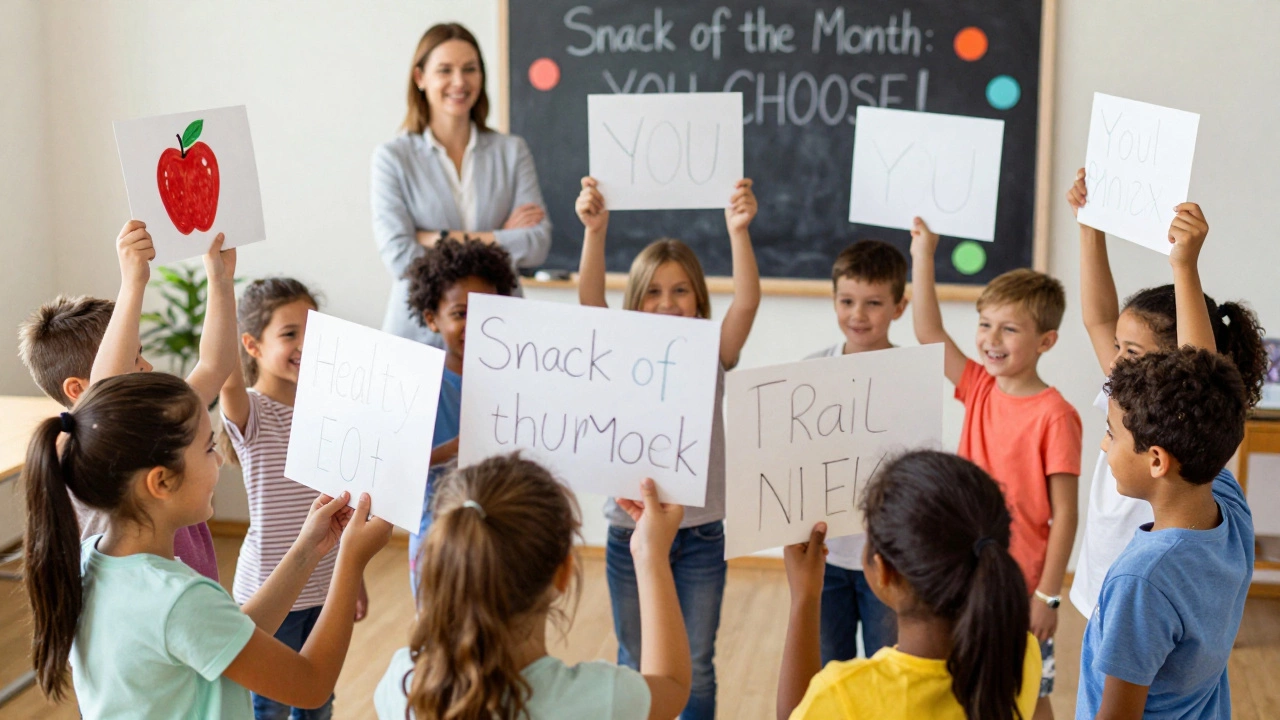
- Let kids vote on one snack a month. They’re more likely to eat it if they helped choose.
One club cut snack costs by 60% just by swapping pre-packaged snacks for bulk nuts and fruit. They also started a “Snack Swap” day where kids bring in something from home and trade. It’s fun, social, and reduces waste.
Snacks as a Learning Tool
Snack time doesn’t have to be silent. Use it to teach.
Ask: “Why does protein help you stay focused?”
Let kids help prepare simple snacks-washing fruit, pouring yogurt, mixing trail mix. It builds life skills and responsibility.
One club turned snack time into a mini science lesson: “Which snack gives you energy longest?” They tested crackers, bananas, and cookies with a timer. Kids remembered the results. And they chose better snacks on their own.
What to Avoid
Even well-meaning clubs make mistakes.
- Don’t assume all kids eat the same things. Some have allergies. Some are vegetarian. Some can’t eat dairy. Always ask parents for dietary needs before planning.
- Don’t use snacks as rewards. “If you clean up, you get a cookie.” That teaches kids food is a prize, not fuel.
- Don’t skip snacks on “quiet days.” Even if they’re doing puzzles or reading, their brains are still working hard.
- Don’t rely on vending machines. They’re often full of sugar and salt, not nutrition.
The Bigger Picture
After-school clubs are more than just a place to wait for parents. They’re a second learning environment. And just like school, they need structure-especially around food.
When kids are well-fed, they’re calmer, more creative, and more willing to try new things. They make friends easier. They stick with activities longer. They come back next week.
Snacks aren’t optional. They’re part of the curriculum. And if you’re running a club for 10-year-olds, you’re already teaching them how to stay healthy-you just didn’t know it.
Do 10-year-olds really need snacks if they just ate lunch?
Yes. Lunch is usually eaten around 12:30 p.m., and after-school clubs often start at 3:30 p.m. That’s five hours without food. A child’s energy needs are much higher than adults, and their stomachs are smaller. Without a snack, their blood sugar drops, leading to fatigue, irritability, and trouble focusing. A small, balanced snack bridges the gap until dinner.
What if a child has food allergies?
Always collect dietary restrictions from parents at the start of each term. Keep a list posted and check snacks before serving. Avoid common allergens like peanuts, dairy, and gluten unless you’re certain they’re safe. Use separate containers and tools for allergen-free snacks. Many food banks and local charities now offer allergy-friendly options.
How much should we give them?
A portion should be about the size of their fist. For example: one apple, half a sandwich, a small yogurt, or a handful of trail mix. Too much can make them sluggish; too little leaves them hungry again by 5 p.m. The goal is to take the edge off hunger-not fill them up for dinner.
Can we use money from the club fund to buy snacks?
Yes, if it’s part of the budget. Snacks are an operational cost, just like art supplies or sports equipment. Many clubs set aside £10-£20 per week for snacks. If funds are tight, combine parent donations with bulk buying. A 5kg bag of oats lasts 20+ servings and costs less than £3.
What if kids only want sugary snacks?
Offer choices. One week, have apples and cheese. The next, try whole grain muffins and yogurt. Let kids pick one snack from two healthy options. Over time, they’ll adapt. Avoid banning sweets completely-instead, save them for special occasions. The goal is to build healthy habits, not create rebellion.
Next Steps for Club Leaders
If you run an after-school club, start tomorrow:
- Ask parents for dietary needs and preferences.
- Choose three easy snacks from the list above.
- Set up a snack box with reusable containers.
- Let kids help pick the next snack.
Within a week, you’ll notice a difference. Quieter transitions. Better focus. Fewer meltdowns. And kids who actually look forward to coming back.