
Volunteer Hours Tracker & Proof Calculator
Enter Your Volunteer Hours
Choose Your Application Purpose
Required Proof Checklist
If you’ve spent weekends sorting food at a local pantry, tutoring kids after school, or helping clean up a riverbank, you know volunteering changes lives-including your own. But what happens when you need to prove it? Whether you’re applying for college, a job, a scholarship, or even a visa, organizations often ask for proof you actually showed up and did the work. It’s not about bureaucracy-it’s about trust. Here’s how to do it the right way, without the stress.
Keep a Volunteer Log
Start simple: write it down. A volunteer log doesn’t need to be fancy. Just a notebook, a spreadsheet, or even a note in your phone works. For every shift, record the date, time, organization name, what you did, and who you worked with. Be specific. Instead of writing "helped at the food bank," write "sorted 120 boxes of canned goods and packed 45 meal kits for families in need on October 14, 2025, with Bristol Food Bank." Details matter. They turn vague effort into real evidence.Many volunteers skip this step until they’re asked for proof-and then panic. Don’t wait. Make it a habit. Five minutes after each shift ends is the best time to log it. Your future self will thank you.
Get a Signed Letter or Certificate
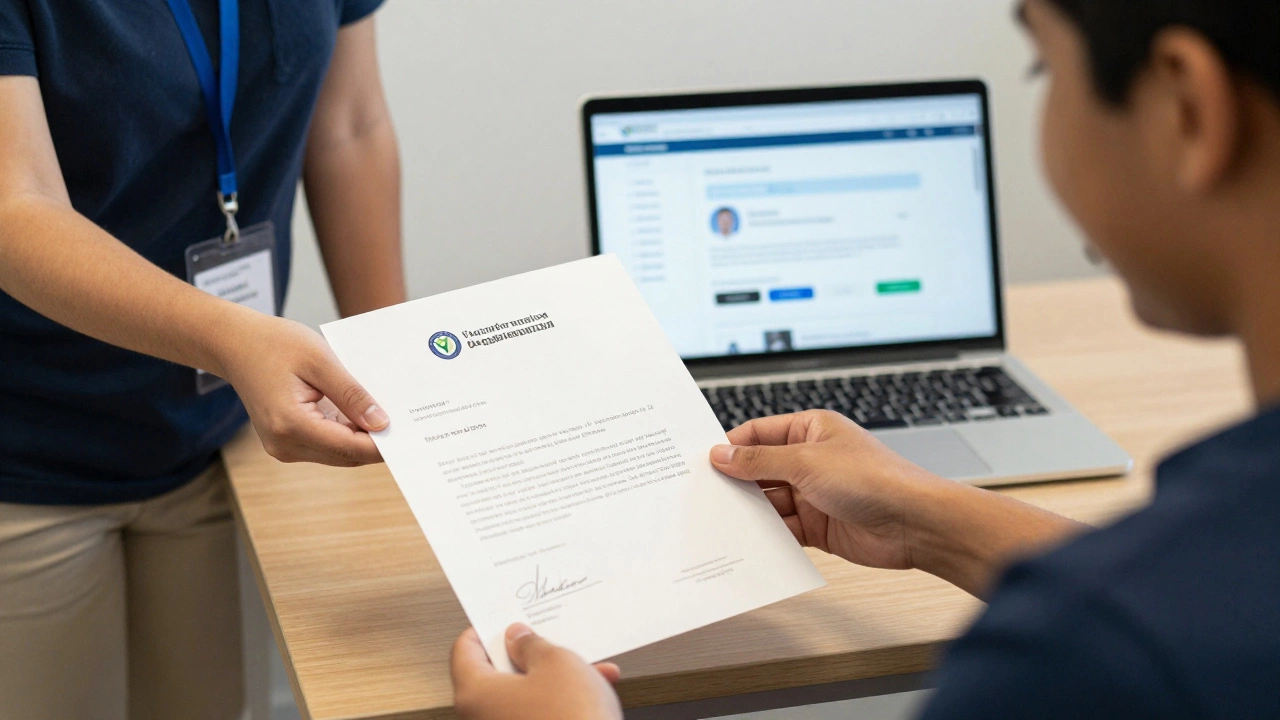
The gold standard for proving volunteer work is a signed document from the organization you served with. Most nonprofits have a standard volunteer verification letter or certificate they’ll give you on request. Ask your supervisor or volunteer coordinator at the end of your time there. Say something like: "Could you please send me a letter confirming my hours and role? I need it for my college application."Good letters include:
- Your full name
- Organization name and address
- Dates of service (start and end)
- Total hours completed
- Description of your role and responsibilities
- Signature and contact info of the supervisor
Some places, like the NHS or local councils, even have official templates. If they don’t, you can draft one yourself and ask them to sign it. Most will be happy to help.
Use Official Volunteer Platforms
Many UK organizations use verified platforms to track volunteer hours. If you signed up through Do-It, Volunteer Centre Bristol, or Timebank, your hours are already recorded digitally. These platforms issue official certificates you can download and print. They’re trusted by universities, employers, and even immigration officers because they’re linked to real organizations.Check if your volunteer group uses one of these. If they do, ask for your activity report. It’s often just a click away in your account. No need to wait weeks for a letter-just export it.
Take Photos and Save Receipts (With Permission)
Photos can help-but only if you have permission. Some organizations allow volunteers to take photos during events. If you’re helping at a community garden, a youth workshop, or a charity run, ask: "Can I take a photo of us working? I’d like to keep it for my records."Don’t post them publicly unless you’re told it’s okay. But keeping them in a private folder with notes ("October 5, 2025 - Planting trees with Friends of Avon Gorge, 8 hours") adds context. Some schools and employers accept photo logs as supplemental proof.
Same goes for receipts. If you were given a uniform, a badge, or even a thank-you card with the organization’s logo, keep them. These aren’t proof on their own, but they support your story.
Ask for References
A personal reference from someone you volunteered with can carry a lot of weight. It doesn’t have to be a formal letter. A quick email from your supervisor saying, "I can confirm Anara worked 30 hours with us between June and November 2025, helping run the after-school program," is enough for many applications.Choose someone who saw your work regularly-your direct supervisor, not just the CEO. Make sure they know your full name and the exact dates you served. Give them a heads-up before you apply. Say: "I’m applying for a scholarship and need someone to confirm my volunteer hours. Would you be comfortable sending a quick note?" Most people are happy to help.
What Doesn’t Work
Don’t rely on just your word. Saying "I volunteered 100 hours last year" isn’t enough. Neither is a screenshot of a Facebook event you attended. Or a selfie with a smiley sign. These don’t prove you did the work.Also, avoid fake certificates. Some websites sell "volunteer certificates" for a fee. They look official but are meaningless. Organizations check. If you’re caught using one, it can hurt your credibility more than not having proof at all.
How Much Proof Do You Really Need?
It depends on who’s asking. For a university application, they want a signed letter or platform record. For a job interview, a quick mention of your role and a reference might be enough. For visa applications in the UK, you may need a letter on official letterhead with contact details.Always check the requirements first. If they say "proof of 50+ hours," give them your log + signed letter. If they say "evidence of community involvement," a photo log and reference might suffice. Tailor your proof to the ask.

What If the Organization Won’t Help?
Sometimes, small groups don’t have the staff to write letters. If that’s you, here’s what to do:- Write your own summary: date, hours, tasks, impact
- Ask a fellow volunteer to sign it as a witness
- Include any emails you exchanged about your role
- Submit it with a note: "This is self-reported with witness confirmation. I’m happy to provide contact details for verification."
Many organizations accept this if it’s honest and detailed. Honesty beats perfection every time.
Keep It Organized
Once you have your proof, store it safely. Create a folder on your computer called "Volunteer Proof". Put in:- PDFs of signed letters
- Downloaded certificates from volunteer platforms
- Scanned receipts or badges
- Reference emails
- Your volunteer log (as a spreadsheet)
Back it up in the cloud. Update it after every new shift. That way, when the next opportunity comes-whether it’s a scholarship, job, or just a chance to lead your own project-you’re ready.
Why This Matters
Proving your volunteer work isn’t about jumping through hoops. It’s about showing that your time, effort, and heart meant something. It’s about making sure your contribution doesn’t get lost in the noise. And honestly? The people who need help the most-kids, seniors, animals, the environment-they don’t care if you have a certificate. But the systems that give you chances to grow? They do. So give them what they need. Your service deserves to be seen.Can I use a friend’s letter as proof of volunteering?
No. A letter from a friend doesn’t count as official proof. Organizations need verification from someone in a leadership role at the nonprofit you volunteered with-like a coordinator, supervisor, or director. A friend might be able to serve as a witness if the organization can’t provide a letter, but only if you also include your own detailed log and contact info for the group.
Do I need proof for every volunteer job I’ve done?
No. You only need proof for the roles that matter for your current goal-like a college application or job. Pick the 2-3 most relevant experiences and focus on getting solid documentation for those. You don’t need to prove every hour you’ve ever given.
What if I volunteered abroad? Can I still prove it?
Yes. International organizations often issue certificates or letters in English. If they don’t, email them asking for one. Include your full name, dates, and role. If they reply with a PDF, print it. If they only reply by email, save the full thread and add a note: "Official confirmation received via email from [Organization] on [date]." Many UK institutions accept this.
Can I use my university’s volunteering portal as proof?
Yes, if it’s linked to a verified organization. Many UK universities partner with platforms like Do-It or Volunteer Centre networks. If your portal shows your hours, organization name, and a supervisor’s name, it’s usually accepted. Download the official report as a PDF and include it with your application.
How many hours should I aim to log?
There’s no magic number, but most scholarships and competitive programs look for at least 50-100 hours over 6-12 months. Quality matters more than quantity. A consistent 3 hours a week for six months shows commitment better than 20 hours in one weekend. Focus on depth, not just totals.