
Environmental Community Type Matcher
Not sure which environmental group fits your lifestyle? Answer these three questions to find your ideal community type based on the article's definitions.
Join the Movement
Local action builds social capital and creates tangible change right outside your window.
- Primary Focus:
- Typical Activities:
- Commitment Level:
You see a flyer for a river cleanup on your phone. You scroll past it, thinking, "That’s nice, but what does it actually mean for me?" It is easy to feel like environmental protection is something big organizations handle from high-rise offices. But the real engine of change is often much closer to home. It is called an environmental community.
An environmental community is not just a group of people who like trees. It is a network of residents, volunteers, and local leaders who share a specific goal: protecting their immediate environment. These groups turn individual worry into collective power. They clean up parks, monitor air quality, lobby city councils, and teach neighbors how to compost. Understanding what these communities are-and how they work-can help you decide if you want to join one or start your own.
The Core Definition: More Than Just a Club
When we talk about an environmental community, we are talking about a social structure built around ecological stewardship. Unlike a formal non-profit with a board of directors and a budget, many environmental communities operate on trust and shared values. They are grassroots by nature.
Think of it this way: A charity might send money to plant trees in a distant forest. An environmental community plants those trees themselves, right outside their windows. The key difference is proximity and participation. In these groups, every member has a stake in the outcome because they live, breathe, and play in that same space. This creates a sense of ownership that top-down organizations rarely achieve.
These communities often form around a specific threat or opportunity. Maybe a local factory is dumping waste into a creek. Maybe a new development is threatening a wetland. Or maybe the neighborhood simply wants more green spaces. The catalyst varies, but the result is always a group of people organizing to protect their shared habitat.
Types of Environmental Communities
Not all environmental groups look the same. Depending on their goals and methods, they fall into several distinct categories. Knowing which type fits your interests can help you find the right fit.
| Type | Primary Focus | Typical Activities | Commitment Level |
|---|---|---|---|
| Neighborhood Green Groups | Local aesthetics and biodiversity | Garden maintenance, tree planting, litter picking | Low to Medium |
| Advocacy Coalitions | Policy change and regulation | Attending council meetings, petitioning, protests | High |
| Citizen Science Networks | Data collection and monitoring | Air/water testing, bird counting, species tracking | Medium |
| Sustainability Hubs | Education and resource sharing | Tool libraries, repair cafes, workshops | Variable |
Neighborhood Green Groups are perhaps the most visible. You have likely seen them tending to a community garden or removing invasive species from a park. Their work is tangible and immediate. If you enjoy getting your hands dirty and seeing physical results, this is where you will thrive.
Advocacy Coalitions are different. They focus on the system rather than the soil. These groups research local laws, draft proposals, and pressure politicians to act. They might fight against a new highway expansion or demand stricter recycling rules. This path requires patience and a thick skin, as political change is slow.
Citizen Science Networks bridge the gap between data and action. Members collect information that scientists use to make decisions. For example, a group might test water samples in a local river every month. This data can prove pollution levels to regulators. It turns anecdotal evidence into hard facts.
Sustainability Hubs focus on reducing waste and consumption. They might run a tool library so neighbors don’t need to buy drills they use once a year. Or they might host a repair cafe where experts fix broken appliances. These communities build resilience by keeping resources in circulation.
Why Local Action Matters
You might wonder why you should bother with a local group when global issues like climate change seem so huge. The answer lies in scale and impact. Global problems are made up of millions of local problems. Solving them requires action at every level.
Local environmental communities have advantages that large NGOs do not. They know the terrain. They know who the decision-makers are. They understand the specific needs of their ecosystem. A national organization might have a generic plan for urban greening. A local group knows exactly which native plants will survive in their specific soil conditions.
Moreover, local action builds social capital. When you work alongside your neighbors to clean a beach or plant a hedge, you build relationships. These connections strengthen the community beyond just environmental benefits. People who know each other are more likely to help each other during crises, whether that is a flood or a personal emergency.
In Bristol, for instance, local groups have successfully campaigned for pedestrian-only zones and improved cycling infrastructure. These changes reduce emissions and improve health, but they also create a safer, more connected city. The ripple effects extend far beyond the initial project.

How to Find Your Group
Finding an environmental community near you is easier than you think. Start by looking at what bothers you or excites you. Do you hate seeing plastic bags blowing in the wind? Look for a zero-waste group. Are you worried about rising temperatures? Join a climate action coalition.
Social media is a powerful tool here. Search for hashtags related to your city and keywords like "cleanup," "green," or "sustainability." Facebook groups and Nextdoor apps often have active threads about local initiatives. Libraries and community centers also post flyers for upcoming events.
Once you find a potential group, attend a meeting or event as an observer. See how they communicate. Are they welcoming? Do they listen to new ideas? A healthy environmental community encourages diverse perspectives. If a group feels exclusive or cliquish, it might not be the right fit.
Volunteer for a small task first. Offer to help sort donations at a swap shop or hand out flyers. This lets you gauge your interest without a huge time commitment. Most groups are grateful for any help and will appreciate your willingness to try.
Starting Your Own Community
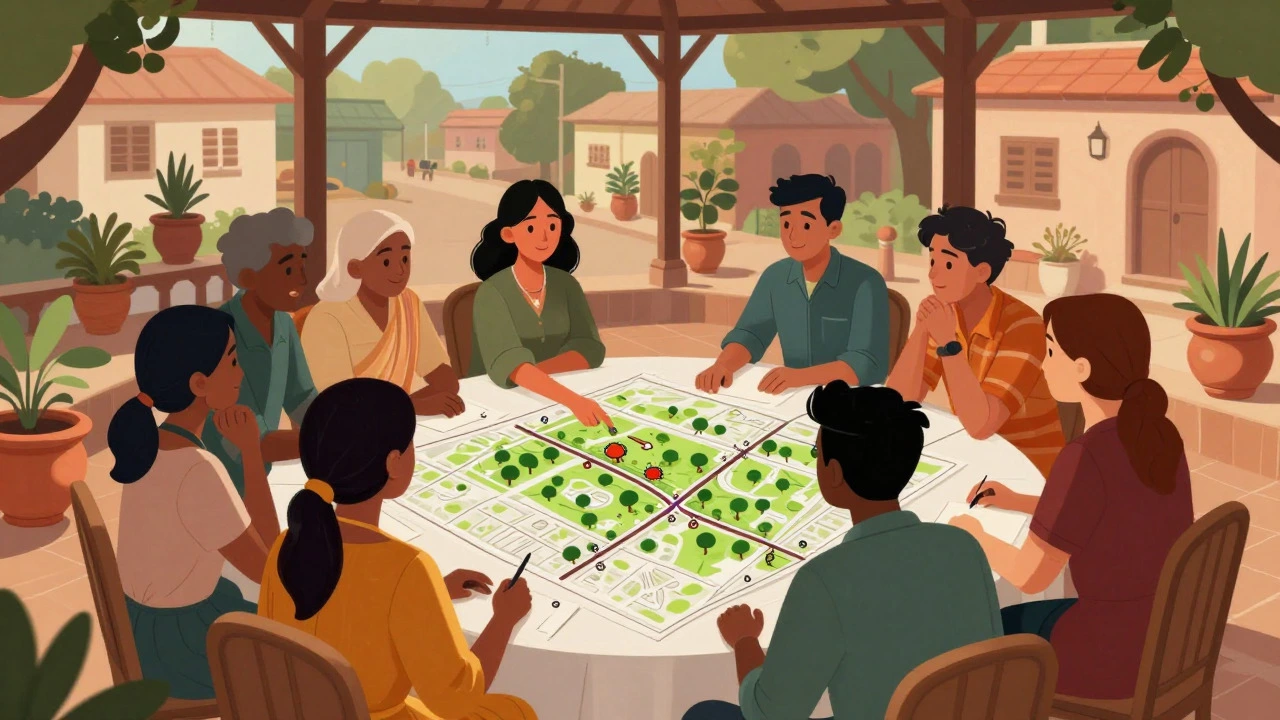
If you cannot find a group that matches your vision, consider starting one. You do not need a large following to begin. In fact, starting small is often better. Gather three or four friends or neighbors who share your concern. Meet regularly to discuss goals and plan actions.
Define a clear mission statement. What do you want to achieve? Be specific. Instead of "saving the planet," aim for "reducing single-use plastics in our school cafeteria." Specific goals are easier to measure and celebrate.
Use free tools to organize. WhatsApp groups, Google Docs, and simple email newsletters are sufficient for early stages. Avoid complex software until you have a stable membership. Keep communication open and transparent. Share successes and failures alike.
Partner with existing organizations when possible. They can provide resources, expertise, and legitimacy. For example, a local university biology department might offer free training on species identification. A nearby hardware store might donate gloves and trash bags for cleanups.
Challenges and How to Overcome Them
Running or participating in an environmental community is not always smooth sailing. Burnout is a common risk. Volunteers give their time freely, and expectations can become unrealistic. To prevent this, rotate leadership roles and set clear boundaries. Celebrate small wins to keep morale high.
Conflict is another challenge. People have different opinions on tactics and priorities. Some may prefer peaceful protests, while others want direct action. Establish a conflict resolution process early. Use consensus-based decision-making whenever possible. Listen actively and validate everyone’s concerns.
Funding can also be tricky. Many environmental communities operate on shoestring budgets. Apply for small grants from local councils or foundations. Host fundraising events like bake sales or guided nature walks. Remember that volunteer labor is valuable too. Count hours contributed as part of your impact report.
The Future of Environmental Communities
As environmental challenges grow more urgent, these communities will become even more important. Technology is changing how they operate. Apps now allow citizens to report illegal dumping in real-time. Drones help monitor deforestation. Data visualization tools make complex information accessible to everyone.
We are also seeing more collaboration between different types of groups. Advocacy coalitions are partnering with citizen science networks to combine political pressure with hard data. Sustainability hubs are working with neighborhood green groups to create circular economies. This integration makes movements stronger and more resilient.
For individuals, joining an environmental community offers more than just ecological benefits. It provides purpose, connection, and hope. In a world that often feels overwhelming, taking concrete action with others can be incredibly empowering. You are not just saving the planet; you are building a better neighborhood.
Is an environmental community the same as an NGO?
Not necessarily. While some environmental communities register as Non-Governmental Organizations (NGOs), many operate informally. NGOs typically have formal structures, paid staff, and broader geographic scopes. Environmental communities are usually grassroots, volunteer-driven, and focused on hyper-local issues. However, successful communities often evolve into registered NGOs to access funding and legal protections.
How much time do I need to commit?
It depends on the group and your role. Casual volunteers might spend a few hours a month attending cleanups or meetings. Leaders or organizers may dedicate 10-20 hours weekly. Most groups welcome flexible commitments, so you can participate as much or as little as your schedule allows.
Do I need scientific knowledge to join?
No. While citizen science groups value data, they usually provide training. Most tasks, like planting trees or sorting recyclables, require no prior expertise. Enthusiasm and reliability are often more important than technical skills. Groups are happy to teach members what they need to know.
Can environmental communities influence government policy?
Yes, absolutely. Local governments rely on public input. Well-organized communities can present petitions, testify at council meetings, and propose alternative plans. History shows that persistent, informed citizen pressure leads to significant policy changes, from banning single-use plastics to creating protected green spaces.
What if my neighborhood has no environmental group?
You can start one! Begin by identifying a specific local issue that matters to you and your neighbors. Reach out via social media or community boards to find interested people. Even a small group of three or four dedicated individuals can make a difference. Consider reaching out to regional environmental networks for guidance and support.