
Wacky Day Costume Idea Generator
Get inspired for Wacky Day with these fun, easy costume ideas. No need for expensive outfits—use what you have at home!
Click the button to get your personalized Wacky Day idea
Why This Works
All ideas use everyday materials like cardboard, fabric scraps, or recycled items—no need to buy anything!
Ever walked into school and seen a kid wearing a superhero cape over their uniform, another in pajamas with slippers, and someone else with their hair dyed bright green (even if it’s just temporary)? That’s Wacky Day at school - a fun, no-rules kind of day where the usual dress code goes out the window and creativity takes over.
What Exactly Is Wacky Day at School?
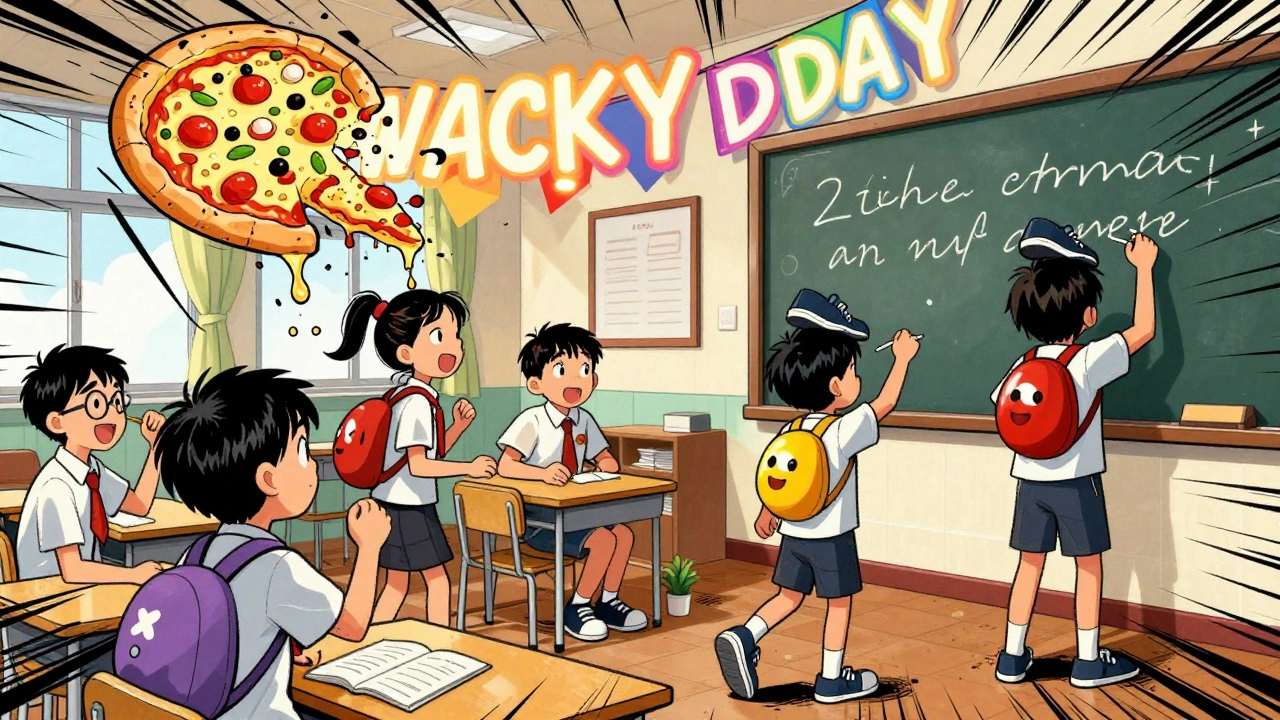
Wacky Day at school is a themed event where students and sometimes teachers dress up in wild, silly, or unexpected outfits. It’s not about fashion or trends - it’s about letting loose. Think mismatched socks, hats on backwards, costumes made from cardboard, or wearing everything backwards. The goal? To break the routine, spark laughter, and build a sense of community through shared silliness.
It’s not a holiday. It’s not a free dress day. It’s a planned, often student-led event that usually happens once a term - sometimes tied to a school spirit week, a fundraiser, or just because someone thought it’d be fun to see the principal in a chicken costume.
Why Do Schools Do Wacky Day?
It’s not just about looking ridiculous (though that’s part of the fun). Schools use Wacky Day as a tool to build connection. Kids who don’t usually speak up in class might be the ones with the most creative outfit. Shy students find confidence in a funny hat. Teachers who normally stick to business suits show up in neon leg warmers - and suddenly, the whole school feels more human.
Studies in child development show that playful, unstructured activities like this reduce stress and improve social bonding. A 2023 survey by the UK’s Education Endowment Foundation found that schools running themed dress-up days reported a 22% increase in student-reported feelings of belonging over the term.
It also gives kids a safe space to express themselves. One student in Bristol told me last year, “I wore a potato sack with googly eyes. No one laughed at me. Everyone else was weirder.” That’s the magic of Wacky Day.
How Is It Different From Casual Friday or Pajama Day?
It’s easy to confuse Wacky Day with other casual dress days, but they’re not the same.
- Pajama Day means wearing sleepwear - simple, cozy, and quiet.
- Casual Friday means jeans and a t-shirt - still normal, just relaxed.
- Wacky Day means go wild. You’re encouraged to break the rules. Wear a tutu over your pants. Bring a pet rock as your “classmate.” Put your shoes on your hands. The weirder, the better.
Wacky Day isn’t about comfort - it’s about creativity. It’s not a permission slip to be lazy. It’s a challenge to be imaginative.
Common Themes for Wacky Day
Most schools pick a theme to guide the madness. Here are some popular ones:
- Decades Day - 80s neon, 90s grunge, 70s bell-bottoms
- Superhero Day - capes, masks, DIY costumes
- Animal Day - ears, tails, fur, wings (real or fake)
- Backwards Day - clothes on backwards, walking backwards, writing backwards
- Food Day - wear your favorite snack as a hat (yes, a banana on your head counts)
- Teacher vs. Student - students dress as teachers, teachers dress as students
Some schools even let students vote on the theme a week ahead. That way, everyone feels involved - not just the ones who show up in a full dinosaur suit.
How Do You Plan a Wacky Day?
If your school doesn’t have one yet, here’s how to start:
- Get a teacher or club advisor on board. You need an adult to approve it - and to keep the chaos from turning into a fire hazard.
- Choose a date. Avoid exam weeks or rainy days. Pick something mid-term when energy is low and everyone needs a boost.
- Set a theme. Make it broad enough to allow creativity but clear enough to avoid confusion.
- Send out a fun flyer. Use cartoons, bright colors, and silly slogans like “Dress Like a Banana. Or a Toaster. Or Both.”
- Offer a small prize. Best costume, most creative, funniest pair - something simple. A certificate, a candy bar, or extra recess time works.
- Set ground rules. No weapons (even foam ones), no offensive costumes, no blocking hallways. Safety first, silliness second.
One school in Bristol did it right: they partnered with the after-school drama club to make costumes from recycled materials. The result? A Wacky Day that doubled as an art project - and saved £300 on new supplies.
What About the Teachers?
Wacky Day isn’t just for kids. When teachers join in, it changes the whole vibe. A math teacher wearing a giant foam dice as a hat? Suddenly, algebra doesn’t feel so scary.
Some schools even run a “Teacher Talent Show” after lunch. Imagine your science teacher doing a rap about the periodic table. Or the headteacher doing the worm in the playground. These moments become the stories families talk about for years.
And here’s the secret: teachers who participate are seen as more approachable. Students are more likely to ask for help after Wacky Day - not because they’re scared of the teacher anymore, but because they see them as a person.
What If You Don’t Want to Participate?
Not everyone feels comfortable dressing up. That’s okay. Wacky Day should never be forced. Schools that do it right make sure there’s no pressure.
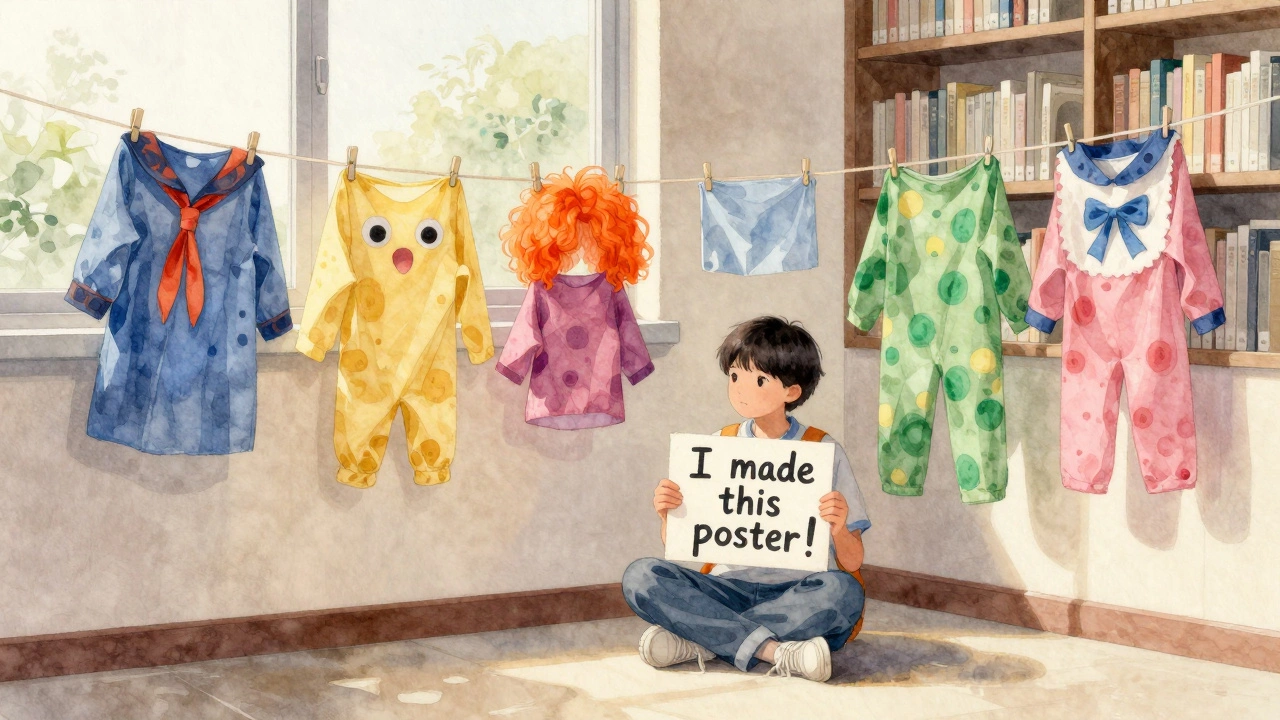
Some kids choose to wear one silly item - a hat, a wig, a pair of mismatched gloves - and that’s enough. Others make signs, help with decorations, or take photos. Participation isn’t about the outfit - it’s about the spirit.
One student in Year 6 told me, “I didn’t dress up. But I made the poster. And I laughed harder than anyone.” That’s still part of the day.
Wacky Day and After-School Clubs
After-school clubs are often the engine behind Wacky Day. The art club makes the costumes. The drama club plans the talent show. The eco-club turns trash into fashion. The coding club even built a “Wacky Day Vote” app last year.
It’s one of the few school events where clubs don’t just run in the background - they lead the show. And for kids who feel lost during regular school hours, Wacky Day gives them a spotlight.
Clubs that run Wacky Day events report higher membership the next term. Why? Because kids see them as places where they can be weird - and it’s welcome.
What to Avoid
Not every idea is a good idea. Here’s what doesn’t work:
- Costumes that mock cultures or religions - this isn’t Halloween. Respect matters.
- Wearing anything that’s dangerous - real weapons, flammable materials, heavy props that block hallways.
- Forcing kids to spend money. Wacky Day should be free. Use recycled stuff. Make it from cardboard. Borrow from a sibling.
- Turning it into a competition where only the “best” get praised. Everyone wins by showing up.
Good Wacky Days aren’t about who looks the funniest. They’re about who felt the most included.
What Happens After?
Wacky Day doesn’t end when the bell rings. Photos go up on the school website. Parents post them on social media. One school’s “Robot Teacher” photo got 12,000 shares.
And the next day? The hallway feels different. Kids talk to each other more. Teachers smile more. The energy stays light for weeks.
It’s not magic. It’s simple: when people let go of being serious for a day, they remember they’re all just people trying to get through the week.
Final Thought: Why It Matters
Wacky Day at school isn’t just about silly clothes. It’s about giving kids a moment where they don’t have to be perfect. Where it’s okay to be loud, weird, or quiet. Where creativity beats conformity.
In a world that’s always telling children to sit still, speak quietly, and follow the rules - Wacky Day says: Be you. Even if you’re a banana wearing a top hat.
Is Wacky Day only for elementary schools?
No. While it’s most common in primary schools, middle and high schools run Wacky Day too - sometimes with more creative themes like “Movie Character Day” or “Alien Invasion.” Older students often lead the planning, making it a great leadership opportunity.
Do students have to buy costumes for Wacky Day?
Absolutely not. Most schools encourage using what’s already at home - old clothes, cardboard, fabric scraps, or even face paint. Many clubs host costume-making workshops using recycled materials so no one has to spend money.
Can teachers refuse to participate in Wacky Day?
They can, but most schools make participation optional and positive. Teachers who join in usually get the best reactions from students. If someone doesn’t want to dress up, they can help organize, take photos, or run a quiet activity - and that’s still valued.
Is Wacky Day just a waste of learning time?
Not if it’s planned well. Many schools tie Wacky Day to lessons - like art projects for costumes, writing assignments about their outfit, or math games using themed props. Even without ties to curriculum, the social-emotional benefits - reduced stress, stronger peer bonds - help students learn better the rest of the week.
How often should Wacky Day happen?
Once a term is ideal. Too often, and it loses its special feel. Too rarely, and students forget about it. Many schools pick one day in autumn, one in spring, and sometimes one before exams to lift spirits.