
When you’re sleeping on the street, every hour counts. The cold doesn’t wait. The fear doesn’t fade. And the question ‘Where do I go?’ isn’t theoretical-it’s urgent. You don’t need a list of nice-sounding options. You need a door that opens, a bed that’s clean, and someone who won’t turn you away. Here’s where to find that in the real world.
Emergency Shelters Are Your First Stop
Emergency shelters are the most reliable starting point. They’re open 24/7, don’t require ID, and take people regardless of how they got there. In Bristol, the St. Paul’s Night Shelter takes anyone over 18, no questions asked. They offer a hot meal, a mattress, and lockers for your things. No one gets turned away for being drunk, high, or having a pet dog. You might wait an hour in line, but you’ll get in.
Other cities have similar models. In London, the St. Mungo’s network runs shelters in every borough. In Manchester, The Big Issue Foundation partners with local churches to open overflow spaces on freezing nights. These aren’t luxury hotels. The floors are linoleum. The showers are shared. But they’re safe. And they’re open.
Day Centers Offer More Than Just a Place to Sit
Shelters close during the day. That’s when you need a place to wash up, charge your phone, and get help without waiting in line. Day centers fill that gap. In Bristol, the Bristol Homeless Project on St. James’s Street opens at 8 a.m. You can shower, do laundry, use the internet, and talk to a caseworker who knows how to get you into housing programs.
These centers also hand out warm clothes, toiletries, and sometimes even bus tickets to get to job interviews or medical appointments. They don’t ask for proof of income. They don’t care if you’ve been in jail. They care if you’re alive today.
Outreach Teams Find You-Even If You Don’t Go to Them
Not everyone can walk to a shelter. Maybe you’re injured. Maybe you’re scared. Maybe you’ve been hurt by systems before. That’s why outreach teams exist.
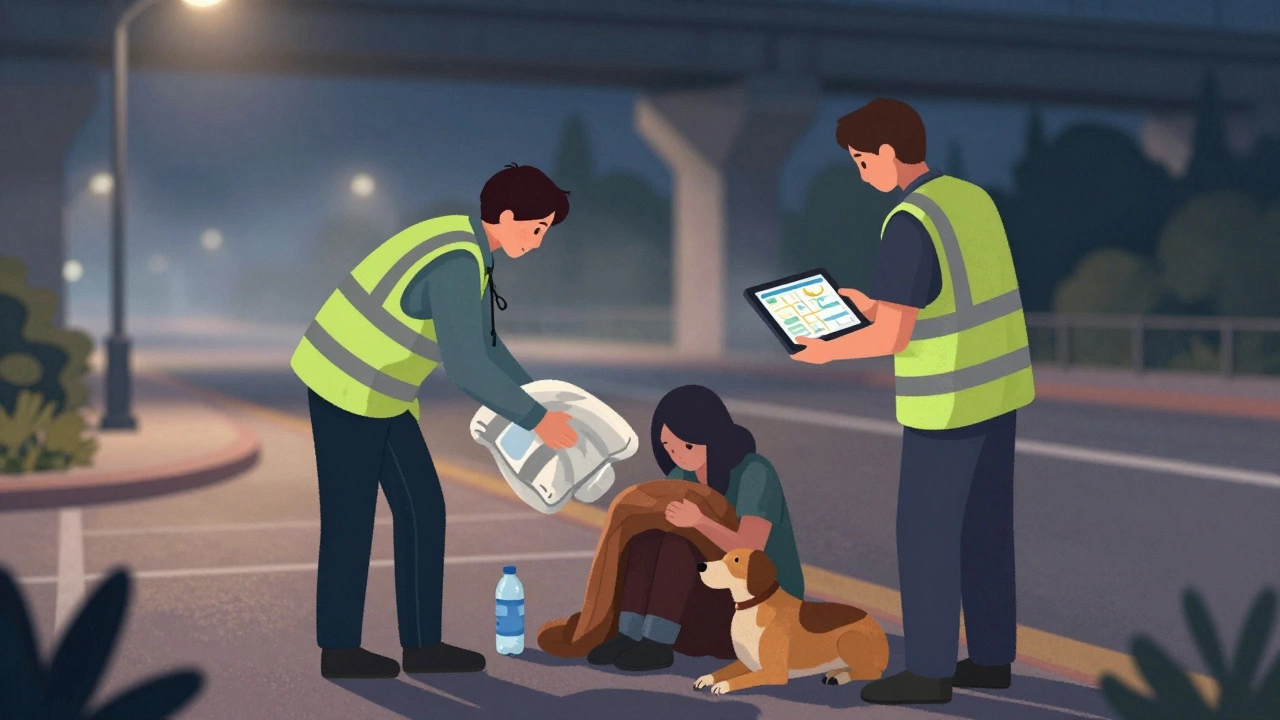
In Bristol, the StreetLink service sends workers out every night with blankets, water, and food. They carry tablets and can connect you to a shelter on the spot. Just tell them your location. You don’t need to know your address. Say ‘near the bridge’ or ‘behind the bus station.’ They’ll come.
StreetLink works across England. Call 0300 500 0914 or use their app. It’s anonymous. It’s free. And it’s staffed by people who’ve been where you are.

Hostels With Support Services Are the Bridge to Stability
Emergency shelters are temporary. Hostels are the next step. They’re not just beds-they’re programs. In Bristol, the St. George’s Hostel offers 6-month stays with weekly check-ins, mental health counseling, and help applying for benefits. You don’t have to be ‘ready’ to change. You just have to show up.
Some hostels require you to attend meetings or job training. Others don’t. The key is finding one that matches your needs. If you’re struggling with addiction, look for a hostel with on-site support. If you have kids, find one that’s family-friendly. There are no perfect places. But there are places that try.
Food Banks Are More Than Free Meals
Food banks don’t just hand out cans. They’re hubs. In Bristol, the Bristol Food Union connects people to housing advice, legal aid, and even free phone credit. You can get a hot lunch, pick up hygiene kits, and talk to someone who’s helped others get off the streets.
Most food banks don’t require proof of homelessness. You just say you need help. They’ll ask what else you’re struggling with. And they’ll try to fix it. No one gets turned away for being ‘not poor enough.’
What to Bring-and What to Leave Behind
You don’t need much to get in. A backpack with clothes, your ID if you have it, and your phone are enough. Most places let you keep your belongings. Some even give you a locker.
Leave the judgment at the door. No one cares if you used to have a job. No one cares if you’ve been arrested. What matters is that you’re here. And you’re alive.
Don’t Wait for Perfect
You might hear people say, ‘Wait until you’re clean,’ or ‘Get your ID sorted first.’ That’s not true. Shelters don’t require sobriety. They don’t need your birth certificate. You don’t need to be ‘worthy.’ You just need to be here.
The system isn’t perfect. You might wait. You might be moved around. You might get turned away once. But keep going. The next door might be the one that opens.
Know Your Rights
You have the right to safety. You have the right to be treated with dignity. If a shelter refuses you without reason, ask to speak to a manager. If you’re denied because you have a pet, ask about pet-friendly shelters-some exist. In Bristol, the Animal Welfare Shelter lets people bring dogs if they’re registered.
If you’re in danger, call 999. If you’re cold and tired, call StreetLink. If you’re lost, go to the nearest library. They’ll help you find the next step.
Homelessness isn’t a choice. But help is always there-if you know where to look.
Can I go to a shelter if I have a pet?
Yes, some shelters do allow pets. In Bristol, the Animal Welfare Shelter works with people who have dogs and lets them stay together. Other shelters may partner with local animal charities to temporarily house pets while you get settled. Don’t assume you have to leave your pet behind-ask.
Do I need ID to get into a shelter?
No. Emergency shelters in the UK don’t require ID, proof of address, or any documentation. Your name is enough. If someone says you need paperwork, ask to speak to a supervisor. That’s not standard policy.
What if I’m under 18?
If you’re under 18, you should go to a youth-specific service. In Bristol, the Bristol Youth Homelessness Project offers safe housing, counseling, and education support. Adults aren’t allowed to take you to adult shelters-youth services are designed to protect minors. Call 0117 903 7400 for immediate help.
Can I get help if I’m not a UK citizen?
Yes. Emergency shelter access is based on need, not immigration status. Food banks, day centers, and outreach teams serve everyone. Legal advice services can help you understand your rights, but you don’t need to be documented to get food, warmth, or a bed for the night.
What if I’ve been turned away before?
Keep trying. Different shelters have different rules. One might say no because they’re full. Another might say yes because they have space. Go to a different location. Call StreetLink. Talk to a day center worker. They know which places have room today. Persistence isn’t stubbornness-it’s survival.
Next Steps: What to Do Right Now
If you’re reading this and you’re outside right now:
- Call StreetLink at 0300 500 0914 or use their app. Tell them where you are.
- If you can walk, head to the nearest library or community center. They’ll help you find a shelter.
- Don’t wait until morning. Shelters fill up fast at night.
- Keep your phone charged. You might need to call again.
- One place will say yes. Don’t stop until you hear it.
You don’t have to be brave. You just have to keep going. Someone will meet you there.