
Fundraising Event ROI Calculator
Enter Event Data
Direct Costs
Labor & Staffing
Event Analysis
Enter your data and click calculate to see if your event is a profitable investment.
You spend three months planning a charity gala. You stress over the caterer, beg local businesses for sponsorships, and lose sleep over the seating chart. On the night of the event, everyone is smiling, champagne flows, and you raise $25,000. But wait-did you actually make money? Or did you just work for free while paying a venue, a band, and a photographer?
This is the hard question every nonprofit leader eventually faces: are fundraising events worth it? The short answer is yes, but only if you treat them like a business investment rather than a social obligation. For many organizations, traditional galas and auctions are financial black holes that drain staff time and yield negligible net profit. However, when executed with clear metrics and low overhead, events remain one of the most powerful tools for building community and securing major donors.
The Hidden Cost of "Fun" Fundraisers
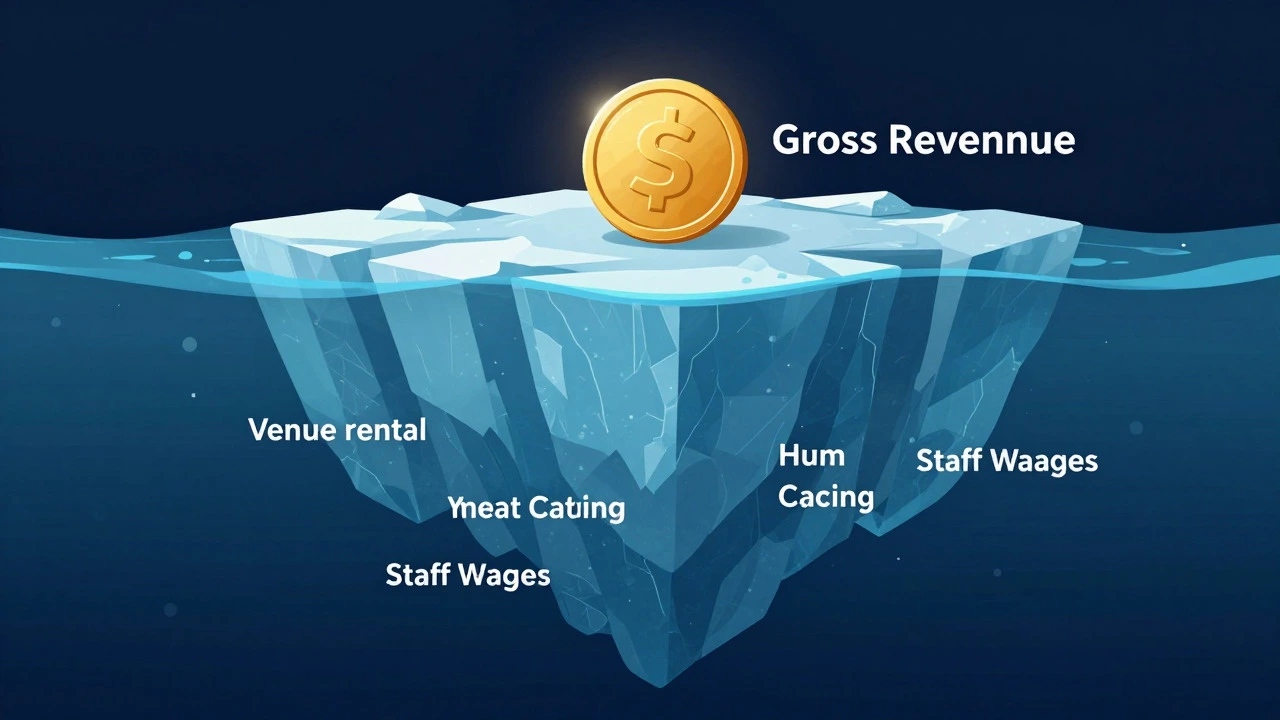
We often look at the gross revenue of an event-the total amount raised-and celebrate. That’s a mistake. Gross revenue ignores the massive iceberg of expenses lurking beneath the surface. To understand if an event is worth it, you need to calculate the Net Profit and the Return on Investment (ROI).
Consider a typical annual dinner. You might raise $50,000 in ticket sales and silent auction bids. Sounds great, right? Now subtract the venue rental ($8,000), catering for 100 people ($6,000), floral arrangements ($2,500), marketing materials ($1,500), and staff wages for the six weeks of preparation ($4,000). Suddenly, your $50,000 haul is down to $28,000. If your organization has paid staff involved in logistics, the real cost goes even higher. Many nonprofits operate with such thin margins that a 40% expense ratio on an event leaves them barely breaking even after accounting for opportunity costs.
The danger lies in the "sunk cost fallacy." Once you’ve spent two months planning, you feel compelled to continue, even if early indicators suggest low attendance or poor sponsorship interest. This emotional attachment to the event often blinds leaders to the financial reality. Before committing to any fundraiser, ask yourself: what is our break-even point? If we don’t hit that number by mid-October, do we have the cash flow to cover the remaining costs?
Why Events Still Matter Beyond the Money
If the math looks grim, why do so many charities still host big parties? Because fundraising events serve a dual purpose: they generate revenue and they build relationships. In the nonprofit sector, trust is currency. People give to causes they feel connected to, and face-to-face interactions create deeper bonds than email newsletters ever could.
A well-executed event acts as a stage for storytelling. When a donor sees the impact of their contribution through a heartfelt video or a speaker from the field, their likelihood of giving again increases significantly. According to data from the National Association of Fundraising Professionals, attendees at live events are up to 30% more likely to become recurring donors compared to those who only donate online. This long-term value, known as Customer Lifetime Value (CLV), often outweighs the immediate net profit of the event itself.
Furthermore, events provide visibility for sponsors. Local businesses love associating themselves with successful community initiatives. A high-profile gala offers brand exposure that digital ads cannot match. If you can secure corporate underwriting that covers 50% of your expenses, the financial risk drops dramatically, making the event much more viable.
High-ROI vs. Low-ROI Event Types
Not all fundraising events are created equal. Some formats naturally lend themselves to higher profits due to lower overhead and easier scalability. Understanding the difference between high-yield and low-yield activities is crucial for strategic planning.
| Event Type | Average Overhead Cost | Staff Time Required | Primary Benefit | Risk Level |
|---|---|---|---|---|
| Annual Gala/Dinner | High ($5k-$20k+) | Very High (3-6 months) | d>Major Donor CultivationHigh | |
| Charity Run/Walk | Medium ($2k-$10k) | High (2-4 months) | Community Awareness | Medium |
| Peer-to-Peer Campaign | Low ($500-$2k) | Low-Medium (1-2 months) | Donor Acquisition | Low |
| Online Auction | Low ($0-$1k platform fee) | Medium (2-4 weeks) | Revenue Generation | Low |
| Benefit Concert | High ($3k-$15k) | High (2-3 months) | Youth Engagement | High |
Notice the trend: events requiring physical venues, food, and entertainment carry the highest risk. Conversely, digital-first or peer-driven models offer better margins. A peer-to-peer campaign, where volunteers raise money within their own networks, shifts the labor burden away from your staff. You provide the platform and branding; they do the heavy lifting. This model often yields a 90%+ profit margin because there are no venue costs or catering bills.
How to Calculate True Event ROI
To stop guessing and start knowing, you need a standardized way to measure success. Here is a simple formula to determine if your next event is worth the effort:
- Total Revenue: Add up all income sources (tickets, donations, auction proceeds, sponsorships).
- Total Direct Costs: Include venue, food, decor, printing, software fees, and honorariums.
- Staff/Opportunity Cost: Estimate the hourly wage of staff/volunteers multiplied by hours spent planning and executing.
- Net Profit: Total Revenue minus Total Direct Costs minus Staff/Opportunity Cost.
- ROI Percentage: (Net Profit / Total Costs) x 100.
If your ROI is negative, the event lost money. If it’s positive but below 20%, ask yourself if you could have achieved similar donor engagement with less expense. For example, instead of a full dinner, consider a "cocktail hour" format which reduces catering costs by 40% while maintaining social interaction. Small tweaks like this can drastically improve profitability without sacrificing experience.
Strategies to Maximize Event Value
You don’t have to cancel your events to save money. Instead, optimize them. Here are proven tactics to boost the effectiveness of your fundraisers:
- Sponsorship Tiers: Create clear packages for local businesses. Offer logo placement on banners, social media mentions, and speaking opportunities. Aim to cover 50-70% of hard costs through sponsors alone.
- In-Kind Donations: Ask vendors to donate services (photography, AV equipment) in exchange for tax receipts and publicity. This reduces cash outlay significantly.
- Digital Integration: Use mobile bidding apps for silent auctions. This increases participation and average bid amounts by removing the friction of writing checks or waiting in line.
- Pledge Drives: Encourage attendees to pledge additional gifts during the event. A simple ask from the stage can generate thousands in extra revenue with zero marginal cost.
- Data Collection: Capture contact information for every attendee. Follow up within 48 hours with a thank-you note and a specific impact story. This turns a one-time guest into a lifelong supporter.

When to Say No to Fundraising Events
Sometimes, the best decision is to skip the event entirely. If your team is already stretched thin managing daily operations, adding a complex fundraiser can lead to burnout. Burnout affects not just morale but also service quality for the beneficiaries you aim to help.
Consider these red flags:
- Your past three events have had declining attendance.
- You lack a dedicated project manager for the event.
- The primary goal is vague (e.g., "raise awareness") rather than measurable (e.g., "raise $10,000").
- You are relying solely on volunteer labor without proper training.
In these cases, pivot to low-cost alternatives like direct mail campaigns, monthly giving programs, or grant writing. These methods require consistent effort but offer predictable returns and less logistical chaos.
The Future of Nonprofit Events
The landscape of fundraising is shifting. Post-pandemic, donors expect convenience and transparency. Hybrid events-combining in-person experiences with virtual streaming options-are becoming the norm. This allows geographically dispersed supporters to participate, expanding your potential donor base without increasing physical capacity constraints.
Technology plays a pivotal role here. Platforms like Classy, Donorbox, and GiveLively streamline registration, payment processing, and post-event analytics. By leveraging these tools, you reduce manual errors and gain insights into donor behavior. For instance, tracking which auction items sell fastest can inform future procurement decisions, ensuring you stock inventory that resonates with your audience.
Ultimately, whether fundraising events are worth it depends on your strategy. Treat them as investments in relationship-building, not just cash grabs. Keep costs lean, measure everything, and always prioritize the donor experience. When done right, an event isn’t just a party-it’s a catalyst for sustainable growth.
What is a good ROI for a nonprofit fundraising event?
A healthy ROI for a fundraising event typically ranges from 20% to 50%. This means for every dollar spent, you should aim to generate $1.20 to $1.50 in net profit. However, if the primary goal is donor acquisition, a lower ROI may be acceptable if the lifetime value of new donors is high.
How do I calculate the break-even point for my charity event?
To find your break-even point, divide your total fixed costs (venue, catering, etc.) by the expected profit per ticket or donation. For example, if your costs are $5,000 and you expect to net $50 per attendee, you need 100 attendees to break even. Any attendance beyond that is pure profit.
Are online fundraising events more profitable than in-person ones?
Generally, yes. Online events eliminate venue, catering, and travel costs, leading to higher profit margins. They also allow for global participation, potentially reaching a larger audience. However, they may require more investment in digital marketing and technology platforms to ensure smooth execution.
What are the biggest risks associated with large-scale fundraising galas?
The biggest risks include high upfront costs, low attendance, and vendor failures. Galas often require significant deposits months in advance, creating cash flow pressure. If attendance falls short, the organization may struggle to cover expenses. Additionally, reliance on third-party vendors introduces variables outside your control, such as last-minute cancellations or service issues.
How can small nonprofits run successful fundraising events with limited budgets?
Small nonprofits should focus on low-overhead events like peer-to-peer campaigns, community walks, or virtual auctions. Leverage in-kind donations for supplies and venue space. Partner with local businesses for sponsorships. Keep the format simple and intimate to foster strong connections without breaking the bank.