
You gave £500 to your local food bank this year. You felt good about it. But now you’re staring at your tax return wondering: was it worth it? Did that donation actually lower your bill? Or did you just give money away with no real return?
The short answer? Yes, donating to charity can reduce your tax bill-but not how most people think. It doesn’t give you a dollar-for-dollar refund. It doesn’t mean you get cash back. What it does is lower the amount of income the government taxes. And if you’re in the right tax bracket, that can add up fast.
How Charitable Donations Cut Your UK Tax Bill
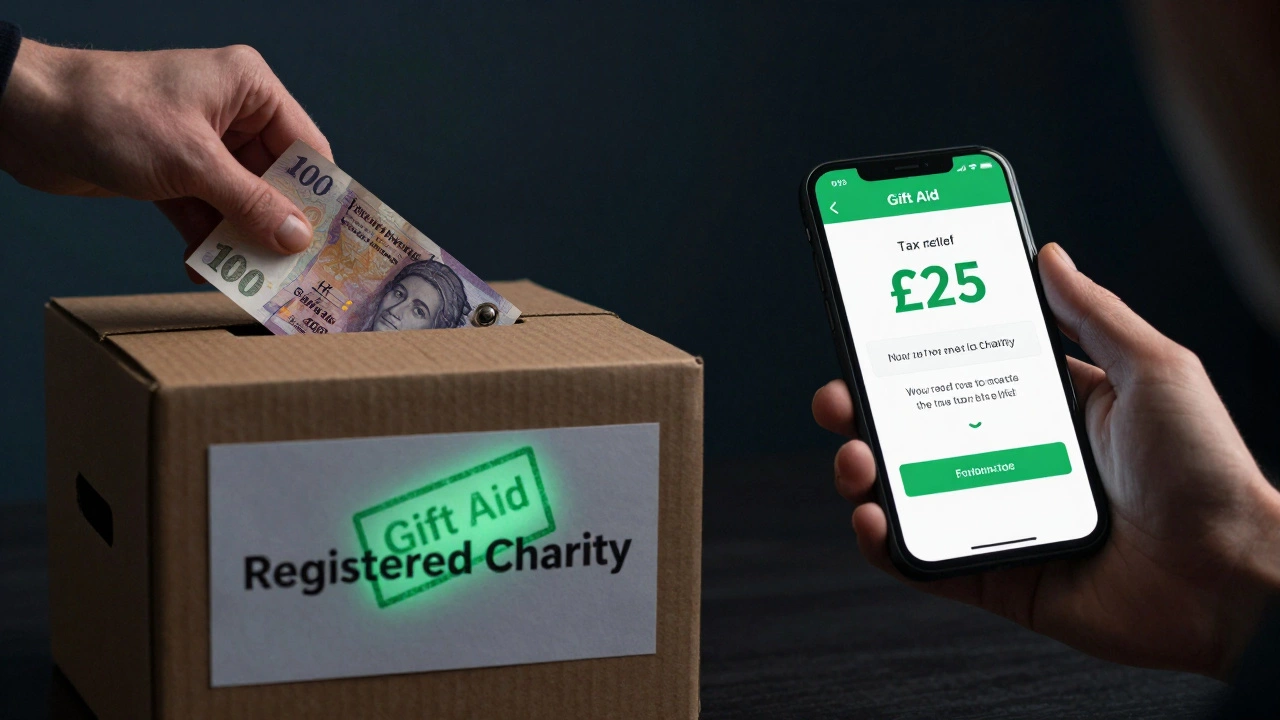
In the UK, the system works through Gift Aid. When you donate to a registered charity, they can claim back the basic rate tax (20%) you already paid on that money. So if you give £100, the charity gets £125. You don’t pay extra. The government gives the extra £25 to the charity because you’re a taxpayer.
But here’s the part most people miss: if you pay higher or additional rate tax, you can claim the difference back yourself.
Let’s say you earn £60,000 a year. You’re a higher-rate taxpayer (40%). You donate £1,000 to a charity through Gift Aid. The charity claims £250 from the government. Now, you’ve effectively given £1,250. But since you paid 40% tax on that income, you’re entitled to claim back the extra 20% (the difference between 40% and 20%). That’s £250. You get that back when you file your self-assessment.
So you gave £1,000. The charity got £1,250. You got £250 back in tax relief. Net cost to you? £750.
That’s not free money. But it’s not a loss either. It’s a way to stretch your giving further.
What Counts as a Charitable Donation?
Not every gift qualifies. The charity must be registered with the Charity Commission for England and Wales, or the Office of the Scottish Charity Regulator. You can check if a group is registered on the Charity Commission website.
Eligible donations include:
- Cash gifts (bank transfers, cheques, direct debits)
- Donations made through payroll giving (your employer takes it out before tax)
- Shares or land given to charity
- Items sold at charity auctions if you donated them
What doesn’t count?
- Buying raffle tickets or event tickets-even if the proceeds go to charity
- Volunteering your time or skills
- Donations to individuals or crowdfunding pages (GoFundMe, JustGiving for personal causes)
- Payments to charities abroad unless they’re UK-registered or have a UK branch
If you’re unsure, ask the charity. Reputable ones will tell you if your gift qualifies for Gift Aid. They’ll also ask you to sign a simple declaration form. Keep a copy. You’ll need it if HMRC asks.
How Much Can You Claim Back?
It depends on your tax rate.
Basic rate taxpayer (20%): The charity claims back 25% of your donation. You get nothing extra. But your donation still goes further.
Higher rate taxpayer (40%): You can claim back the difference between 40% and 20%. That’s 20% of the total donation value (including Gift Aid). So for every £100 you give, you get £25 back.
Additional rate taxpayer (45%): You get back 25% of the total donation value. For every £100 you give, you claim £25 back.
Example: You donate £5,000 in a year and pay 45% tax. The charity gets £6,250 with Gift Aid. You claim back £1,562.50 on your tax return. Your net cost: £3,437.50.
That’s nearly £1,600 back for a donation that helped a cause you care about.
What About Donating Assets?
If you give shares, property, or other assets to charity, you don’t pay Capital Gains Tax on the increase in value. That’s a big deal if you’ve held stocks for years and they’ve grown.
Let’s say you bought £10,000 worth of shares in 2018. Today they’re worth £25,000. You sell them, you owe Capital Gains Tax on £15,000. But if you donate them directly to a charity, you pay zero Capital Gains Tax. Plus, you can claim income tax relief on the full market value of the shares-£25,000.
That’s two tax breaks in one: no capital gains tax, plus income tax relief. It’s one of the smartest moves for high-net-worth donors.
Charitable Trusts: A Bigger Play
If you’re giving over £10,000 a year-or want to structure long-term giving-a charitable trust might make sense. A charitable trust is a legal structure that holds money or assets to support a cause over time.
You can set one up yourself, or use a donor-advised fund (DAF) through a financial institution. The UK doesn’t have DAFs like the US, but you can use charitable foundations like the Charities Aid Foundation (CAF).
How it works: You put money into the trust. You get immediate tax relief on the full amount. The trust holds the money and distributes it to charities over time. You decide where it goes, when.
Benefits:
- Immediate tax relief on the full donation
- Flexibility to support multiple charities over years
- Can include family in giving decisions
- Assets grow tax-free inside the trust
Downside? It’s not cheap to set up. Legal fees, administration, minimum contributions-usually £10,000 or more. Only worth it if you’re giving seriously over time.
Common Mistakes People Make
Don’t assume your donation counts. I’ve seen people claim £3,000 in donations-only to find HMRC says £1,200 doesn’t qualify because the charity wasn’t registered. Always double-check.
Another mistake: forgetting to declare. If you’re not doing self-assessment, you won’t get your higher-rate relief automatically. You have to file a return. Even if you’re employed and normally don’t file, you must if you want to claim extra tax relief on donations.
And don’t mix personal and charitable giving. If you buy a charity dinner ticket for £100 and say it’s a donation, HMRC will say: nope, you got a meal. Only the portion above market value counts. If the meal was worth £40, only £60 qualifies.
Keep records. Save bank statements, charity receipts, Gift Aid declarations. HMRC can ask for them up to six years later.
When Donating Isn’t Worth It for Taxes
There are times when giving for tax reasons backfires.
If you’re not a taxpayer, Gift Aid doesn’t help you. If you’re retired and live on pensions with no taxable income, you can’t claim back anything. The charity still gets the 25% boost, but you get no personal benefit.
Don’t give more than you can afford just to save on tax. That’s not smart giving. It’s financial self-harm.
And if you’re using a charity as a tax loophole-like donating to a friend’s fake nonprofit-you’re risking penalties. HMRC cracks down hard on fraudulent claims.
Donating should feel good. The tax benefit is a bonus. Not the reason.
What to Do Next
Here’s your simple checklist:
- Review your donations from the past tax year (April 6, 2024 - April 5, 2025).
- Confirm each charity is registered with the Charity Commission.
- Check if you signed a Gift Aid declaration for each.
- Calculate your total eligible donations.
- If you pay 40% or 45% tax, log into your HMRC online account and file a self-assessment to claim the extra relief.
- Keep receipts and declarations for at least six years.
If you gave more than £1,000 and are a higher-rate taxpayer, you’re probably due for a refund. Don’t leave money on the table.
Final Thought: The Real Return
Tax relief is nice. But the real value of giving isn’t in your bank account. It’s in the meals served, the shelter provided, the education funded. That’s the return that lasts.
Use the tax system to make your giving go further. But don’t let the numbers decide whether to give. Let your heart.
Can I claim tax relief on donations made through payroll giving?
Yes. Payroll giving lets you donate directly from your salary before tax is taken out. That means you get full tax relief immediately. For example, if you donate £100 a month and are a 40% taxpayer, you only lose £60 from your take-home pay. The charity gets the full £100. No need to claim back later-it’s automatic.
Do I need to declare charity donations on my tax return?
If you’re a basic rate taxpayer and only used Gift Aid, no-you don’t need to file a return. But if you’re a higher or additional rate taxpayer, you must file a self-assessment to claim the extra tax relief. HMRC won’t send you the money unless you ask for it.
Can I carry forward unused charitable donation relief to next year?
No. You can only claim tax relief in the year you made the donation. You can’t save it for next year. But if you donate through a charitable trust or donor-advised fund, you can spread out the giving while claiming relief in the year you put the money in.
Is there a limit to how much I can donate for tax relief?
There’s no cap on the total amount you can donate. But you can only claim relief up to your total taxable income for the year. For example, if you earned £50,000 and donated £70,000, you can only claim relief on £50,000. The rest doesn’t count for tax purposes. You can still give it-but you won’t get a tax break on the excess.
What if I donate to a charity outside the UK?
Only donations to UK-registered charities qualify for Gift Aid. If the charity is based abroad, you won’t get UK tax relief unless it’s registered as a UK charity or has a UK branch that can claim Gift Aid. Always check the charity’s registration status on the Charity Commission website before donating if you want tax relief.