
Senior Home Repair Eligibility Calculator
Check Your Eligibility
Determine if you qualify for Massachusetts senior home repair programs based on your specific situation.
Living at home as you get older should be safe, comfortable, and possible-no matter your income or physical ability. But what happens when the stairs become too steep, the bathroom gets slippery, or the roof starts leaking? For many seniors in Massachusetts, these aren’t just inconveniences-they’re risks to health and independence. The good news? There are real, working programs that help seniors with home repairs, and they’re not hard to find.
Massachusetts Senior Home Repair Programs Are Real-and Free or Low-Cost
Many people assume home repairs for seniors are only for the wealthy or those with long-term care insurance. That’s not true. Massachusetts offers several publicly funded and nonprofit programs designed specifically to help older adults stay safely in their homes. These aren’t just handouts-they’re targeted, practical solutions that prevent falls, improve accessibility, and reduce emergency room visits.
One of the most well-known is the Massachusetts Home Repair Program, run through the state’s Executive Office of Elder Affairs. It provides grants and low-interest loans for critical repairs like fixing broken stairs, installing grab bars, replacing faulty wiring, and repairing leaky roofs. Eligibility is based on income, age (60+), and home ownership. You don’t need to be poor-just living on a fixed income.
Another key player is the Area Agencies on Aging (AAAs). There are 13 of them across the state, each covering a different region. They don’t do the repairs themselves, but they connect seniors with local contractors, help apply for funding, and even coordinate volunteer labor. In Worcester County, for example, seniors can get free weatherization services including insulation and draft sealing. In Berkshire County, they help replace broken windows and install ramps.
Who Qualifies? It’s Simpler Than You Think
You don’t need to be in crisis to qualify. Most programs require:
- Be 60 years or older
- Own and live in your home
- Have a household income below 80% of the area median income (AMI)
- Need repairs that affect safety, health, or accessibility
For example, in 2025, a single senior in Boston could earn up to $54,000 a year and still qualify. In rural areas like Western Massachusetts, the limit is higher-up to $62,000-because the cost of living is lower. If you’re on Social Security, a pension, or disability benefits, you’re likely eligible.
Even if you rent, you’re not out of luck. Some programs, like those run by Habitat for Humanity Massachusetts, work with landlords to make repairs if the tenant is a senior. You’ll need the landlord’s permission, but many are willing to cooperate if the work improves the property’s value.
What Kind of Repairs Are Covered?
These programs don’t pay for cosmetic upgrades. They focus on safety and function. Here’s what’s typically covered:
- Installing grab bars in bathrooms and handrails on stairs
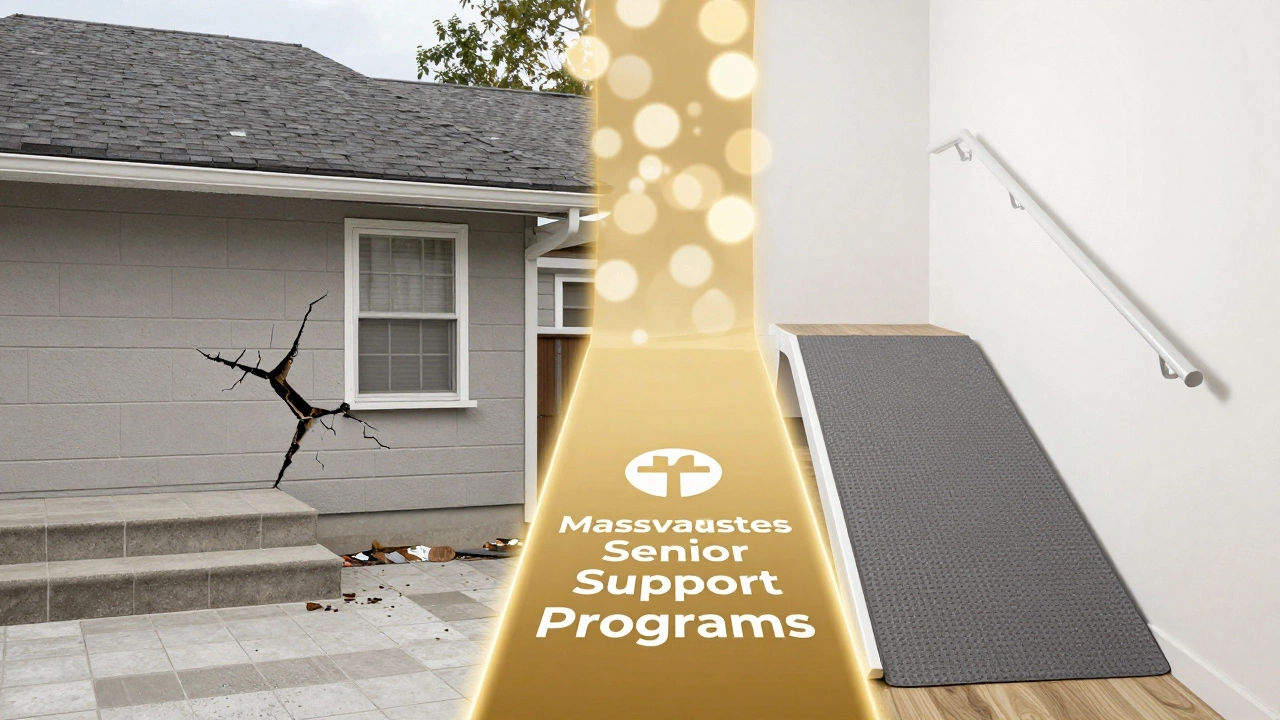
- Replacing or repairing broken steps and porches
- Fixing leaky roofs and damaged siding
- Upgrading electrical systems to prevent fire hazards
- Installing non-slip flooring or shower benches
- Replacing broken heating systems or furnaces
- Building wheelchair ramps or widening doorways
- Repairing or replacing windows to improve insulation
Some programs even help with pest control or mold remediation if it’s affecting health. One woman in Springfield, 78, had severe asthma from mold in her basement. Her local AAA connected her with a grant that paid for a full basement waterproofing job-no out-of-pocket cost.

How to Apply: Step-by-Step
Applying is straightforward. You don’t need a lawyer or a complex form. Here’s how to start:
- Find your local Area Agency on Aging. Go to mass.gov/aaa and enter your zip code.
- Call them. Most have a single intake specialist who walks you through the process. No appointment needed.
- They’ll ask for basic info: your age, income, home address, and what repairs you need.
- They’ll send someone to your home for a free safety assessment.
- If you qualify, they’ll match you with a licensed contractor and handle the paperwork.
- Repairs usually start within 4 to 8 weeks.
Some programs, like the Massachusetts Home Modification Program, even offer expedited service for seniors with mobility issues or recent hospital discharges. If you’ve been in the hospital for a fall or surgery, you can get priority.
Volunteers and Nonprofits Can Help Too
Not every repair needs a paid contractor. Many nonprofits rely on volunteers who are trained and insured. Organizations like Rebuilding Together Massachusetts send teams of skilled volunteers to do minor repairs-painting, installing smoke detectors, fixing leaky faucets, or building wheelchair ramps. They’ve helped over 2,500 seniors since 2020.
In Boston, the Senior Center Home Repair Initiative partners with local high school trade programs. Students learn carpentry and plumbing while helping seniors. One 82-year-old man in Dorchester had his porch rebuilt by a team of 16-year-olds. He still sends them cookies every Christmas.
What If You Don’t Qualify for Grants?
Not everyone will get a full grant. But that doesn’t mean you’re out of options.
Low-interest loans are available through the Massachusetts Housing Partnership. You can borrow up to $20,000 at 1% interest for home repairs, with repayment terms up to 15 years. Payments are often as low as $100 a month.
Energy assistance programs like LIHEAP can cover furnace repairs, insulation, and window replacements-even if you don’t qualify for home repair grants. These are federally funded and available to anyone over 60 with income under 60% of the state median.
Some towns offer property tax freezes or deferrals for seniors who can’t afford repairs. Call your city or town hall and ask about senior property tax relief programs. In Cambridge and Somerville, seniors can defer taxes until the home is sold.
Don’t Wait Until It’s an Emergency
Many seniors wait until they can’t climb the stairs or the heat stops working before they reach out. By then, the damage is worse, and the cost is higher. These programs work best when you act early.
A simple handrail can prevent a fall. A new roof can prevent mold. A repaired step can mean the difference between staying at home and moving to a nursing facility. And the cost of prevention? Often under $500. The cost of a fall? Often over $30,000 in medical bills and rehab.
If you or someone you know is 60 or older and living in Massachusetts, don’t assume help doesn’t exist. It does. And it’s waiting for you to pick up the phone.
Is there a program that helps seniors with home repairs in Massachusetts?
Yes. Massachusetts has multiple programs, including the state’s Home Repair Program, Area Agencies on Aging, Rebuilding Together Massachusetts, and Habitat for Humanity. These offer grants, low-interest loans, and volunteer labor for critical home repairs like ramps, handrails, roofing, and heating system fixes. Eligibility is based on age (60+), income, and home ownership.
How do I apply for home repair help as a senior in Massachusetts?
Start by contacting your local Area Agency on Aging. Find your nearest one at mass.gov/aaa by entering your zip code. Call them directly-they’ll guide you through a free home safety assessment and help you apply for funding. No complex paperwork or appointments are required. Most repairs begin within 4 to 8 weeks.
What home repairs are covered for seniors in Massachusetts?
Covered repairs focus on safety and accessibility: installing grab bars and handrails, repairing stairs and porches, fixing leaky roofs, upgrading electrical systems, replacing broken heating units, building wheelchair ramps, installing non-slip flooring, and improving window insulation. Cosmetic changes like new paint or flooring are not covered.
Do I have to own my home to qualify for repair help?
Most grant programs require you to own your home. However, if you rent, organizations like Habitat for Humanity Massachusetts can work with your landlord to make repairs if you’re a senior. You’ll need the landlord’s permission, but many are open to it, especially if the repairs increase the property’s value.
Can I get help if I’m on a fixed income but make too much for a grant?
Yes. Even if you earn too much for a grant, you may qualify for low-interest loans through the Massachusetts Housing Partnership. These loans offer up to $20,000 at just 1% interest with 15-year repayment terms. You can also apply for energy assistance programs like LIHEAP, which cover heating repairs and insulation regardless of income level.
Are there volunteer groups that help seniors with small repairs?
Yes. Rebuilding Together Massachusetts and local senior centers partner with volunteer groups, including high school trade students, to perform minor repairs like painting, installing smoke detectors, fixing leaky faucets, and building ramps-all at no cost. These services are free and often scheduled within a few weeks of request.
Next Steps: What to Do Today
If you’re a senior in Massachusetts, or you’re helping one, here’s what to do right now:
- Write down the repairs you need-no matter how small.
- Find your Area Agency on Aging using your zip code at mass.gov/aaa.
- Call them. Ask about grants, loans, and volunteer help.
- Don’t wait for a crisis. A small repair today can prevent a hospital visit tomorrow.
Staying in your home shouldn’t mean risking your safety. Massachusetts has the tools. You just need to ask.