
Environmental Services Quiz
Test Your Knowledge
Identify which environmental service category each scenario belongs to
"The river in Bristol provides drinking water for 100,000 residents."
"Wetlands in the Avon Gorge absorb floodwaters during heavy rain."
"The Bristol Botanic Gardens provide a peaceful space for mental wellness."
"Microbes in soil break down organic matter to create new nutrients."
When we talk about the environment, most people think of trees, rivers, or clean air. But behind all of that is something much bigger: a system of natural processes that keep life running. These are called environmental services. They’re not something you can buy at a store or see on a map. They’re the quiet, invisible workhorses of our planet. And they fall into four clear categories.
Provisioning Services: What Nature Gives Us
Think of provisioning services as nature’s grocery store. This is where the environment directly supplies things we use every day. Clean drinking water? That’s a provisioning service. Fresh fruits, vegetables, fish from the ocean, timber for building homes, even cotton for your T-shirt-all come from this category.
Forests don’t just look nice. They produce oxygen and filter water. Wetlands store and purify water naturally, cutting down the need for expensive treatment plants. The oceans provide over 20% of the world’s protein, mostly from wild-caught fish. In Bristol, local rivers feed into the drinking supply for tens of thousands. None of this would work without healthy ecosystems.
When we cut down forests or overfish, we’re not just losing trees or fish. We’re breaking the supply chain. The World Wildlife Fund estimates that over 3 billion people depend on marine life for their primary source of protein. That’s not a small number. It’s half the planet’s population.
Regulating Services: Nature’s Safety Net
Regulating services are the unsung heroes. They don’t show up on your dinner plate, but they keep you alive. This category includes climate control, flood prevention, disease regulation, and air and water purification.
Forests absorb carbon dioxide. A single mature tree can take in 48 pounds of CO2 per year. Wetlands act like sponges during heavy rain, soaking up floodwaters before they destroy homes and roads. In 2023, the UK’s Environment Agency found that natural floodplains reduced flood damage by £2.3 billion across England alone.
Bees and other pollinators regulate plant reproduction. Without them, 75% of flowering plants and 35% of global food crops would collapse. That includes apples, almonds, coffee, and chocolate. A 2024 study from the University of Reading showed that declining bee populations could cost the UK farming industry over £1 billion annually.
Even microbes in soil break down waste and toxins. In cities like Bristol, green spaces help reduce air pollution by capturing particulate matter. Trees along major roads can cut local air pollution by up to 40%. That’s not just nice to have-it’s life-saving.
Cultural Services: Why Nature Makes Us Feel Human
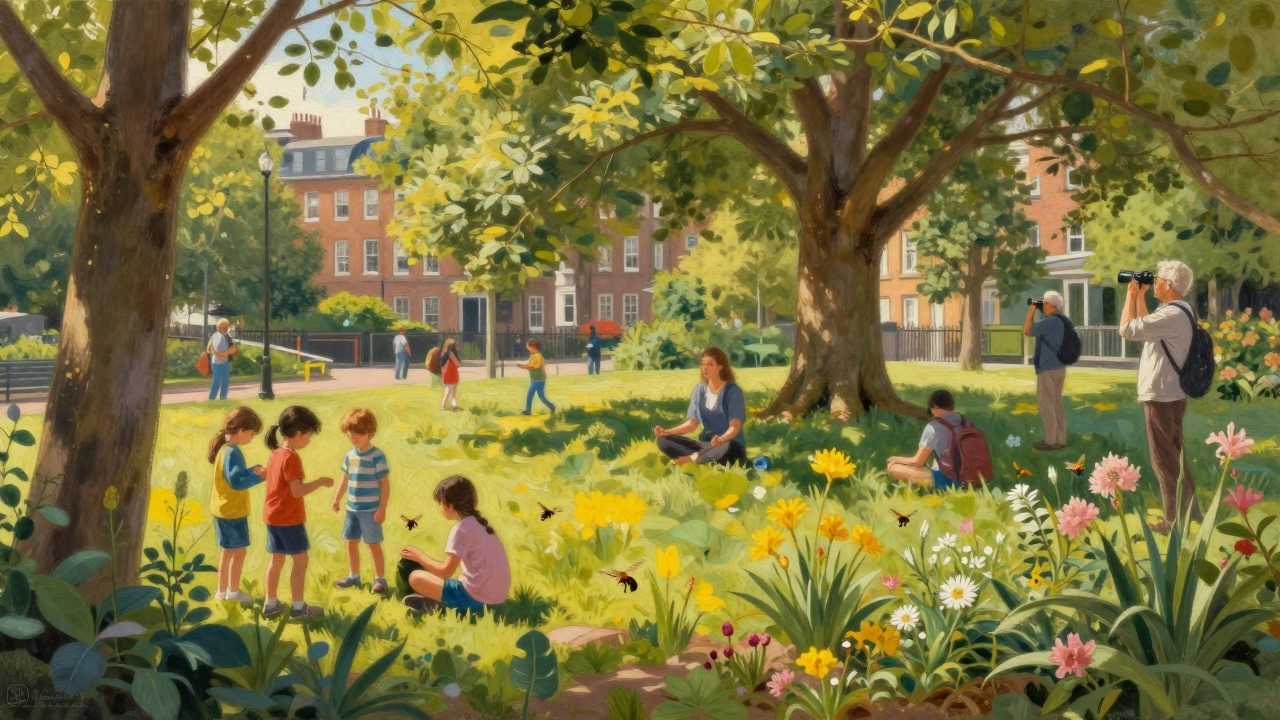
This one’s personal. Cultural services are the emotional and spiritual benefits we get from nature. They’re why you feel calm walking through a park, why you take photos of sunsets, or why you take your kids to the seaside.
Recreation is a big part of this. Hiking, birdwatching, kayaking, camping-all of these activities rely on healthy natural areas. A 2025 survey by Natural England found that 87% of adults in England visit nature at least once a month, and 68% said it improved their mental health.
There’s also education. Schools in Bristol use local woodlands for outdoor lessons on ecology, water cycles, and biodiversity. Museums and cultural heritage sites often tie into natural landmarks-like Stonehenge’s connection to ancient land use, or the Avon Gorge’s role in geological history.
Art, music, literature, and spirituality are all shaped by nature. Indigenous cultures have long tied identity and belief systems to landscapes. Even in modern cities, public art and poetry draw inspiration from rivers, trees, and wildlife. Losing access to nature doesn’t just mean losing a park-it means losing part of our collective soul.
Supporting Services: The Hidden Foundation
Supporting services are the backbone of all the others. You don’t see them. You don’t touch them. But without them, none of the other three categories would exist.
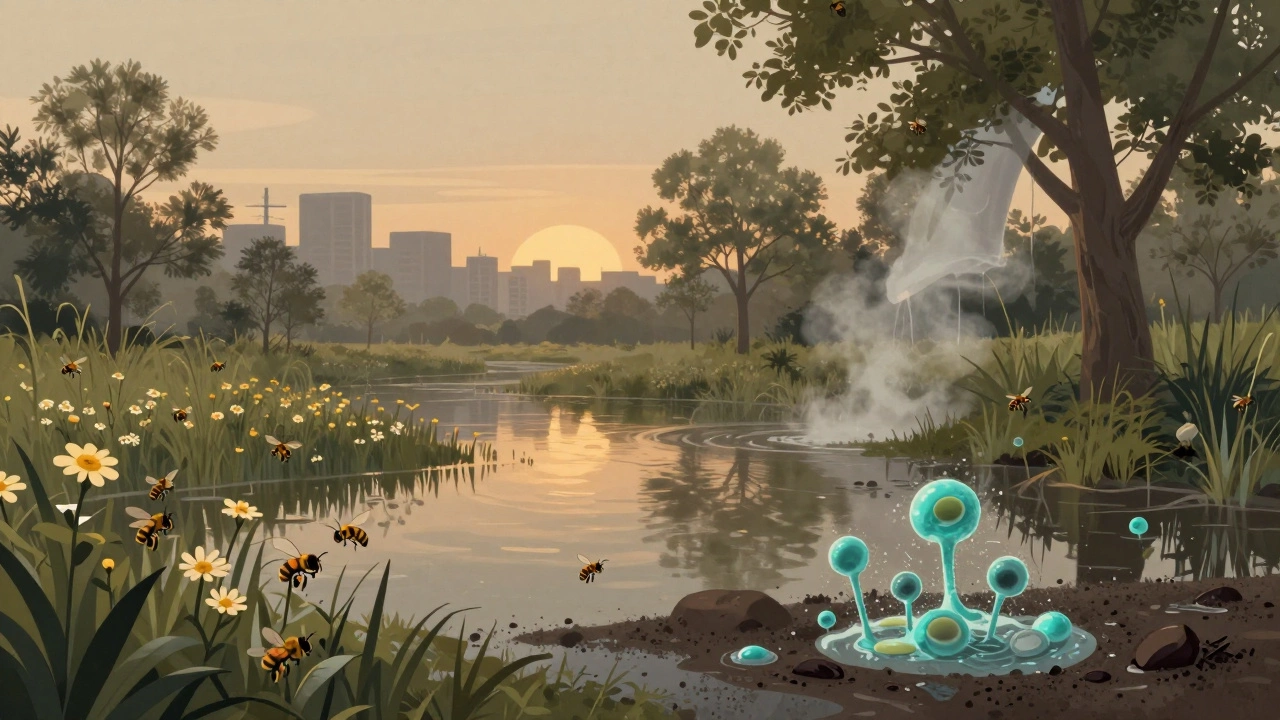
This includes soil formation, nutrient cycling, photosynthesis, and water cycling. Microbes in the soil break down dead plants and animals, turning them into nutrients that feed new growth. Pollinators move pollen between plants, enabling reproduction. Plants convert sunlight into energy, which becomes the base of every food chain.
These processes are happening right now under your feet, in your backyard, in the river nearby. Soil formation alone takes hundreds to thousands of years. Once it’s gone-through erosion, chemical runoff, or construction-it doesn’t come back quickly.
Researchers at the University of Bristol’s School of Geographical Sciences found that 30% of UK soils are now degraded due to intensive farming and urban expansion. That’s not just bad for farmers. It’s bad for water quality, carbon storage, and food security. Supporting services might be invisible, but their collapse is catastrophic.
Why This Matters Right Now
We’re not just talking about nature. We’re talking about survival. The United Nations estimates that over 60% of ecosystem services are being degraded or used unsustainably. That’s not a trend. That’s a warning.
When forests disappear, floods get worse. When wetlands are drained, water becomes more expensive to clean. When pollinators vanish, food prices rise. And when people lose access to green spaces, mental health declines.
But here’s the good news: these services can be restored. Planting native trees in urban areas. Restoring wetlands. Cutting pesticide use. Protecting marine zones. Supporting local farms that work with nature, not against it.
In Bristol, community groups have already started projects to bring back native hedgerows and create wildlife corridors. These aren’t just pretty additions. They’re infrastructure. They’re services. And they’re worth more than any concrete wall or concrete park.
What You Can Do
You don’t need to be a scientist to help. You can:
- Support local conservation groups that protect wetlands and woodlands
- Choose food from farms that avoid synthetic chemicals
- Plant native species in your garden-even a window box helps pollinators
- Advocate for green spaces in your neighborhood
- Reduce water waste; every drop saved helps natural systems
Environmental services aren’t optional. They’re not a luxury. They’re the foundation of everything we rely on. And they’re not infinite. Once they’re gone, we can’t just build a new one.
Are environmental services the same as environmental protection?
No. Environmental protection is an action we take-like planting trees or passing laws. Environmental services are the natural outcomes of healthy ecosystems. Protection helps preserve services, but the services themselves are the results of natural processes like water filtration, pollination, and soil renewal.
Can technology replace environmental services?
Not fully. We can build water filters, but they cost money, use energy, and need maintenance. We can create artificial pollinators, but they can’t match the scale and efficiency of bees. Nature’s systems are self-sustaining, adaptive, and free. Technology can help, but it can’t fully replace what ecosystems do naturally.
How do we measure the value of environmental services?
Scientists use economic valuation to estimate their worth. For example, a study in the UK estimated that urban trees provide £1.5 billion annually in benefits like air purification, cooling, and stormwater management. But many services-like spiritual well-being or cultural identity-can’t be priced. Their value is real even if it’s not on a spreadsheet.
What happens if we ignore these services?
We face rising costs, food shortages, more extreme weather, and health crises. The 2024 IPCC report warned that losing regulating services like climate control and flood mitigation could increase global disaster costs by 50% by 2040. Communities without green infrastructure suffer more during heatwaves and storms. It’s not a future problem-it’s already happening.
Do cities have environmental services too?
Yes. Urban parks, green roofs, street trees, and even community gardens provide all four categories. They cool neighborhoods, filter air, reduce noise, offer recreation, and support wildlife. Bristol’s Urban Forest Strategy aims to increase tree cover to 20% by 2035-not just for beauty, but because each tree delivers measurable environmental services.