Environmental Levels Quiz
Your Results
Score:
When you look at a forest, a river, or even your own backyard, it’s easy to think of nature as one big messy system. But nature isn’t random. It’s built in layers-like a set of Russian nesting dolls, each one fitting inside the next. These layers are called the levels of organization in the environment, and they’re how scientists make sense of life on Earth. Understanding them isn’t just for textbooks. It’s key to knowing how pollution spreads, why species disappear, and how to fix broken ecosystems. There are six clear levels, and they go from the smallest building blocks to the whole planet.
Organism: The Individual Life Form
This is where it all starts. An organism is a single living thing-a red squirrel, a mushroom, a single oak tree, or even a single bacterium in your soil. Each one has its own needs: food, water, shelter, and the ability to reproduce. In Bristol’s Avon Gorge, you’ll find individual peregrine falcons hunting for pigeons. That falcon? One organism. Simple, right? But here’s the catch: no organism lives alone. Everything it does affects and is affected by what’s around it. That’s why we need to look beyond the individual.
Population: Group of the Same Species
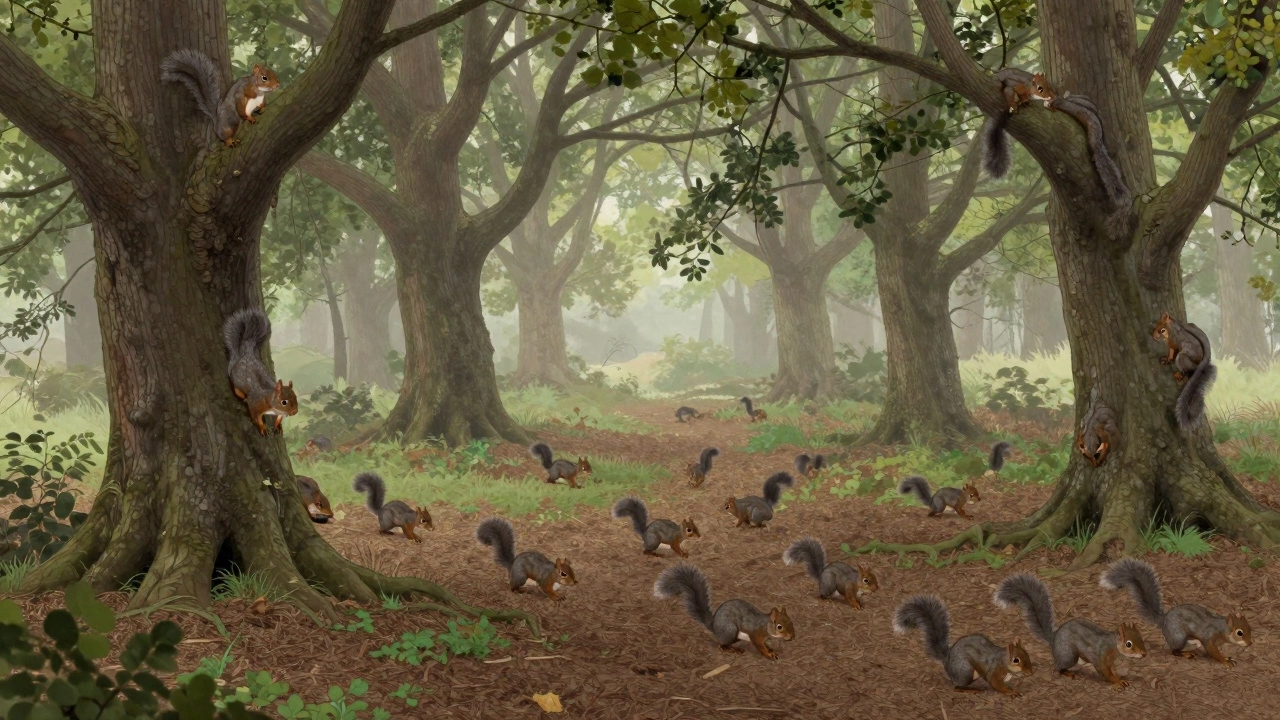
A population is a group of organisms of the same species living in the same area at the same time. Think of it like a community of identical neighbors. In the woods near Clifton, there’s a population of fallow deer-maybe 80 to 100 animals that regularly move through the same patches of forest. They all breed with each other, compete for the same food, and face the same threats, like cars on nearby roads. Population size changes all the time. A bad winter? Fewer fawns survive. A new food source? Numbers climb. Tracking populations helps conservationists know if a species is in trouble. If the deer population drops below 50, it’s a red flag.
Community: All the Different Populations Together
Now imagine you take every population in one place and throw them into the same bucket. That’s a community. It’s not just deer. It’s the foxes that hunt them, the earthworms that break down leaves, the fungi that feed on dead wood, the bees pollinating wildflowers, and the bacteria in the soil. In a healthy urban woodland like Leigh Woods, you’ve got dozens of populations interacting. Some help each other-like trees and mycorrhizal fungi exchanging nutrients. Others fight-like crows stealing eggs from robins. The balance between these relationships determines if the whole system stays stable or collapses. A community doesn’t include non-living things. That’s the next level.
Ecosystem: Living Things + Their Physical World
An ecosystem adds the non-living stuff. Soil, water, sunlight, rocks, air, temperature, rainfall-all of it. The ecosystem is the full package: the community of living things, plus the environment they live in. Take the River Avon. It’s not just the fish, frogs, and waterweeds. It’s the riverbed sediment, the dissolved oxygen levels, the pH of the water, the amount of sunlight reaching the surface, and even the pollution runoff from nearby streets. If a factory dumps chemicals into the river, it doesn’t just kill fish. It changes the water chemistry, which kills the insects, which starves the birds. That’s an ecosystem failing. Ecosystems can be tiny-a puddle after rain-or huge-the entire Amazon basin.
Biome: The Big Picture Across Continents
Now zoom out even further. A biome is a massive area with similar climate, soil, and life forms. Think deserts, tundras, rainforests, grasslands. The UK’s temperate deciduous forest biome includes forests from Bristol to Berlin. It’s defined by cold winters, warm summers, and trees that lose leaves each year. A biome isn’t one ecosystem-it’s hundreds or thousands of them, all sharing the same weather patterns and dominant life forms. A boreal forest biome spans Canada, Russia, and Scandinavia. Even though the trees and animals differ slightly from place to place, they all survive the same harsh winters. Biomes are shaped by latitude and climate, not borders. That’s why you’ll find similar plant types in Bristol and upstate New York, even though they’re 3,000 miles apart.
Biosphere: The Whole Living Planet
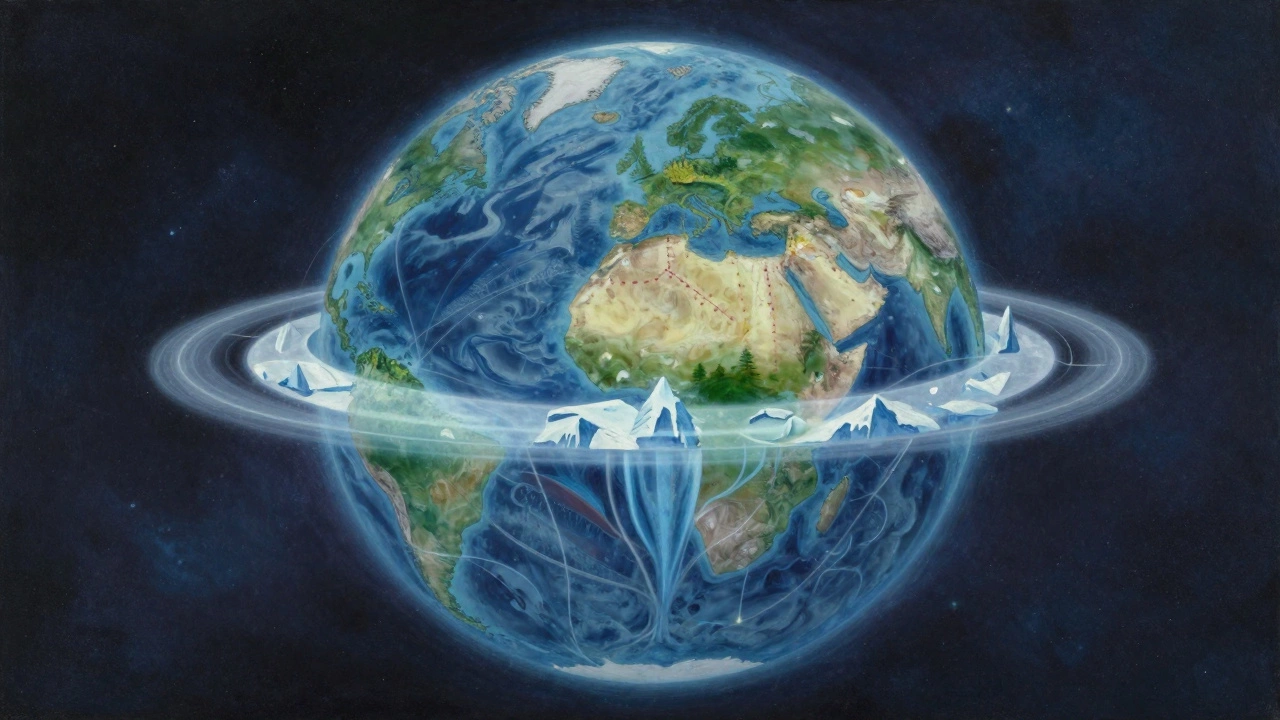
This is the top layer-the big finale. The biosphere is everything: every organism, every population, every community, every ecosystem, all across Earth. It includes the deepest ocean trenches, the highest mountain peaks, the frozen poles, and the hot deserts. It’s the thin, fragile shell of life wrapping around the planet. Even the microbes living in deep underground rocks are part of the biosphere. Human activity now affects every corner of it. Burning fossil fuels changes the atmosphere, which changes weather patterns, which melts glaciers, which raises sea levels, which floods coastal ecosystems. The biosphere doesn’t care about borders. Pollution from China affects Arctic ice. Plastic from the UK ends up in Pacific fish. You can’t fix one ecosystem without thinking about the whole biosphere.
Why This Matters
Knowing these six levels isn’t just science class trivia. It’s how you understand real-world problems. If you’re trying to save bees, you can’t just plant flowers. You need to look at the population of bees in your area, the community of plants they depend on, the soil and pesticide levels in the ecosystem, the regional climate trends in the biome, and how global warming is shrinking the biosphere’s ability to support pollinators. Environmental groups that only focus on one level-like cleaning up litter-often miss the bigger picture. The most effective efforts connect all six. A project to restore a wetland? It starts with individual plants, builds up populations of frogs and dragonflies, brings back the community of insects and birds, cleans the water and soil of the ecosystem, fits into the regional biome of temperate wetlands, and helps the biosphere store carbon and filter water.
What Happens When One Level Breaks?
Let’s say a road cuts through a forest, killing off a deer population. That’s a population collapse. But the ripple doesn’t stop there. Fewer deer means more undergrowth, which changes the soil, which affects tree growth-that’s the ecosystem. Predators like foxes starve-that’s the community. If this happens in enough places, the whole temperate forest biome starts to shrink. And when biomes shrink, the biosphere loses resilience. Climate change doesn’t attack one level. It attacks them all at once. That’s why we need to think in layers, not single fixes.
| Level | Definition | Example in Bristol |
|---|---|---|
| Organism | A single living thing | A single grey squirrel in Clifton Woods |
| Population | A group of the same species in one area | 120 grey squirrels living in the same woodland |
| Community | All populations living and interacting together | Squirrels, birds, fungi, insects, and plants in Leigh Woods |
| Ecosystem | Community + physical environment | Leigh Woods + soil, rainfall, air quality, sunlight |
| Biome | Large region with similar climate and life | Temperate deciduous forest (covers UK, eastern US, parts of Europe) |
| Biosphere | All living things on Earth | All life from the Avon River to the Antarctic ice |
What You Can Do
You don’t need to be a scientist to help. Start by noticing which level you’re affecting. If you plant native flowers in your garden, you’re helping the organism level-by giving bees a meal. If you join a local river clean-up, you’re protecting the ecosystem. If you support policies that protect woodlands, you’re defending the biome. And if you reduce your carbon footprint, you’re helping the biosphere. Each action, no matter how small, ripples upward. The environment doesn’t work in silos. Neither should we.
Are the six levels the same everywhere on Earth?
Yes, the six levels are universal. Every ecosystem, whether it’s in the Amazon, the Arctic, or your backyard, follows this same structure. What changes is the specific organisms, climate, and scale-not the levels themselves. A desert ecosystem still has organisms, populations, communities, ecosystems, biomes, and a biosphere. The difference is in the details: cacti instead of oaks, scorpions instead of foxes.
Can one organism belong to more than one population?
No. An organism belongs to exactly one population-defined by species and location. A fox living in Clifton Woods is part of the Clifton Woods fox population. If it moves to Ashton Court, it joins a new population, even if it’s the same species. Populations are tied to specific areas, not just species.
Is a city an ecosystem?
Absolutely. A city is an urban ecosystem. It has organisms (people, rats, pigeons, trees), populations (the human population, the pigeon population), a community (all living things interacting), and a physical environment (buildings, roads, air pollution, rainwater drainage). Urban ecologists study cities the same way they study forests. The only difference? Concrete replaces soil, and traffic noise replaces bird song.
Why isn’t the cell level included in these six?
The six levels focus on ecological organization-not biological structure. Cells are part of how an organism works internally. Ecology looks at how organisms interact with each other and their surroundings. So while a cell is a building block of life, it’s not an ecological level. Ecologists care about how squirrels interact, not how their mitochondria produce energy.
Do humans fit into these levels?
Yes, humans are part of all six levels. Each person is an organism. The 460,000 people in Bristol make up a human population. That population interacts with pets, pests, plants, and microbes-forming a community. Our buildings, sewage, and air pollution create an urban ecosystem. We live in the temperate biome. And our collective impact on climate, oceans, and forests shapes the global biosphere. Humans aren’t outside nature-we’re one of its most powerful components.