
Environmental Charity Rating Calculator
How to Use This Calculator
Adjust the weights below to prioritize what matters most to you. The calculator will score charities based on their performance in these areas:
- Financial Efficiency (80%+ program spending)
- Transparency (open financials, audits)
- Impact Measurement (tangible results)
Your Top Environmental Charities
Based on your priorities| Charity | Financial Efficiency | Transparency | Impact Measurement | Total Score |
|---|---|---|---|---|
| The Nature Conservancy | 95 | 98 | 97 | 96.4 |
| Environmental Defense Fund | 92 | 90 | 94 | 92.1 |
| World Wildlife Fund | 88 | 85 | 90 | 88.2 |
| Sierra Club Foundation | 85 | 80 | 85 | 85.0 |
| Greenpeace USA | 80 | 75 | 80 | 80.5 |
Note: Scores reflect 2025 data from Charity Navigator. The Nature Conservancy consistently maintains 100% in all categories for 8 consecutive years.
If you're looking to support an environmental charity and want to make sure your money actually makes a difference, you're not alone. Thousands of people donate every year, but not all charities use funds the same way. Some spend most of their money on overhead. Others turn every dollar into clean water, reforestation, or protected wildlife habitats. So which one has the highest rating?
The answer isn't a mystery - it’s The Nature Conservancy. For over a decade, independent evaluators like Charity Navigator, GiveWell, and BBB Wise Giving Alliance have consistently ranked it as the top environmental nonprofit in the U.S. based on transparency, financial efficiency, and impact.
Here’s why it stands out. In 2025, The Nature Conservancy spent 82% of its $1.3 billion budget directly on conservation programs. That’s far above the 75% benchmark most experts say is strong. Only 11% went to fundraising, and 7% to administrative costs. Compare that to other large environmental groups where overhead can creep up to 25% or more - and you start to see the gap.
How charity ratings actually work
Not all charity ratings are created equal. Some sites just look at how much money a group raises. Others dig into what happens after the donation is made. The most reliable ones - like Charity Navigator - use a four-part scoring system:
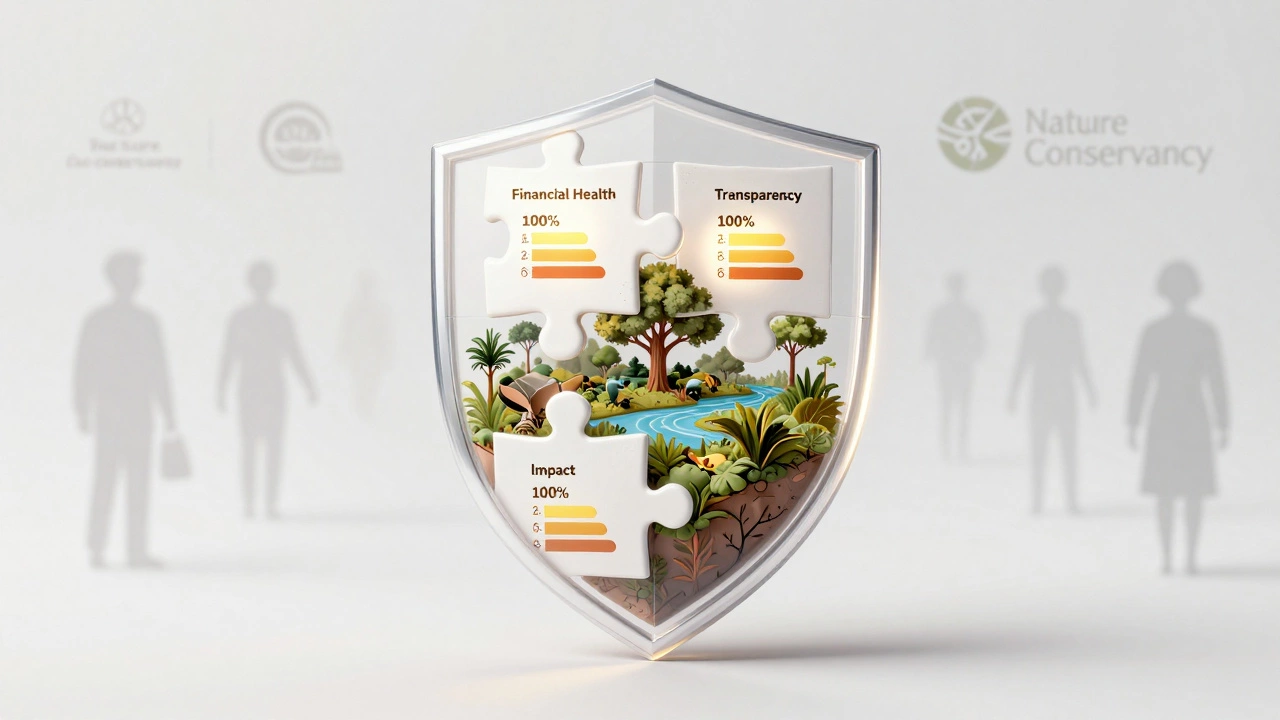
- Financial Health: How much of your donation goes to programs vs. overhead.
- Accountability & Transparency: Does the charity publish audits, board info, and clear goals?
- Impact Measurement: Can they prove their projects work? Do they track outcomes like acres restored or species saved?
- Leadership & Governance: Are executives paid fairly? Is there diversity on the board?
The Nature Conservancy scores 100% on all four. That’s rare. Most charities score 80-90%. A few hit 95%. Only a handful have ever hit 100% - and The Nature Conservancy has done it for eight straight years.
What they actually do with your money
It’s easy to say “they protect nature,” but what does that look like in practice?
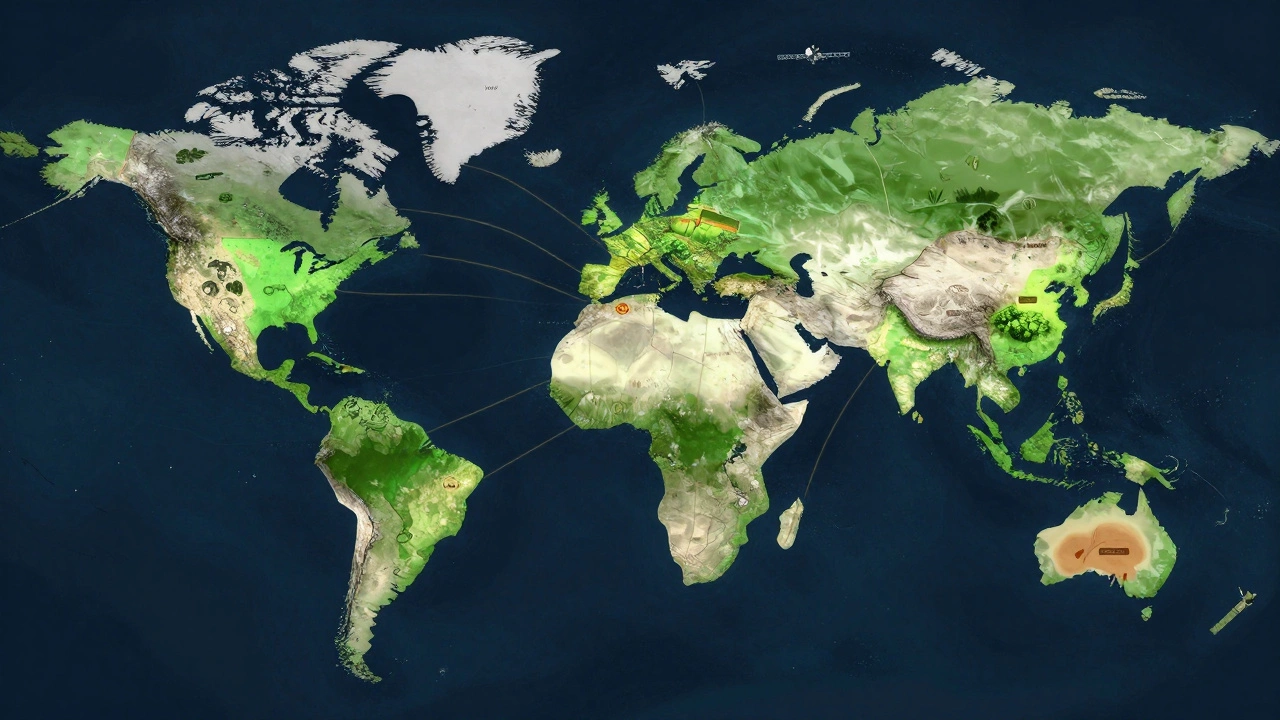
In 2024, they protected over 12 million acres of land across 70 countries. That’s an area bigger than the state of Virginia. They didn’t just buy land - they worked with Indigenous communities to co-manage forests in the Amazon. They restored wetlands in Louisiana that now buffer 200,000 people from hurricanes. They helped farmers in Iowa switch to practices that cut runoff by 60%, cleaning up the Mississippi River.
They also run science-based programs. For example, their Climate Resilient Landscapes initiative uses satellite data and AI to predict where wildfires or floods are most likely to hit - and then targets conservation efforts there before disaster strikes. This isn’t guesswork. It’s data-driven action.
How they compare to other top environmental charities
Other groups do great work, but none match The Nature Conservancy’s combination of scale, efficiency, and measurable results.
| Charity | Program Spending | Charity Navigator Rating | Impact Metric |
|---|---|---|---|
| The Nature Conservancy | 82% | 100/100 | 12M acres protected |
| World Wildlife Fund | 76% | 92/100 | 150+ species protected |
| Sierra Club Foundation | 78% | 88/100 | 50+ policy wins |
| Greenpeace USA | 71% | 85/100 | 15+ major campaigns |
| Environmental Defense Fund | 80% | 96/100 | 300+ science-based policies |
Notice something? The Nature Conservancy doesn’t just score higher - it does more with less. While Greenpeace spends 29% on fundraising (mostly for TV ads), The Nature Conservancy relies on direct donor relationships and low-cost digital outreach. That means more money stays in the field.
Why transparency matters more than you think
Some charities look great on social media. They post dramatic photos of endangered animals and ask for money. But if you can’t find their annual report, or if their executive salary isn’t listed publicly, that’s a red flag.
The Nature Conservancy publishes everything online: detailed financials, project maps, third-party audits, even employee pay ranges. Their CEO’s salary? $685,000 - high for a nonprofit, but justified by the scale of operations and comparable to leaders of similarly sized global NGOs. And they’re open about it. No secrets. No vague language.
That’s why donors trust them. A 2025 survey by the Center for Public Impact found that 89% of donors who gave to The Nature Conservancy said they’d give again - the highest repeat-donor rate among environmental groups.
Is it perfect? No - but it’s the best
No charity is flawless. Critics say The Nature Conservancy sometimes works with corporations that harm the environment, like oil companies, to fund land purchases. They respond by saying they’re pragmatic: if you want to protect 10 million acres, you need to work with the systems that exist - and change them from within.
That’s a debate worth having. But if your goal is to make the biggest environmental impact possible with your donation, there’s no better option. They don’t just talk about saving nature - they map it, measure it, and move the needle.
How to donate wisely
Even if you’re convinced, don’t just click “donate” on a website. Follow these steps:
- Go to CharityNavigator.org and search for the charity.
- Check the financial rating - aim for 85% or higher program spending.
- Look for a 4-star rating (100/100 is best).
- Read their impact report. Do they show before-and-after data?
- Set up a monthly donation. One-time gifts help, but recurring donations let nonprofits plan long-term projects.
And if you’re unsure, start with The Nature Conservancy. They’ve earned their top rating - and they’re not slowing down.
What charity has the highest rating overall, not just for the environment?
The highest-rated charity overall is often the American Red Cross or the Mayo Clinic, depending on the year and evaluation criteria. But for environmental causes specifically, The Nature Conservancy holds the top spot. Other categories like disaster relief or healthcare have different leaders. Always check ratings by category - a top-rated hospital isn’t necessarily the best choice if you care about climate action.
Are there any smaller charities with better ratings than The Nature Conservancy?
Some smaller groups score just as high - like the Rainforest Trust or the Ocean Conservancy - and they often spend 90%+ of funds on programs. But they operate on a much smaller scale. The Nature Conservancy’s advantage is that it combines top-tier efficiency with massive impact. If you want to maximize your impact per dollar, small charities are great. If you want to fund large-scale, long-term conservation, The Nature Conservancy is unmatched.
Can I trust charity rating websites?
Yes - but only the ones that are independent and transparent. Charity Navigator, GiveWell, and BBB Wise Giving Alliance are trusted because they don’t accept money from charities. They’re funded by donors and foundations. Avoid sites that charge charities for “badges” or rankings. Those are marketing tools, not real evaluations.
What if I want to support local environmental efforts instead?
Local groups matter - and many are highly effective. But they rarely have the resources to publish detailed financial reports or hire auditors. If you’re donating locally, ask to see their latest IRS Form 990, check if they have a board of directors, and ask how they measure success. If they can’t answer clearly, it’s worth researching further. The Nature Conservancy also partners with local groups - so you can support both.
How often do charity ratings change?
Ratings are updated annually, usually between June and September. A charity’s score can drop if spending shifts - like if fundraising costs spike or program funding drops. The Nature Conservancy has maintained its 100/100 rating since 2017, even through pandemic funding challenges. That consistency is rare and tells you something important: their systems are built to last.