
After-School Club Skill Builder Calculator
How to Use This Tool
Calculate your child's recommended after-school club hours based on their current skill level and desired development areas. This tool uses research-backed data from the article to provide personalized recommendations.
Your Child's Skill Development Plan
After-school clubs aren’t just a way to keep kids busy until dinner. They’re one of the most powerful tools for helping children grow into confident, capable adults. If you’ve ever wondered why schools and communities invest so much time and money into these programs, the answer isn’t just about supervision-it’s about transformation.
They Fill the Gaps That School Doesn’t
School teaches math, reading, and science. But it doesn’t always teach how to work in a team, manage frustration, or lead a group. That’s where after-school clubs come in. A robotics club doesn’t just build robots-it builds problem-solving skills. A drama club doesn’t just put on plays-it builds public speaking confidence. A chess club doesn’t just teach moves-it teaches patience and strategy.
Think about it: in a typical classroom, there are 25 kids and one teacher. There’s little room for personal growth outside the curriculum. After-school clubs, on the other hand, often have smaller groups, more hands-on time, and mentors who care more about the child than the grade. A kid who struggles to speak up in class might find their voice leading a debate team. A child who feels invisible in math class might become the star of the coding club.
They Give Kids a Sense of Belonging
Loneliness isn’t just an adult problem. A 2024 study from the Child Development Institute found that 42% of middle school students reported feeling isolated after school hours. That’s not normal. And it’s not just about being alone-it’s about not having a group that gets you.
After-school clubs create communities. Whether it’s a girl who finally finds her people in the art club, or a boy who connects over shared struggles in a mentorship circle, these spaces offer belonging. And belonging changes everything. Kids who feel connected to a group are 60% more likely to stay engaged in school, according to data from the National AfterSchool Association.
It’s not about being popular. It’s about being seen. In a club, a kid isn’t just another face in the hallway. They’re a team member, a contributor, a leader.
They Build Skills That Colleges and Employers Want
Colleges don’t just look at GPAs anymore. They want students who’ve done something beyond the classroom. Employers don’t just hire people who know how to write code-they hire people who can collaborate, adapt, and lead.
After-school clubs are where those skills are practiced every day. A student who runs a food drive for their community club learns project management. A kid who organizes a school talent show learns logistics, budgeting, and conflict resolution. These aren’t buzzwords-they’re real experiences that show up on applications and interviews.
And here’s the thing: these skills don’t come from textbooks. They come from doing. From failing at a science project and trying again. From convincing a shy teammate to perform. From staying late to fix a broken robot. That’s the kind of learning that sticks.
They Keep Kids Safe and Out of Trouble
The hours between 3 p.m. and 6 p.m. are the peak time for juvenile crime, according to the Office of Juvenile Justice and Delinquency Prevention. That’s when kids are out of school, parents are still at work, and there’s nothing structured to do.
After-school clubs change that. They turn idle time into productive time. A kid who’s building a model rocket with their club isn’t scrolling through social media or hanging out where they shouldn’t be. They’re learning. They’re engaged. They’re growing.
This isn’t just theory. A 2023 evaluation of 12 urban school districts found that students in consistent after-school programs were 37% less likely to be involved in petty crime or vandalism. That’s not a small number. That’s a life path changed.
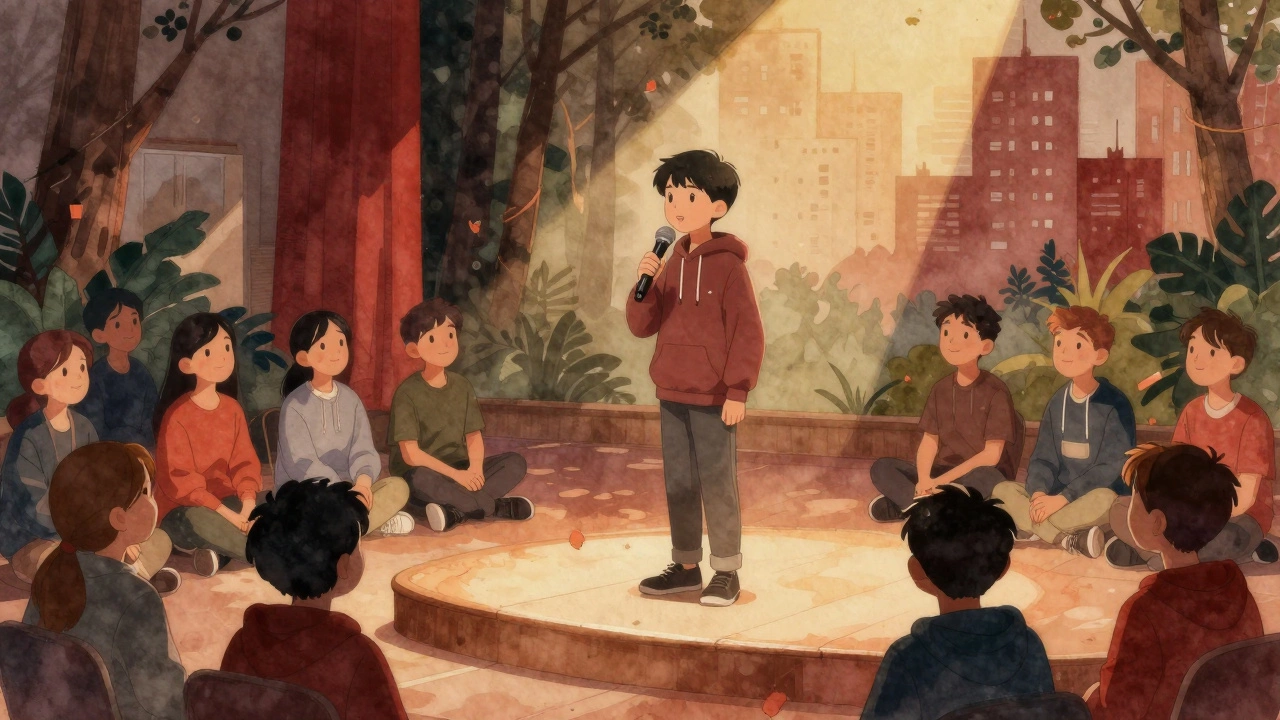
They Help Kids Discover Their Passions
Most kids don’t know what they want to be when they grow up. And that’s okay. But they need space to try things out.
A club is the perfect testing ground. What if a kid tries archery and realizes they love focus and precision? What if a girl joins the gardening club and discovers she loves plants and science? What if a boy who never liked writing ends up writing poetry for the spoken word team?
These aren’t just hobbies. They’re doorways. A passion found in a club can lead to a career, a college major, or a lifelong source of joy. And the best part? No one’s grading it. No one’s telling them they’re not good enough. They’re just doing it-and loving it.
They Support Families, Too
Let’s be honest: working parents are tired. Juggling work, dinner, homework, and bedtime is exhausting. After-school clubs aren’t just good for kids-they’re a lifeline for families.
They provide safe, affordable care. Many clubs cost less than $10 a month. Some are free. They offer homework help, snacks, and transportation. That’s not a luxury-it’s a necessity for working families.
And when kids come home excited about their club, it changes the whole family dynamic. Instead of “How was school?” followed by silence, parents hear “I won the debate!” or “We planted 50 tomatoes today!” That’s connection. That’s joy.
They’re Not Just for “High Achievers”
Some people think after-school clubs are only for kids who are already good at something. That’s not true. In fact, the kids who need them the most are often the ones who don’t sign up.
Clubs that work best are the ones that welcome everyone. The kid who gets Ds in math? Maybe they’re brilliant at fixing things. The kid who’s quiet? Maybe they’re a natural listener and mediator. The kid who’s always in trouble? Maybe they just need a place to channel their energy.
The best clubs don’t pick winners. They build environments where everyone can find their place. That’s the real magic.
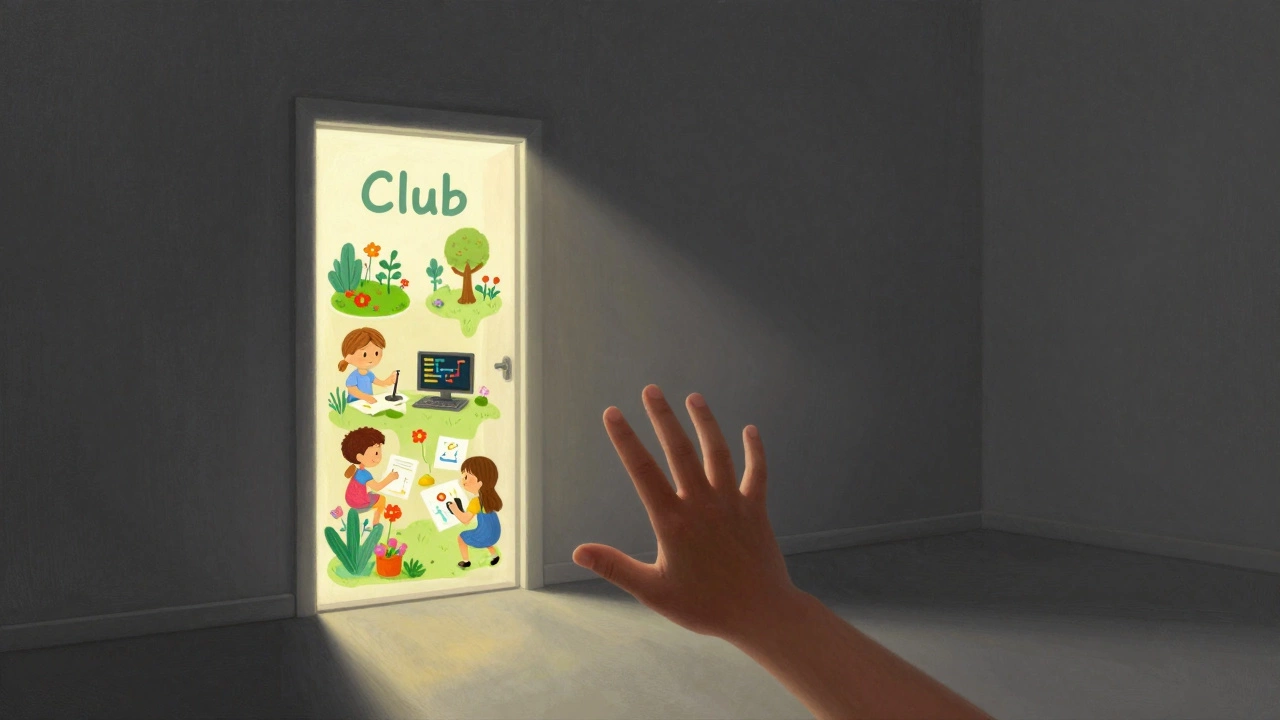
What Makes a Good After-School Club?
Not all clubs are created equal. A good one has:
- Consistent time and location-kids need to know when and where to show up
- Trained, caring adults-not just volunteers who show up late
- Low or no cost-if it’s too expensive, it’s not accessible
- Student input-kids should help choose activities
- Clear goals-not just “have fun,” but “learn to code,” “build a garden,” “write a play”
Ask your child: “What do you like most about your club?” If they say “I get to be with my friends,” that’s good. But if they say “I learned how to fix a bike” or “I gave a speech for the first time,” that’s better.
Where to Find One
Start with your school. Most public schools offer at least a few clubs. If not, check your local library, community center, YMCA, or Boys & Girls Club. Many nonprofits run free after-school programs. Look for organizations that focus on youth development, not just babysitting.
Don’t wait for your child to ask. Talk to them. Ask what they’re curious about. Then find a club that matches it. Even if it’s something weird-like stop-motion animation or urban gardening-that’s okay. Passion doesn’t need to make sense to everyone.
Are after-school clubs only for academic subjects?
No. While some clubs focus on math or science, many are about creativity, sports, social skills, or community service. A cooking club, a dance team, or a peer counseling circle are just as valuable as a robotics club. The goal isn’t to turn kids into scholars-it’s to help them grow into well-rounded people.
What if my child doesn’t want to join anything?
That’s common, especially for kids who’ve had bad experiences or feel overwhelmed. Don’t force it. Start small. Try a one-time workshop or a free trial session. Sometimes all it takes is one positive experience to change their mind. Also, ask them what they’d like to do-not what you think they should do. Their interests might surprise you.
Do after-school clubs cost a lot of money?
Not necessarily. Many public schools, libraries, and nonprofits offer free or low-cost clubs. Some even provide free transportation and meals. If cost is a barrier, ask about scholarships or sliding-scale fees. The goal is access, not profit.
Can after-school clubs help kids with learning differences?
Absolutely. Kids with ADHD, dyslexia, or anxiety often thrive in smaller, less structured settings. A club that focuses on hands-on learning, movement, or creativity can give them a chance to shine where the classroom didn’t. Many clubs adapt activities to fit different needs-just ask.
Is it too late to start a club in high school?
Never too late. High school clubs help with college applications, build leadership skills, and give teens a sense of purpose. Even joining a club in 11th grade can change a student’s trajectory. It’s not about how long they’ve been in it-it’s about what they gain from it.
What Happens When Kids Don’t Have Clubs?
It’s easy to overlook what’s missing. But when kids don’t have after-school clubs, they lose more than just an activity. They lose structure. They lose mentors. They lose chances to discover who they are.
Without clubs, kids are more likely to feel disconnected, bored, or invisible. They’re more likely to spend hours on screens without purpose. They’re more likely to fall behind in social skills. And for kids from low-income families, the gap widens even more.
After-school clubs don’t fix everything. But they fix a lot. They give kids a place to belong, to grow, to be more than their grades or their zip code.
So why do after-school clubs? Because kids need more than a classroom. They need a community. They need a chance to try. They need to know someone believes in them-even if it’s just the person running the art club after school.