
Charitable Trust Structure & Impact Estimator
| Trust Type | Annual Payout (£) | End-of-Year Balance (£) | Best For |
|---|---|---|---|
| Enter parameters and click Calculate | |||
Imagine you have a specific goal for your money. Maybe you want to fund scholarships in Bristol, support local food banks, or preserve a historic building. You don't just want to give the cash away; you want it to stay dedicated to that purpose forever, protected from market crashes or personal financial troubles. That is exactly what a charitable trust is a legal arrangement where assets are held by trustees specifically for the benefit of a charitable cause rather than individual beneficiaries. It is not just a donation. It is a structured tool that separates the ownership of assets from their control, ensuring they serve a public good indefinitely.
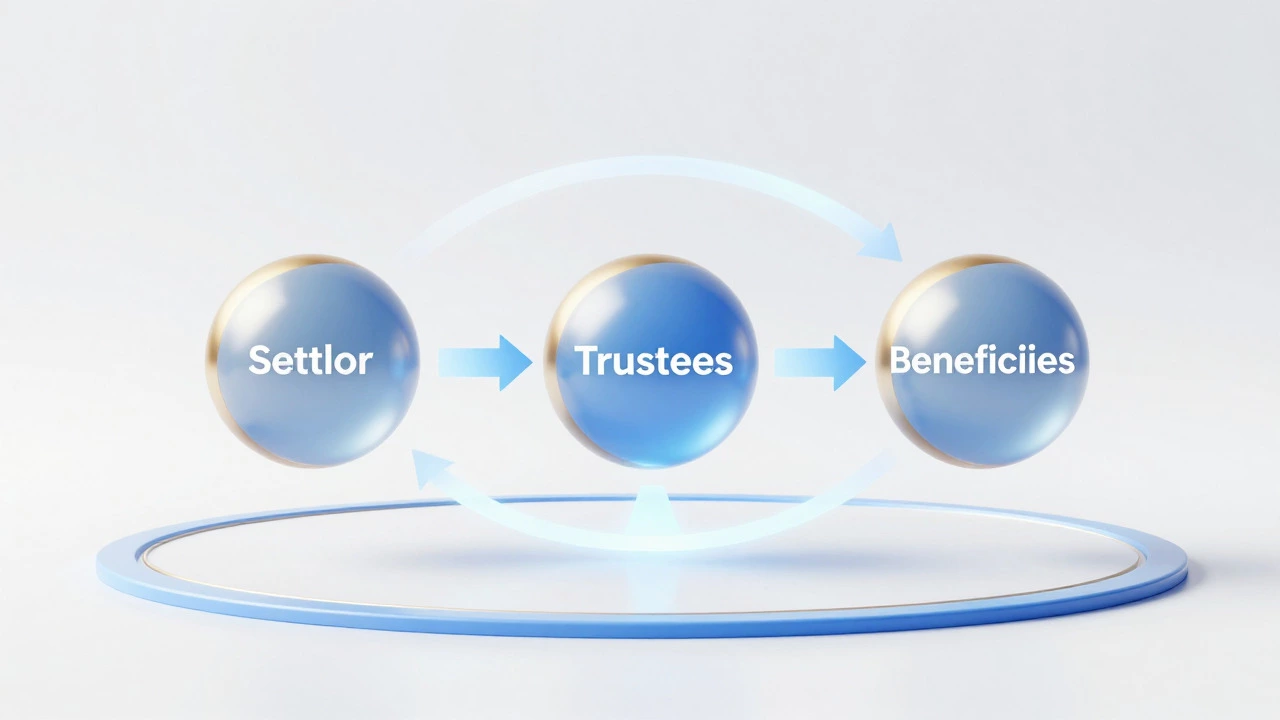
For many people, the term "trust" sounds intimidating, like something only wealthy lawyers understand. But at its core, it is simple: one person (the settlor) gives assets to another (the trustee), who manages them for a third party (the beneficiary). In a charitable context, the "beneficiary" is the cause itself. This structure provides stability, tax efficiency, and accountability that a standard bank account or direct donation cannot match.
The Core Mechanics: Who Does What?
To understand how this works, you need to know the three key players involved in any trust arrangement. In a Charitable Trust, these roles are distinct and legally defined.
- The Settlor: This is the person creating the trust. They provide the initial funds or assets. Once the trust is established, the settlor usually has no further control over how the money is spent, though they can set guidelines in the trust deed.
- The Trustees: These are the individuals or organizations responsible for managing the trust's assets. They have a legal duty to act in the best interest of the charitable purpose. In the UK, trustees must be registered with the Charity Commission if the trust meets certain thresholds.
- The Beneficiaries: Unlike private trusts where you might name your children as beneficiaries, charitable trusts do not have specific human beneficiaries. Instead, the "benefit" goes to the public or a specific community group, such as students, the elderly, or environmental conservation efforts.
This separation is crucial. If you simply donate £10,000 to a charity, that money becomes part of their general operating budget. They can use it for rent, salaries, or other expenses. In a charitable trust, the principal amount often remains intact, and only the income generated from investments is used for the charitable activities. This ensures long-term sustainability.
Why Choose a Trust Over a Direct Donation?
You might wonder why you would go through the effort of setting up a trust instead of just writing a check to your favorite non-profit. There are several strategic reasons for this choice, particularly regarding Estate Planning and long-term wealth management strategies designed to minimize tax liability and ensure asset continuity.
- Asset Protection: Assets held in a trust are generally protected from the settlor's personal creditors. If you face bankruptcy or legal disputes, the trust assets remain safe for the charitable cause.
- Tax Efficiency: In the UK, charitable trusts can enjoy significant tax advantages. For example, income earned by the trust may be exempt from Corporation Tax if it is applied wholly to charitable purposes. Additionally, gifts into the trust may qualify for Gift Aid, allowing charities to reclaim basic rate tax on donations.
- Specific Control: You can dictate exactly how the funds are used. Do you want the money invested ethically? Do you want it distributed annually or every five years? The trust deed allows you to write these rules down, binding future trustees to your vision.
- Perpetuity: Charitable trusts can last forever. This is known as perpetuity. While private trusts often have a lifespan limit, charitable trusts are exempt from the Rule Against Perpetuities, meaning your legacy can outlive generations.
However, there is a trade-off. Flexibility is reduced. If the economic landscape changes dramatically, trustees may find themselves bound by strict investment rules that no longer make sense. This requires careful drafting at the outset.
Types of Charitable Trusts in the UK
Not all charitable trusts look the same. Depending on your goals, you might choose between different structures. The most common distinction is between discretionary and cumulative trusts, but in the charitable sector, we often categorize them by their primary function.
| Type | Primary Purpose | Distribution Style | Best For |
|---|---|---|---|
| Spending Trust | Maximizing immediate impact | Requires spending a set percentage of assets annually | Urgent needs like disaster relief or youth programs |
| Endowment Trust | Preserving capital for the future | Only income is spent; principal stays intact | Scholarships, research grants, permanent facilities |
| Unitrust | Balancing growth and distribution | Fixed percentage of total asset value distributed yearly | Long-term projects requiring stable funding |
An Endowment Trust is a type of charitable trust designed to preserve the original corpus of assets while using only the investment income for charitable purposes. This is popular for educational institutions. Think of it as planting a tree whose fruit you eat, but never cut down the trunk. A Spending Trust, on the other hand, prioritizes current needs. It might require trustees to spend down the entire fund over a set period, say ten years. This is less common for large institutional charities but useful for specific campaign-based fundraising.
Setting Up Your Trust: The Step-by-Step Process
Creating a charitable trust is not an overnight task, but it is manageable if you follow a logical sequence. Here is what the process typically looks like in the UK context.
- Define Your Purpose: Be specific. "Helping people" is too vague. "Providing meals to homeless individuals in Bristol city center" is clear. The purpose must be recognized as charitable under the Charities Act 2011. This includes relief of poverty, advancement of education, advancement of religion, and other purposes beneficial to the community.
- Choose Your Trustees: Select individuals who are trustworthy, financially literate, and aligned with your values. You need at least two trustees. Avoid relying solely on family members if possible, to ensure objectivity.
- Draft the Trust Deed: This is the legal document that governs the trust. It outlines the powers of the trustees, the investment policy, and the distribution rules. A solicitor specializing in UK Charity Law is the body of laws governing the establishment, operation, and regulation of charitable organizations in the United Kingdom should draft this to avoid pitfalls.
- Register with the Charity Commission: If the trust's annual income exceeds £5,000, it must register with the Charity Commission for England and Wales. Registration brings regulatory oversight but also public credibility and tax exemptions.
- Fund the Trust: Transfer the initial assets. This could be cash, stocks, bonds, or even real estate. Transferring illiquid assets like property can trigger Capital Gains Tax, so professional advice is critical here.
One common mistake is failing to define the investment strategy clearly. If the deed says "invest wisely," trustees have too much discretion. If it says "only invest in government bonds," they might miss out on growth. A balanced approach, perhaps specifying a target asset allocation range, offers the best of both worlds.
Tax Implications and Financial Benefits
Tax is often the deciding factor for high-net-worth individuals considering a charitable trust. In the UK, the system is designed to encourage philanthropy, but the details matter.
First, consider Gift Aid, which is a scheme that allows charities to claim back basic rate tax paid on donations made by UK taxpayers. When you transfer assets to a charitable trust, you may be able to claim Gift Aid on the value of the gift, provided you are a UK taxpayer. This effectively increases the value of your donation without costing you extra.
Second, look at Income Tax. If the trust generates income from investments, that income is generally exempt from Income Tax if it is applied wholly to charitable purposes. However, if the trust holds non-charitable assets or incurs debts, some tax may apply. This is where the complexity lies. Professional accounting advice is not optional; it is essential to maximize these benefits.
Finally, think about inheritance. By placing assets in a trust during your lifetime, you remove them from your estate for Inheritance Tax (IHT) purposes. After seven years, the gift is generally outside your estate, saving potentially 40% in IHT. This makes charitable trusts a powerful tool for both philanthropy and estate optimization.

Common Pitfalls to Avoid
Even with the best intentions, charitable trusts can fail if not managed correctly. Here are the traps to watch out for.
- Vague Purposes: If the purpose is too broad, trustees may struggle to justify expenditures. Keep the language precise.
- Inactive Trustees: Trustees have a legal duty to monitor the trust. If they do nothing, they can be held personally liable for losses. Ensure your chosen trustees are committed and capable.
- Ignoring Regulatory Changes: Laws change. The Charity Commission updates its guidance regularly. Trustees must stay informed to remain compliant.
- Over-Complicating the Deed: Too many restrictions can paralyze the trust. Allow for reasonable flexibility in how funds are deployed.
For instance, if you restrict investments to only UK blue-chip stocks, you might suffer significant losses during a market downturn. A diversified portfolio, including international equities and bonds, is usually safer. Discuss this with your financial advisor before finalizing the deed.
Maintenance and Governance
Setting up the trust is just the beginning. Ongoing governance is vital. Trustees should meet at least once a year to review performance, approve distributions, and file annual returns with the Charity Commission. These reports are public, so transparency is key. Donors and the public can see how the money is being used, which builds trust and encourages future support.
Regular audits are also required for larger trusts. An independent auditor checks the accounts to ensure everything is above board. This external scrutiny protects the trustees and the beneficiaries alike. It is a safeguard against misuse or mismanagement.
As time passes, you may find that the original purpose needs adjustment. Perhaps the community need has changed. The trust deed should include a mechanism for amending the terms, usually requiring approval from the Charity Commission. This flexibility ensures the trust remains relevant and effective.
Can I change my mind after setting up a charitable trust?
It is difficult but possible. Since the assets are no longer yours, you cannot simply take them back. To change the purpose or terminate the trust, you usually need the consent of the Charity Commission. This process involves demonstrating that the change aligns with the original intent or serves a greater charitable good. It is not a casual decision, so plan carefully before signing the deed.
Do I need a lawyer to create a charitable trust?
Yes, highly recommended. While you can technically write a simple deed yourself, errors in legal wording can invalidate the trust or create tax liabilities. A solicitor experienced in charity law will ensure the document complies with the Charities Act 2011 and optimizes tax positions. The cost of legal advice is small compared to the potential risks of a poorly drafted trust.
What happens if the trustees die or resign?
The trust does not end when a trustee dies. New trustees must be appointed according to the rules in the trust deed. Usually, the remaining trustees have the power to appoint new ones. If no trustees are left, the Charity Commission can step in to appoint someone. This continuity is one of the strengths of the trust structure.
Is a charitable trust better than leaving money in my will?
They serve different purposes. A will takes effect only after death, while a trust can start immediately. A trust offers more control over how the money is managed during your lifetime and provides asset protection. However, a will is simpler and cheaper to set up. If you want immediate impact and complex management, a trust is better. If you just want to leave a lump sum, a will might suffice.
Can I use a charitable trust for business purposes?
Generally, no. The purpose must be charitable as defined by law. If you use the trust to benefit your own business or family exclusively, it may lose its charitable status and face tax penalties. However, you can use a trust to support employees' welfare or community relations, provided the primary benefit is to the public or a defined community group, not just the company owners.