
Texas Mental Health Resource Finder
Answer a few questions to find the care path that best fits your current situation.
Recommended Resources for You:
Key Takeaways
- Texas frequently ranks in the bottom tier for mental health access due to a critical shortage of providers.
- Rural regions face a much steeper climb in getting care than urban centers.
- Mental health charities and non-profits are filling the gaps where state funding falls short.
- Telehealth has become the primary bridge for those in "mental health deserts."
The Reality of Texas Rankings
When we look at national data, Texas is a U.S. state in the South Central region known for its diverse economy and large population often finds itself in the lower third of rankings for mental health access. Why? It usually comes down to the provider-to-patient ratio. According to data from the HRSA (Health Resources and Services Administration), a significant percentage of Texas counties are designated as Mental Health Professional Shortage Areas (HPSAs).
It's not just about having buildings; it's about having people. In many parts of the state, you'll find a handful of psychiatrists serving tens of thousands of residents. This creates a bottleneck where only the most acute cases-people in active crisis-get immediate attention, while those with moderate depression or anxiety are left to wait. This "crisis-only" model is a primary reason why Texas struggles to move up the national rankings.
The Urban-Rural Divide
You can't talk about Texas without talking about geography. There is a stark difference between living in Austin and living in the Panhandle. In major cities, you have access to academic medical centers and a dense network of private practitioners. However, once you move into the rural interior, the map becomes a "mental health desert."
In these rural zones, the local primary care doctor often becomes the de facto psychiatrist. While these doctors are hardworking, they aren't always equipped to handle complex psychiatric disorders. This gap leads to higher rates of untreated illness and a heavier reliance on emergency rooms for psychiatric stabilization. When a person in a rural county has a breakdown, they aren't going to a clinic; they're going to the ER, which is the most expensive and least efficient way to receive long-term mental health care.
| Feature | Urban Centers (e.g., Houston, Dallas) | Rural Counties |
|---|---|---|
| Wait Times | Days to Weeks | Weeks to Months |
| Provider Density | High (Specialists available) | Low (Generalists only) |
| Care Model | Preventative & Maintenance | Crisis Management |
| Cost of Access | Varied (Insurance/Private) | High (Travel costs + ER visits) |
Where Mental Health Charities Step In
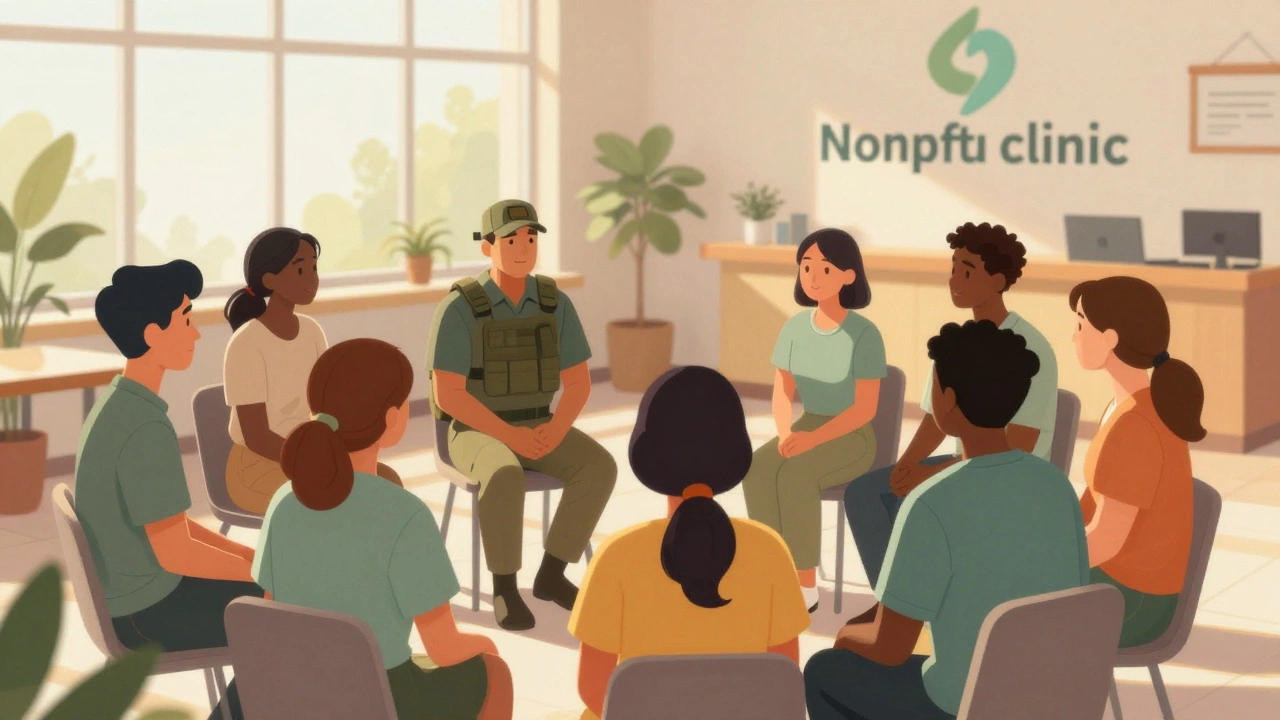
Because the state system is stretched thin, mental health charities have become the backbone of support for many Texans. These organizations don't just provide therapy; they tackle the social determinants of health-things like housing and employment-that often trigger mental health crises.
Charities often operate through "low-barrier" entries. While a state clinic might require mountains of paperwork and a month of waiting, a non-profit might offer a walk-in support group or a peer-to-peer mentoring program. They use a model of "community-based care," focusing on keeping people stable in their own homes rather than admitting them to a psychiatric ward. This approach is generally more effective and far cheaper than institutionalization.
Many of these charities focus on specific demographics. For instance, some prioritize the LGBTQ+ community, who often face unique stressors and discrimination in healthcare. Others focus on veterans, utilizing the specific trauma-informed care models needed for those transitioning from military to civilian life. By specializing, these charities provide a level of nuanced care that the broad state system simply cannot match.
The Role of Telehealth in 2026
If there is one thing saving the state's rankings from bottoming out, it's the explosion of Telehealth. Telehealth is the distribution of health-related services via electronic information and telecommunication infrastructure. Since the mid-2020s, Texas has expanded its laws to make it easier for providers to see patients across county lines via video calls.
For a mother in a small town who can't drive two hours to the nearest city, a 45-minute Zoom call with a licensed therapist is a lifesaver. However, telehealth isn't a magic bullet. It requires a stable internet connection-which is still a problem in some "dead zones" of West Texas-and a private space to talk, which isn't always available in crowded households. Despite these hurdles, the shift toward digital care has effectively "shrunk" the state, allowing urban expertise to reach rural living rooms.

Navigating the System: How to Find Help
If you're currently struggling or trying to help a loved one, the system can feel like a maze. You don't start by calling the governor; you start by identifying your level of need. If it's a life-threatening emergency, the 988 Suicide & Crisis Lifeline is the gold standard. It connects you with trained counselors who can coordinate immediate local response.
For non-emergency care, look for Federally Qualified Health Centers (FQHCs). These are clinics that receive government funding to provide care in underserved areas. They operate on a sliding scale, meaning your payment is based on your income. This is often the most viable path for those without comprehensive insurance. Additionally, searching for "Certified Community Behavioral Health Clinics" (CCBHCs) can lead you to facilities that are required to provide a comprehensive suite of services, including 24/7 crisis care and outpatient treatment.
The Path Forward for Texas
Improving the rank of Texas in mental health requires more than just more money; it requires a change in how we view the profession. For years, there has been a push to integrate mental health into primary care. Instead of sending a patient to a separate building for a psychiatrist, the goal is to have a behavioral health consultant right in the pediatrician's or family doctor's office. This "integrated care" model reduces the stigma and the friction of seeking help.
We also need to incentivize new graduates. Many medical students avoid psychiatry because the pay is lower than surgical specialties and the burnout rate is higher. By offering student loan forgiveness for those who commit to practicing in rural Texas counties, the state can begin to fill those empty slots in the HPSA maps. Until then, the combination of government-funded clinics, telehealth, and dedicated charities will remain the primary safety net for millions of people.
Why does Texas rank so low in mental health access?
The low ranking is primarily driven by a shortage of mental health professionals relative to the population. Many rural counties lack a single psychiatrist, and the high population growth has outpaced the creation of new clinics and the training of new providers, leading to long wait times and "crisis-only" care models.
What is the difference between a state clinic and a mental health charity?
State clinics are government-funded and often handle the bulk of Medicaid and Medicare patients, but they can be bogged down by bureaucracy and long waitlists. Mental health charities are non-profit organizations that often provide more specialized, flexible, and community-based support, such as support groups or peer mentoring, often with lower barriers to entry.
How can I find affordable mental health care in Texas without insurance?
The best options for those without insurance are Federally Qualified Health Centers (FQHCs) and Community Behavioral Health Clinics. These facilities offer sliding-scale fees based on your income. Additionally, many non-profit charities offer free or low-cost counseling services for specific populations.
Is telehealth actually effective for serious mental health issues?
Yes, numerous studies indicate that for many conditions-including depression, anxiety, and PTSD-telehealth is as effective as in-person therapy. While it may not be suitable for some acute crises that require physical stabilization, it is a powerful tool for consistent, long-term maintenance and therapy.
What is a "Mental Health Professional Shortage Area" (HPSA)?
An HPSA is a designation used by the federal government to identify areas that have a shortage of healthcare providers. In Texas, this often means a county where the ratio of mental health professionals to the population is too low to provide adequate care, which then triggers certain federal funding and recruitment incentives.