
Outreach Plan Builder
Step 1: Identify Your Audience
Step 2: Define What You're Offering
Step 3: Choose Communication Channels
Step 4: Timing & Location
Step 5: Assign Roles
Step 6: Measure Success
Your Outreach Plan Summary
Who to Reach
What to Offer
Channels
Timing & Location
Roles
Success Metrics
Key Recommendation
When you're trying to get people involved in a local cause-whether it's cleaning up a park, feeding the hungry, or running after-school programs-you can't just hope people show up. You need a plan. Not a vague idea. Not a wish list. A real, working outreach plan that tells you who to talk to, how to reach them, and what to say. Many groups fail because they skip this step. Others spend months doing random events and wonder why no one shows up. The difference? A clear outreach plan.
Who you’re trying to reach
Every outreach plan starts with the same question: Who are we trying to connect with? It sounds simple, but most groups get this wrong. Saying "we want to help the community" is too broad. You need names. You need neighborhoods. You need age groups. You need barriers.For example, if you're running a food distribution program in Bristol, you don’t just target "low-income families." You look at postcode data. You find out which areas have the highest rates of child food insecurity. You check which bus routes serve those neighborhoods. You talk to school nurses and local GPs-they know who’s struggling but won’t ask for help. That’s your audience: single parents on the 11 bus route near Hartcliffe, grandparents raising grandchildren on fixed incomes, teens who skip lunch because their mom works two shifts.
Without this level of detail, your flyers end up in the wrong mailbox. Your social media posts get ignored. Your volunteers show up at the wrong time. Knowing who you’re reaching isn’t about being precise for the sake of it. It’s about making sure your effort doesn’t vanish into thin air.
What you’re offering
People don’t care about your mission. They care about what’s in it for them-or for someone they love. Your outreach plan must answer: What’s the real benefit?Let’s say you’re organizing free after-school tutoring. You might think: "We’re helping kids get better grades." But that’s not what gets parents to show up. What does? "Your child can catch up without paying for tutors." "We pick them up from school and drop them home." "We serve a hot meal while they study." Those are the hooks.
A good outreach plan doesn’t lead with your organization’s history. It leads with the change it creates in someone’s daily life. If you’re cleaning up a riverbank, don’t say "we protect wildlife." Say: "We’re turning this trash-filled ditch into a safe place for kids to fish on weekends." That’s a picture people can feel.
How you’ll get the message out
You can have the best message in the world, but if no one hears it, it doesn’t matter. Your outreach plan must list every channel you’ll use-and why.Here’s what works in real communities, not in theory:
- Local radio stations-especially ones that play community announcements. A 30-second spot on BBC Radio Bristol costs next to nothing and reaches people who don’t use social media.
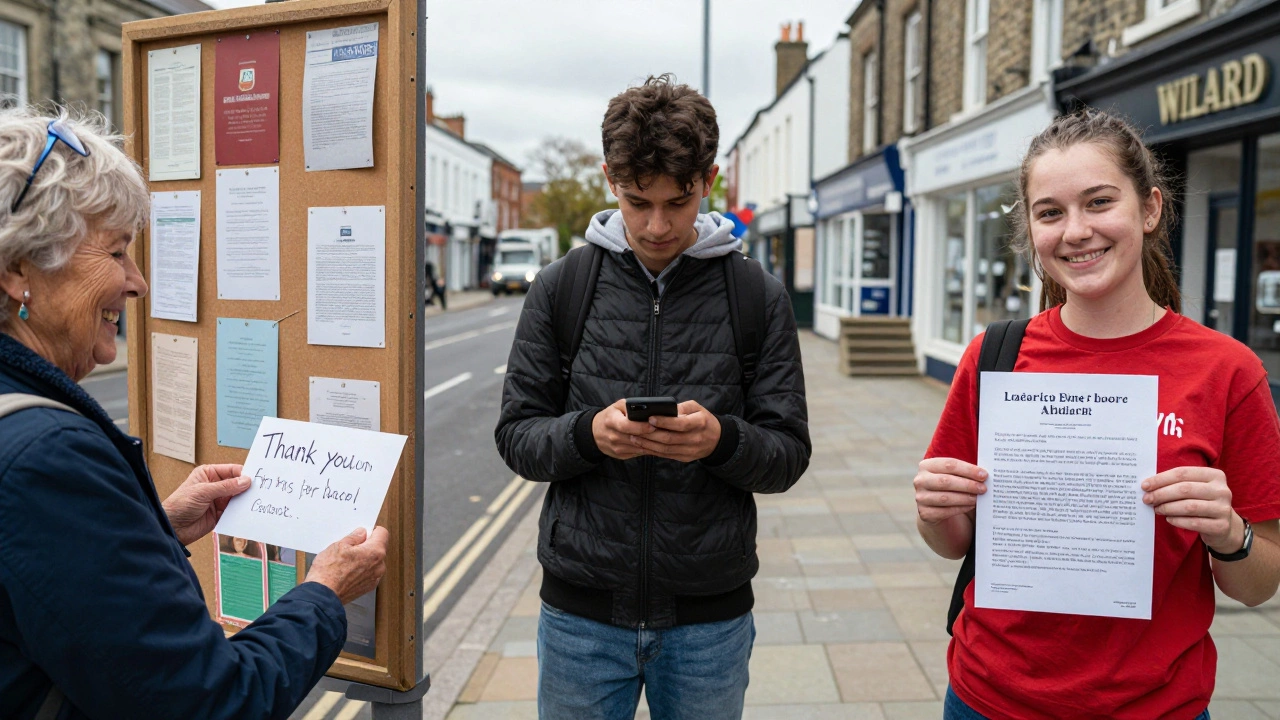
- Community boards-libraries, laundromats, corner shops. These aren’t outdated. They’re where older adults, delivery workers, and parents on foot check for updates.
- Word of mouth through trusted figures-church leaders, school PTA chairs, local shop owners. These people have influence. Give them a simple flyer and a 10-minute chat. They’ll do more than your Instagram page ever will.
- Text message alerts-if you have a list of phone numbers (with permission), a quick text works better than an email. People open texts. They ignore emails.
- Face-to-face at key locations-stand outside a bus stop on Monday mornings. Bring coffee. Talk to people. Don’t hand out flyers. Ask questions. Listen. That’s how you learn what really matters to them.
Don’t try to do everything. Pick three channels that match your audience. If your group is mostly teens, skip the radio. If your audience is over 60, skip TikTok. Match the tool to the people.
When and where you’ll act
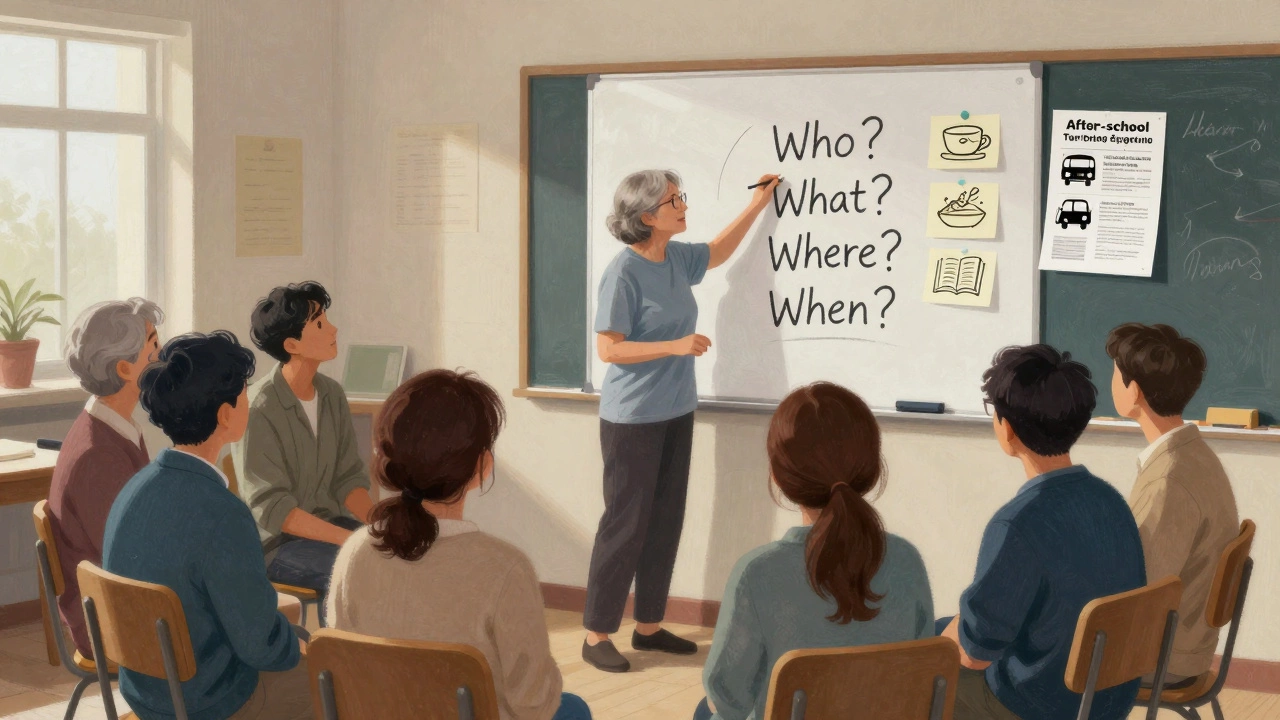
Timing isn’t just about dates. It’s about rhythm. People are busy. You have to work around their lives.Think about it: If you host a volunteer day on a Saturday afternoon, you might get 15 people. But if you host it on a Sunday morning after church, you might get 50. Why? Because that’s when people are already out, already in community mode.
Same goes for events. If you’re running a health fair, don’t do it in July when everyone’s on vacation. Do it in September, right after school starts. Parents are already thinking about their kids’ health. Teachers are looking for resources. You’re not asking them to make time-you’re fitting into their existing rhythm.
Location matters too. Don’t hold a meeting in your office. Hold it in the community center where people already go. Or in the church basement. Or at the library. You’re not asking them to come to you. You’re meeting them where they already are.
Who’s doing the work
You can’t do it all yourself. That’s why outreach plans include clear roles.Who handles calls? Who designs flyers? Who talks to the local council? Who follows up with people who say "maybe"? Write it down. Even if it’s just on a whiteboard. People need to know what’s expected. Otherwise, everything falls through the cracks.
Also, don’t rely on volunteers who "have time." Find people who have energy and connection. A retired teacher who still knows every parent in the school district is worth ten people who just want to "help out." Find those connectors. Train them. Give them a small badge or a T-shirt. Make them feel seen.
How you’ll know if it’s working
Too many groups run outreach for months and never check if it’s actually reaching anyone. They assume if they showed up, people came. That’s not tracking. That’s guessing.Set three simple measures:
- How many people showed up? Track attendance. Not just total numbers-break it down by neighborhood, age, how they heard about it.
- How many came back? One-time volunteers are nice. Repeat volunteers are your foundation. If less than 30% return, your message or delivery needs work.
- What feedback did you get? Ask. Not just "Did you like it?" Ask: "What stopped you from coming earlier?" "What would make you bring a friend?" Write down the answers. They’re gold.
You don’t need fancy software. A notebook and a spreadsheet will do. The point isn’t to impress donors. It’s to find out what’s working so you can do more of it.
What most outreach plans miss
The biggest mistake? Treating outreach like a one-time project. It’s not. It’s a relationship. You don’t build trust in a week. You build it over months-by showing up, listening, and changing based on what people tell you.Another thing: forgetting to thank people. A simple "thank you" note, a hand-written card, a shout-out at the next meeting-these cost nothing but mean everything. People don’t stay involved because they’re noble. They stay because they feel seen.
And finally: don’t wait for perfect conditions. You don’t need a budget, a fancy website, or a PR team. You need one person who shows up, asks questions, and listens. That’s the heart of any real outreach plan.
What’s the first step in creating an outreach plan?
Start by identifying exactly who you want to reach-not just "the community," but specific groups like single parents in a certain neighborhood, seniors without transportation, or teens who skip meals. Talk to local leaders, check council data, and visit places where they gather. This clarity turns vague hope into focused action.
How do I know which communication channels to use?
Look at your audience. If they’re older adults, use local radio, community boards, and word-of-mouth through trusted figures like church leaders. If they’re teens, focus on Instagram, text alerts, and school bulletin boards. Don’t spread yourself thin. Pick two or three channels that match where your people already spend time-and stick with them.
Do I need a budget to run an outreach plan?
No. Many successful outreach efforts cost little to nothing. A printed flyer, a few hours of volunteer time, and a conversation at a local shop can be more effective than a $5,000 ad campaign. Focus on relationships, not spending. Use free tools: Facebook Groups, community noticeboards, local radio, and personal networks. Money helps, but connection matters more.
How long should an outreach plan take to show results?
Real results take time. You might see a few people show up in the first week, but real engagement-repeat volunteers, trusted relationships, consistent turnout-usually takes 3 to 6 months. Don’t give up after one event. Track who comes back. Listen to feedback. Adjust. Outreach isn’t a sprint; it’s a slow build of trust.
What’s the biggest mistake people make with outreach?
Assuming everyone knows what you’re doing. Many groups spend weeks planning an event, then post it online and wonder why no one came. Outreach isn’t about announcing. It’s about connecting. You need to go where people are, talk to them face-to-face, and listen to what they really need-not what you think they should want.
Next steps: Start small, stay consistent
You don’t need to build a perfect outreach plan overnight. Start with one neighborhood. Talk to five people. Write down what they say. Pick one channel to spread the word. Run one small event. Then do it again next month. Track who comes back. Ask why. Adjust. Repeat.The most powerful outreach isn’t flashy. It’s steady. It’s the person who shows up every Tuesday at the bus stop with a smile and a question. That’s how real change happens.