Community Activity Quiz
Test Your Understanding
Answer these 5 questions based on the article content. See how much you know about effective community activities!
1. What is the most common example of a community activity mentioned in the article?
2. According to the article, what is NOT a characteristic of good community activities?
3. Which community activity is specifically mentioned as helping people with dementia?
4. How did the community kitchen in Easton grow?
5. What is one of the common myths about community activities mentioned in the article?
Results
When people talk about community activities, they often picture big events with banners and loud music. But the most powerful community activities are quiet, regular, and deeply personal. They don’t need a budget or a permit. They just need people showing up.
Neighborhood Clean-Up Days
In Bristol, every third Saturday of the month, a group of neighbors meets at the edge of the Avon River near Totterdown. No flyers. No social media hype. Just a pile of gloves, trash bags, and a few coffee thermoses. They’ve been doing this for over five years. Last year alone, they removed 1,200 kilograms of litter - plastic bottles, old tires, broken furniture. It’s not glamorous. But it changes how people see their own street. After one clean-up, a local shop owner started leaving water bottles and snacks for volunteers. A teenager who showed up once now leads the group. That’s the ripple effect.
Community Kitchen Nights
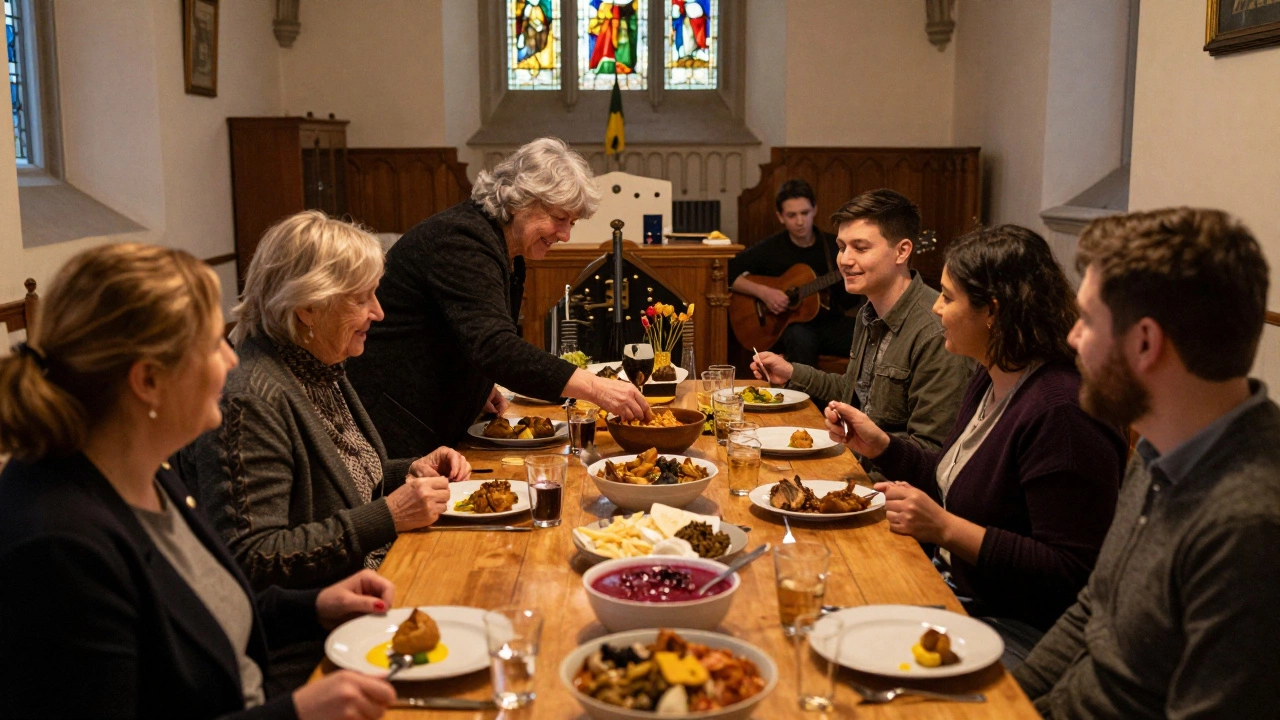
At the St. Mary’s Church hall in Easton, every Thursday evening, 15 to 20 people gather to cook and eat together. It’s not a food bank. No one is asked for ID or proof of need. You bring a dish. You take a plate. You sit with someone you’ve never met before. Some come because they’re lonely. Others come because they want to help. The menu changes weekly - Nigerian stew, Ukrainian borscht, Welsh cawl. A retired teacher, Margaret, started this in 2021 after her husband passed away. She said, “I didn’t want to eat alone anymore. So I made a table for others who didn’t want to eat alone either.” Now, over 60 regulars show up. Some bring their kids. Others bring their guitars. It’s not charity. It’s connection.
Library Story Hours for Toddlers
The Bristol Central Library runs a free story hour every Tuesday morning for children under five. But here’s what makes it different: every session is led by a different volunteer. A nurse. A retired bus driver. A teenager who’s learning sign language. A father who reads in Spanish and English. No worksheets. No lesson plans. Just books, blankets on the floor, and time. The library doesn’t track attendance. But the staff noticed something - parents who came once started coming every week. Some even brought their own books to share. One mom, who’d been isolated after moving here from Syria, now leads the session every other month. “I didn’t know anyone,” she said. “Now, my daughter has 20 aunties and uncles who read to her.”
Adopt-a-Tree and Grow-a-Friend
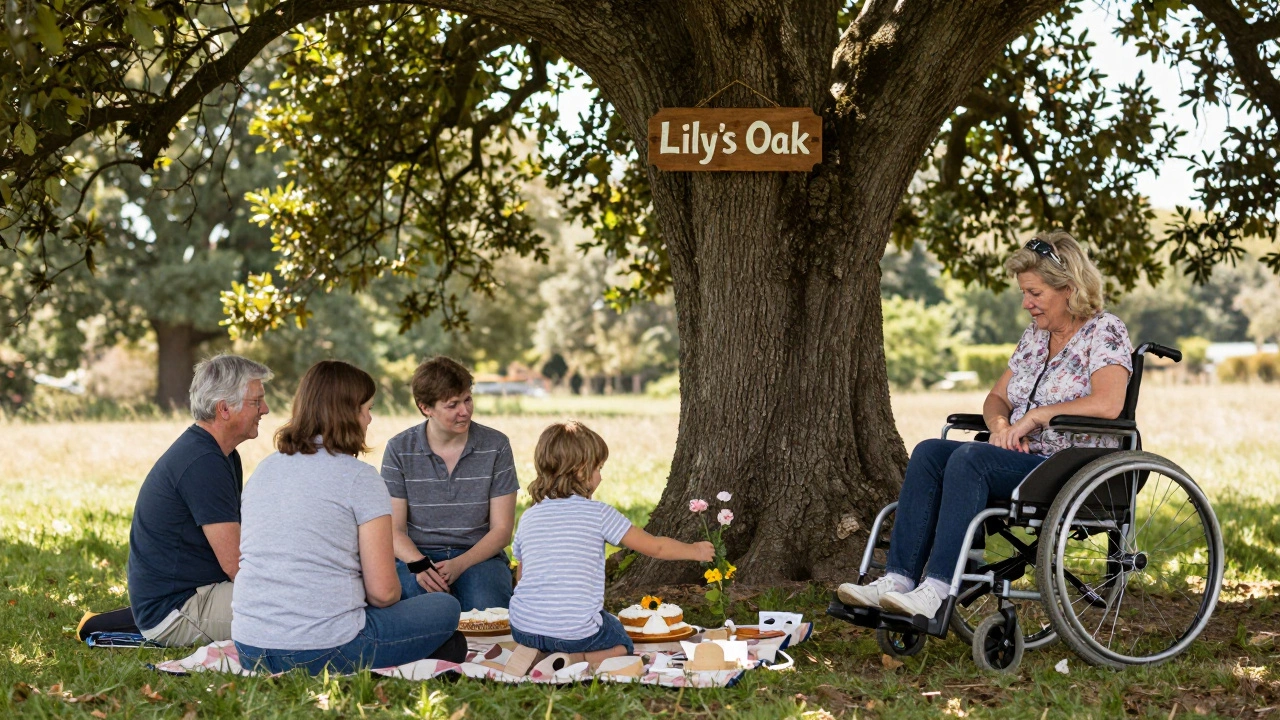
Not all community activities happen indoors. In the Clifton area, a group of residents adopted 37 trees along the sidewalk near the university. Each tree got a small plaque with a name - “Lily’s Oak,” “Miguel’s Maple.” The rule? Anyone can water it. Anyone can sit under it. But you have to care for it for at least six months before you can claim it as yours. The project started when two teenagers, bored one summer, glued a piece of cardboard to a dying tree and wrote, “I’m sorry we forgot you.” A neighbor saw it. Took a photo. Posted it. Within a week, 40 people joined. Now, the group holds monthly “tree birthdays” - a picnic under each tree, with homemade cakes and stories about why they chose it. One tree, “Bertie’s Birch,” was named after a man who died last winter. His daughter says, “Every time I sit under it, I feel like he’s still here.”
Community Choir for People with Dementia
At the Kingswood Community Centre, a weekly choir meets for people living with dementia and their caregivers. No auditions. No music sheets. Just simple songs - “You Are My Sunshine,” “Amazing Grace,” “Rolling in the Deep.” The leader, a former music teacher named Helen, says, “We don’t care if they remember the words. We care if they remember how to sing.” Families report that after joining, their loved ones smile more. Some who hadn’t spoken in months start humming. One man, who hadn’t recognized his wife in two years, sang “Can’t Help Falling in Love” with her during a session. She cried. He didn’t say a word. But he held her hand the whole time.
Why These Work
These aren’t charity projects. They’re not run by nonprofits with grants. They’re started by ordinary people who saw a need and didn’t wait for someone else to fix it. The common thread? They’re simple. They’re repeatable. They don’t require special skills. And they focus on presence, not performance.
A community activity doesn’t need to be big. It just needs to be real. It doesn’t need to solve everything. It just needs to remind people they’re not alone.
What Makes a Good Community Activity?
- It’s easy to join - no forms, no fees, no experience needed.
- It happens regularly - weekly, monthly, even biweekly. Consistency builds trust.
- It’s inclusive - no one is turned away for age, income, background, or ability.
- It invites participation - people aren’t just spectators. They’re part of the rhythm.
- It leaves space for emotion - laughter, silence, tears, memories. All are welcome.
Where to Start If You Want to Begin One
- Look around your street or neighborhood. What’s missing? A bench? A clean park? A place to talk?
- Start small. Invite three people. Maybe you’ll meet at the corner café every Friday for coffee and chat.
- Don’t wait for permission. You don’t need a permit to sit with someone who’s lonely.
- Let it grow organically. If it’s meaningful, people will show up. If it’s forced, it won’t last.
- Keep it simple. The best community activities are the ones that don’t need a website.
Common Myths About Community Activities
- Myth: You need money to make a difference. Truth: Time and attention cost nothing.
- Myth: Only trained volunteers can help. Truth: A person who listens is more powerful than a certified counselor.
- Myth: You have to fix the whole problem. Truth: You just have to show up for one person.
- Myth: It’s too late to start. Truth: The first community choir in Bristol began with one woman and a keyboard in her living room.
What Happens When Communities Do This
When people gather regularly for something simple - cleaning a park, sharing a meal, singing a song - something deeper changes. Crime rates drop. Loneliness declines. Kids feel safer. Older people stay connected. Businesses notice more foot traffic. Local leaders start listening.
In Bristol, after the community kitchen started, the city council funded a new community center in Easton. Not because of a petition. Because the mayor walked in one night and saw 60 people eating together, laughing, arguing over who made the best dumplings. He didn’t write a speech. He just sat down and ate.
What is the most common example of a community activity?
The most common example is neighborhood clean-up days. These happen in towns and cities worldwide, often led by residents who care about their local environment. In Bristol, monthly clean-ups along the Avon River have become a regular tradition, bringing together people of all ages to remove litter, plant native shrubs, and reconnect with their surroundings. These activities are simple, require no special skills, and create lasting change through consistent, collective action.
Can a community activity be informal?
Yes, and many of the most impactful ones are. Informal activities - like a weekly coffee meetup, a shared garden, or a block-wide book swap - often last longer than organized programs because they’re driven by personal connection, not funding or bureaucracy. In Easton, the community kitchen began with one woman inviting neighbors to share dinner. It had no budget, no logo, and no website. Now it feeds over 60 people every week. The power comes from trust, not structure.
Do you need special skills to start a community activity?
No. You don’t need to be an organizer, a teacher, or a nonprofit leader. All you need is the willingness to show up and invite others. A community choir for people with dementia doesn’t require musical training - just patience and a playlist. A tree adoption project doesn’t need a botanist - just someone who waters regularly. The best community activities are built on humanity, not expertise.
How do you get people to join a new community activity?
Start with one or two people you already know. Invite them to something simple - a walk, a coffee, a clean-up. Don’t advertise. Don’t make it official. Just be consistent. People notice when you show up week after week. After a few weeks, they’ll start bringing friends. In Bristol, the library story hours grew because parents kept coming back. They didn’t need flyers - they needed reliability. Presence builds trust faster than promotion.
Can community activities help with loneliness?
Absolutely. Loneliness doesn’t disappear because of a program. It fades because of repeated, meaningful interactions. The community choir in Kingswood and the Thursday kitchen in Easton both report that participants feel less isolated after just a few weeks. For older adults, immigrants, or people recovering from loss, having someone to sit with - even in silence - is more healing than any therapy session. Community activities create belonging through routine, not rescue.