
Elderly Care Service Finder
Answer these questions to find the most requested and suitable support service for your loved one. This tool reflects current trends in UK elderly care demand.
Your Recommendation
Why this fits:
Estimated Cost:
Next Steps Checklist:
- Request a Care Needs Assessment from Local Council
- Check eligibility for Attendance Allowance (if over State Pension age)
- Vet providers for staff retention rates (>70%)
- Consider hybrid models (Telecare + Human Visits) for safety
Here’s a hard truth: most families don’t call for help because their parents can’t walk or cook. They call because they’re lonely. Or worse, they call because a fall happened at 3 AM and nobody was there to pick them up. When you look at the data from home care agencies across the UK in 2026, the single most requested service isn’t complex medical nursing-it’s non-medical personal care combined with companionship. It’s someone showing up to make tea, check on meds, and chat for an hour.
Why? Because the system broke long ago. The National Health Service (NHS) handles acute illness, but it doesn’t handle Tuesday afternoon boredom or the anxiety of forgetting whether you took your pills. Families are stretched thin. Adult children work full-time, often miles away. So, when people search for "support for the elderly," they aren’t looking for a hospital bed. They’re looking for safety nets that allow independence. Let’s break down exactly what these services are, why they’re in such high demand, and how to navigate the messy reality of getting them funded.
The Core Demand: Why Companionship Outweighs Clinical Care
You might expect the top request to be wound care or dementia monitoring. And yes, those are huge sectors. But volume-wise, personal care and domestic assistance dominate. Think about it practically. An 80-year-old living alone usually manages fine until something small goes wrong. A slipped disc means they can’t clean the kitchen. Mild arthritis means opening jars is painful. Dementia starts with losing keys, not wandering off.
The most common request is a "care package" that includes:
- Personal Care: Help with washing, dressing, and toileting. This preserves dignity without requiring a nurse.
- Domestic Assistance: Light cleaning, laundry, and meal preparation.
- Companionship: Conversation, walks, and mental stimulation.
This blend addresses the two biggest killers of elderly quality of life: physical decline and social isolation. According to recent surveys by Age UK, over 1 million older people in England report feeling lonely often. That loneliness accelerates cognitive decline faster than many diseases. So, when a family hires a carer, they aren’t just buying hygiene; they’re buying peace of mind. They want someone who will notice if Mum seems quieter than usual or if Dad has stopped eating properly. That observational role is invaluable and cannot be replaced by a robot vacuum or a pill dispenser.
Breaking Down the Service Types
Not all support looks the same. Understanding the categories helps you ask for the right thing. If you go to a council or agency asking for "help," they’ll assume you mean basic tasks. You need to be specific.
| Service Type | Primary Function | Funding Source | Best For |
|---|---|---|---|
| Home Care (Domiciliary) | Visiting carers provide personal care, cleaning, and companionship in the client's own home. | Council-funded (means-tested) or Private Pay | People who want to stay in their current home but need daily assistance. |
| Day Centres | Structured activities, meals, and social interaction during daytime hours. | Council subsidies, Charities, or Private Fees | Combating isolation and giving caregivers a break. |
| Telecare / Telehealth | Sensors, pendants, and video calls to monitor safety and health remotely. | NHS Integrated Care Systems or Council Grants | High-risk falls patients or those with early-stage dementia. |
| Respite Care | Short-term residential stays to relieve family caregivers. | Council funding or Self-funding | Burnt-out relatives needing a holiday or emergency cover. |
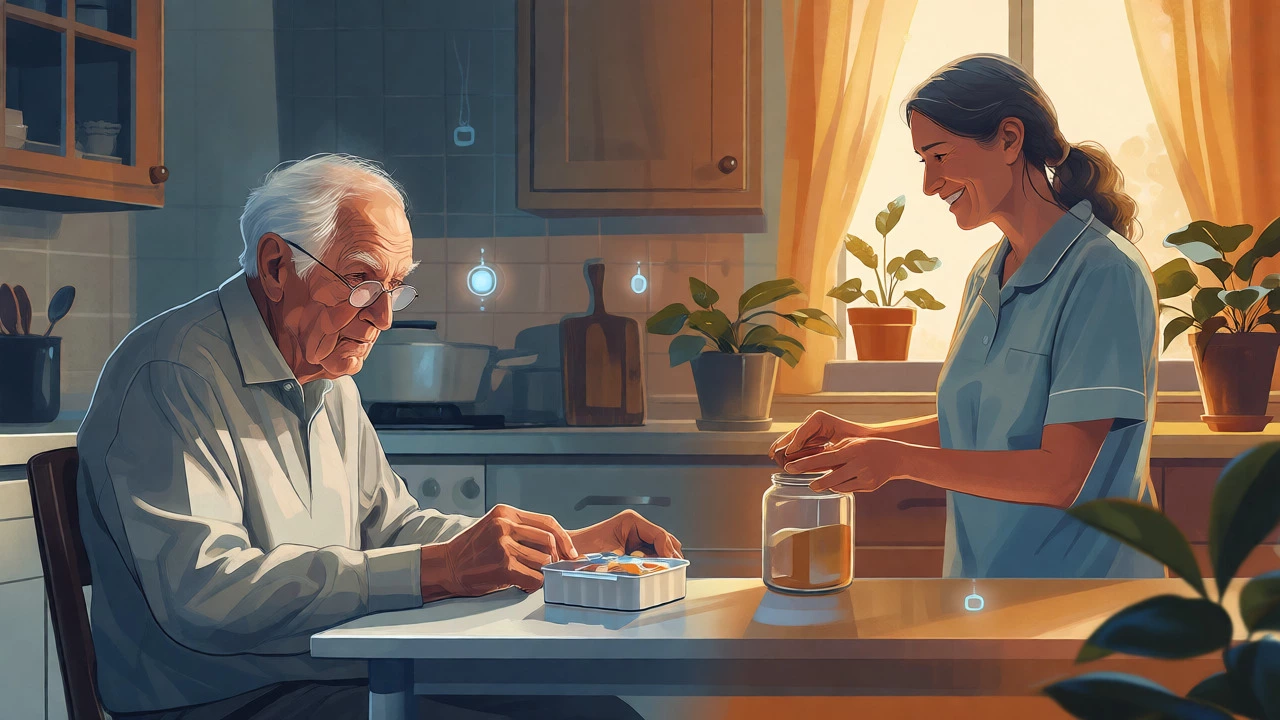
Notice the pattern? Home care is the default because it keeps costs lower than residential homes and aligns with the government’s push for "aging in place." However, telecare is growing fastest. In Bristol, local councils have seen a 15% rise in requests for sensor-based systems since 2024. Why? Because it’s cheaper than human visits and provides 24/7 coverage. But here’s the catch: sensors don’t hold hands. They don’t listen. That’s why hybrid models-telecare plus weekly human visits-are becoming the gold standard.
The Funding Maze: Who Actually Pays?
This is where things get ugly. Everyone wants support; few know who pays for it. In England, the system is split between the NHS (for health needs) and Local Authorities (for social care needs). This distinction confuses everyone.
If your parent needs help with washing because they have a broken hip, that’s likely NHS continuing healthcare. If they need help with washing because they’re frail and arthritic, that’s social care, handled by the council. Social care is means-tested. If your parent has savings above £23,250 (the threshold in England as of 2026), they pay full price. Below that, the council contributes. If they have no assets, the council covers it entirely.
But wait. There’s also the Attendance Allowance, a tax-free benefit for people over State Pension age who need help with personal care. Many eligible seniors never claim it. Claiming this can free up hundreds of pounds a month to pay for private care. Always check eligibility first before assuming you must sell the house.
Spotting the Red Flags in Service Providers
The market is flooded with agencies. Some are excellent; others treat staff like disposable commodities. High turnover rates plague the industry. If your carer changes every week, you’ve lost the relationship aspect. You’re paying for a stranger, not a helper.
When vetting providers, ask these three questions:
- What is the staff retention rate? Anything below 70% annually is a red flag. It means constant retraining and poor continuity.
- Do you employ staff directly or use subcontractors? Direct employment usually means better training and accountability. Subcontracting shifts liability and reduces quality control.
- How do you handle emergencies? If a carer calls in sick at 7 AM, does the agency guarantee a replacement within two hours? Many don’t.
In my experience advising families in the South West, the best agencies are those that specialize in local areas. A national chain might offer slick apps, but a local Bristol firm knows which GP surgeries are efficient and which community centres run good bingo nights. That local knowledge adds value beyond the contract.

Alternatives to Traditional Home Care
Money is tight. Not everyone can afford £20-£30 per hour for professional care. Fortunately, the community sector fills gaps. Volunteering organizations like Age UK or local faith groups often provide befriending services for free. These volunteers visit once a week to chat or take a short walk. It’s not enough for medical needs, but it’s crucial for mental health.
Another rising trend is "time banking." In some communities, younger retirees volunteer to help older neighbors in exchange for credits they can use later. It builds intergenerational connections and reduces reliance on paid services. While not yet widespread nationally, pilot schemes in cities like Manchester and Leeds show promising results in reducing loneliness scores among participants.
Practical Steps to Secure Support Today
Don’t wait for a crisis. Here’s your action plan:
- Request a Care Needs Assessment: Contact your local council’s adult social services department. They are legally required to assess anyone who appears to need care, regardless of finances. Do this before you hire anyone privately.
- Check NHS Continuing Healthcare Eligibility: If your parent has severe, ongoing health issues, apply for CHC assessment. It could cover all care costs, including residential fees.
- Explore Telecare Options: Ask your GP or council housing team about installing pendant alarms or motion sensors. These are often subsidized and provide immediate safety improvements.
- Review Insurance Policies: Did your parent buy critical illness insurance decades ago? Check the small print. Some policies pay out for loss of independence.
Remember, the goal isn’t just survival. It’s maintaining identity. The most requested service succeeds because it allows people to remain themselves-to keep their routines, their homes, and their dignity-while getting the help they actually need.
Is home care cheaper than a residential home?
Generally, yes, for part-time care. Residential homes cost £900-£1,200 per week in the UK. Home care averages £20-£30 per hour. If your parent needs only 2 hours a day, home care is significantly cheaper. However, if they require 24-hour supervision, home care becomes more expensive than residential options due to staffing complexities.
Does the NHS pay for home care?
Rarely. The NHS funds "continuing healthcare" for primary health needs, which is strict criteria. Most routine home care (washing, dressing, cleaning) falls under social care, managed by local councils and subject to means-testing. NHS nurses may visit for specific medical tasks like injections or wound care, but they do not provide general domestic support.
What is the difference between a carer and a companion?
A carer performs regulated activities like lifting, administering medication, and personal hygiene. A companion focuses on social interaction, light domestic tasks, and outings. Companions are often unregulated and cheaper. Many agencies offer hybrid roles, but always clarify qualifications if medical tasks are involved.
Can I pay a relative for care?
Yes, but with caveats. Council funding rarely pays for spouses or partners living in the same household. Adult children can sometimes be paid if they live separately and meet CQC standards, but direct payments from councils to relatives are scrutinized closely to prevent abuse of the system. Private contracts with relatives are straightforward.
How quickly can home care start?
Private agencies can often start within 24-48 hours. Council-funded packages depend on waiting lists, which can range from weeks to months depending on your area’s budget pressures. Emergency placements through hospitals are faster but may lack choice in provider selection.