
Meal Builder for Limited Resources
What food items do you have?
Select what you currently have available from these common survival foods
Your Meal Options
When you have no food and no money, the fear isn’t just hunger-it’s the feeling that no one sees you, no one helps, and there’s nowhere to turn. But there are real, working options available right now. You don’t have to choose between paying rent and eating. You don’t have to go without. This isn’t about charity-it’s about survival, and survival is possible.
What you can eat right now with zero money
Even if your pantry is empty and your wallet is too, there are foods that cost nothing if you know where to look. These aren’t fancy or glamorous, but they’re filling, safe, and available to anyone who asks.
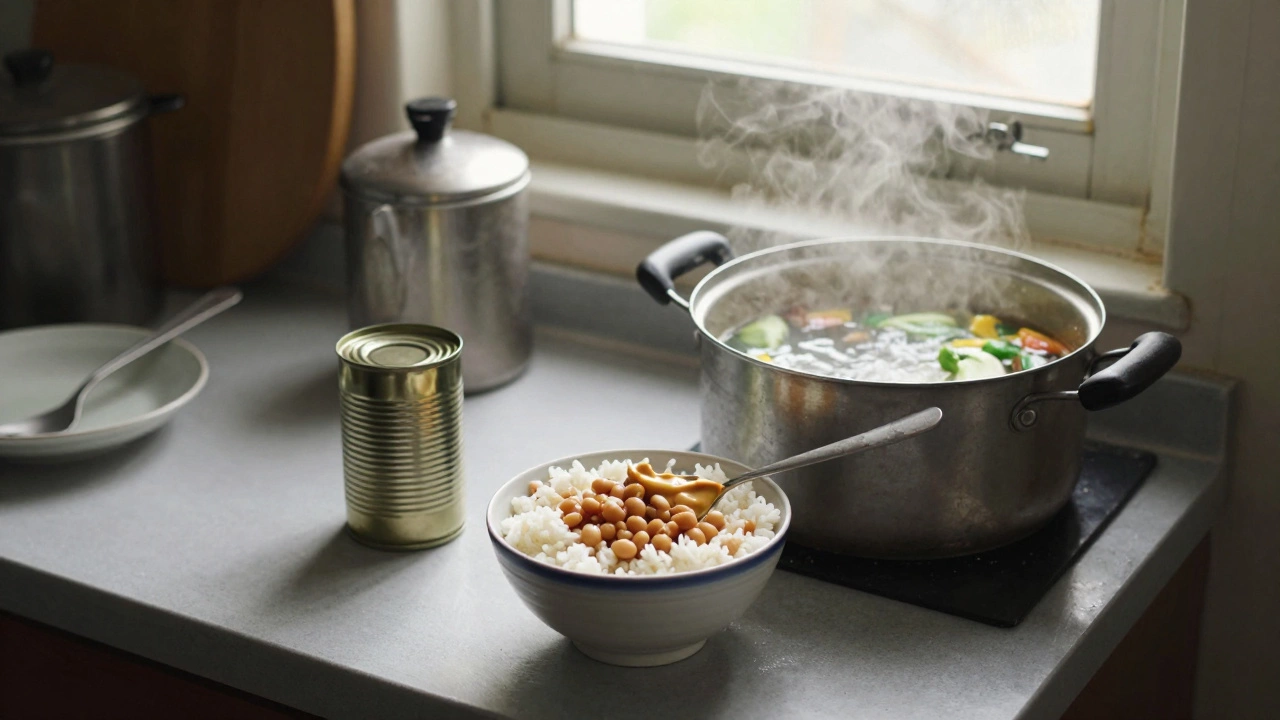
- Grains and beans - Rice, oats, dried beans, and pasta are staples at nearly every food bank. A cup of rice with salt and water gives you calories and energy. Add a spoonful of peanut butter if it’s available.
- Canned vegetables and fruits - These last for years and don’t need cooking. Look for low-sodium options if you can, but even regular ones will keep you alive. Tomato soup, corn, peaches, and green beans are common.
- Peanut butter - One jar can feed one person for days. It’s high in protein and calories. If you get a jar, eat it straight from the jar with a spoon if you don’t have bread.
- Breakfast cereal - Don’t dismiss it. Even plain cornflakes with water or milk (if you get some) will give you carbs and sugar to keep your energy up.
- Instant potatoes or mashed potato mix - Just add hot water. No stove? Boil water in a pot on a gas burner at a friend’s house, or ask a shelter if they have a kitchen.
These foods aren’t gourmet. But they’re calories. And calories keep you alive.
Where to get free food right now
Food banks aren’t the only place. There are more options than most people realize, and they’re open even on weekends and holidays.
- Local food banks - Most operate Monday through Saturday. You don’t need ID, proof of income, or an appointment. Just show up. Call ahead if you can, but many don’t require it. They give out boxes of food weekly or biweekly. Some even offer fresh produce, eggs, and dairy.
- Churches and community centers - Many offer free meals on specific days-Wednesday dinners, Sunday lunches. These aren’t just for homeless people. Anyone who’s hungry can walk in. Ask at the front desk: “Do you serve food to people who need it?”
- Schools - If you have kids, they can get free breakfast and lunch at school every day. Even if you’re not enrolled, some districts allow community members to pick up meals for children. Call the school district office and ask.
- Food pantries in libraries or community centers - Libraries often host small food pantries on certain days. No library card needed. Just walk in during open hours.
- Mobile food trucks - Cities like Chicago, Los Angeles, and Philadelphia run weekly food trucks that drive into low-income neighborhoods. Search “free food truck [your city]” online or ask at a local shelter.
Don’t wait until you’re starving to look. Go today. Even if you’re embarrassed, go. The people who run these places have seen it all. They don’t judge. They’re just glad you showed up.
How to stretch food when you have almost nothing
If you get a small bag of rice, a can of beans, and a jar of peanut butter, you can make three meals a day for a week.
Here’s how:
- Make rice and beans - Cook rice. Drain and rinse canned beans. Mix them together. Add salt. Eat it hot or cold. Add a little oil if you find some.
- Use peanut butter as a topping - Spread it on rice cakes (if you get them), bread, or even plain crackers. It adds protein and keeps you full longer.
- Boil vegetables in water - If you get canned veggies, drain them and boil the liquid. That’s your broth. Add rice or noodles. You get flavor and nutrients from the water.
- Make “soup” with scraps - Save onion skins, carrot peels, celery ends. Boil them in water for 20 minutes. Strain. Now you have broth. Add a pinch of salt. Drink it warm.
- Don’t throw out bread - Stale bread? Toast it. Make breadcrumbs. Use it to thicken soups. Eat it with peanut butter.
Food doesn’t have to be fancy to be enough. It just has to be eaten.
What to do if you can’t get to a food bank
What if you’re sick? What if you don’t have transportation? What if you’re scared to leave your home?
You still have options.
- Call 211 - Dial 211 from any phone, even a payphone or a locked phone. It’s a free national helpline. They connect you to food, transportation, housing, and medical help. They’ll even arrange a food delivery if you’re housebound.
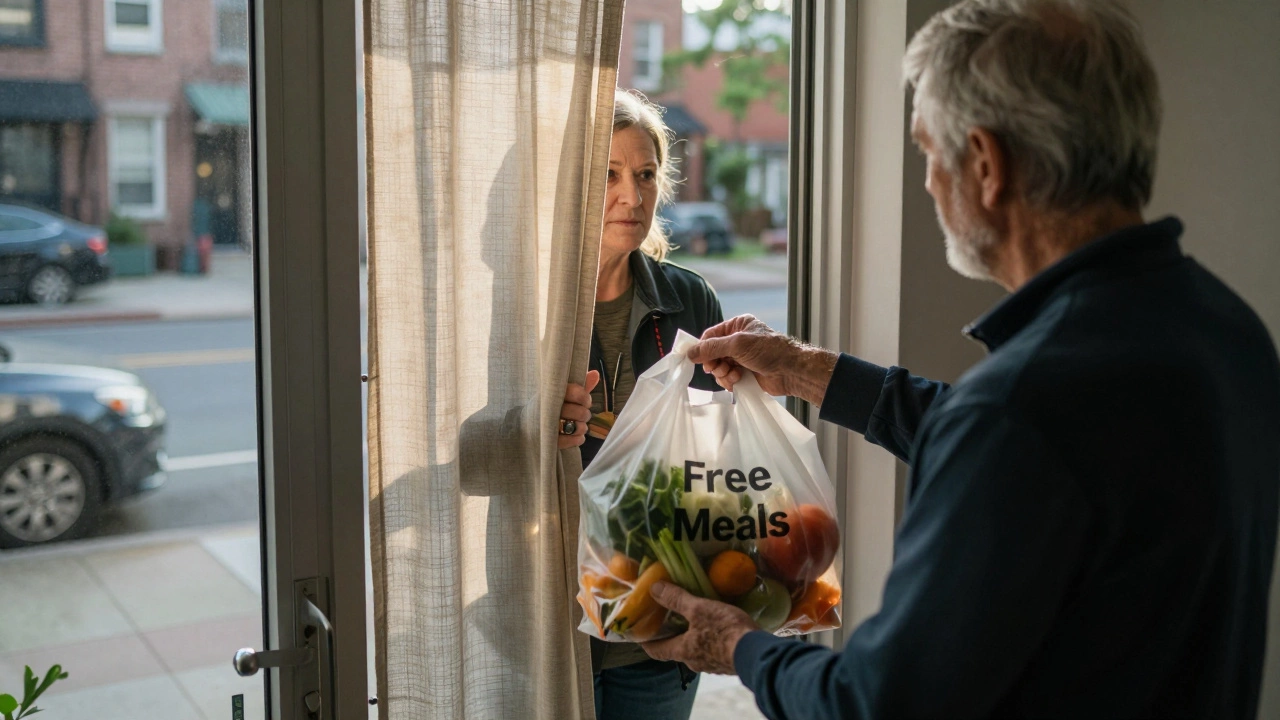
- Ask a neighbor - Say: “I’m having a hard time right now. Do you have any extra food I could take?” Most people will say yes. You’d be surprised how many have extra cans, rice, or bread they don’t need.
- Use apps like Too Good To Go - This app lets you buy surplus food from bakeries and grocery stores at 70-90% off. You get a surprise bag of food for $2-$3. It’s not free, but it’s close. And you can use it even if you have $1.
- Check with local shelters - Even if you don’t need a bed, many shelters give out food bags during the day. Walk in and ask: “Can I get a meal or a bag of groceries?”
There’s always a way. Even if you feel invisible, someone is trying to help you.
What not to do
When you’re desperate, you might be tempted to make bad choices. Avoid these:
- Don’t eat expired food - If it smells bad, looks moldy, or the can is bulging, throw it out. Food poisoning will cost you more than hunger.
- Don’t skip meals to save food - Eat small amounts often. Your body needs fuel. Skipping meals slows your metabolism and makes you more tired, which makes it harder to find help.
- Don’t believe the myth that you have to be “deserving” - You don’t need to be homeless, unemployed, or a parent to get food. If you’re hungry, you qualify.
- Don’t wait for someone to come to you - Help doesn’t knock on your door. You have to reach out. Call. Walk in. Ask.
How to get long-term help
Getting free food today is one thing. Getting out of this situation is another. Here’s how to start.
- Apply for SNAP (food stamps) - You can apply online in under 15 minutes. In most states, you’ll get benefits within 7 days. Even if you’re working, you might qualify. The income limit is higher than most people think.
- Find a job training program - Many nonprofits offer free job training in food service, warehouse work, or customer service. They often pay you a small stipend while you train. Search “free job training [your city].”
- Connect with a case worker - Call 211 and ask for a case manager. They can help you with housing, healthcare, and food programs all at once.
- Volunteer at a food bank - It sounds strange, but volunteering often gets you access to extra food. Plus, you’ll meet people who can help you find other resources.
Help doesn’t come all at once. But it comes step by step. Start with one thing today. Go to a food bank. Call 211. Ask a neighbor. That’s enough to begin.
Why this matters more than you think
One in six Americans struggles with hunger. That’s not a statistic-it’s your neighbor, your coworker, your kid’s teacher. Hunger doesn’t look like a person on the street. It looks like a single mom working two jobs and skipping meals so her kids can eat. It looks like a senior on a fixed income choosing between medicine and groceries.
You are not alone. You are not broken. You are not lazy. You are in a hard moment, and there are people who want to help you through it.
Right now, the most important thing you can do is eat. And then ask for help. Not tomorrow. Not when you feel ready. Today.
Can I get food from a food bank without ID?
Yes. Most food banks do not require ID, proof of income, or documentation. You just need to show up. Some may ask for your name and zip code for record-keeping, but they won’t turn you away for lacking paperwork.
What if I don’t have transportation to a food bank?
Call 211. They can connect you with volunteer drivers, public transit vouchers, or mobile food pantries that come to your neighborhood. Some food banks also offer delivery for seniors, disabled individuals, or those with no way to travel.
Are food banks only for homeless people?
No. Food banks serve anyone who is hungry, regardless of housing status. Many people who use them have jobs, homes, and families-they just don’t make enough to cover rent, bills, and food. You don’t have to be homeless to qualify.
How often can I visit a food bank?
Most food banks let you come once a month. Some allow twice a month, especially during holidays or emergencies. Check with your local one. If you need more, ask about supplemental programs like SNAP or school meal pickups.
Can I get fresh food from a food bank?
Yes. Many food banks now offer fresh produce, dairy, eggs, and meat. This is more common than ever. Ask when you arrive what’s available that day. Some even have salad bars or farmers’ markets on-site.
Next steps if you’re still struggling
If you’ve tried everything and still can’t get enough to eat, here’s what to do next:
- Call 211 again. Say: “I’ve tried food banks and still can’t get enough. What else is available?”
- Visit your local social services office. They can help with emergency cash assistance, utility help, and food vouchers.
- Reach out to a faith group-even if you’re not religious. Many churches have emergency funds for food.
- Write to your city council member. Ask for more funding for food distribution. People power works.
You are not a burden. You are not a problem. You are a person who needs food. And food is a right, not a privilege. Keep asking. Keep showing up. Someone will help you.