
Support Group Quality Checker
This tool helps you assess if a support group might be a good fit for you based on key characteristics mentioned in the article. Select which criteria apply to the group you're considering.
How to use this tool
Select your answers for each criterion. The tool will calculate a quality score and provide feedback based on the article's insights.
When you’re going through something hard-grief, addiction, chronic illness, or just feeling utterly alone-it’s easy to think, Maybe I should join a support group. But then you pause. Are they really worth it? Do people actually get better? Or is it just a room full of strangers sharing sad stories while sipping bad coffee?
The answer isn’t yes or no. It’s more like: it depends. But for a lot of people, especially in places like Bristol, support groups don’t just help-they change lives.
What happens in a real support group?
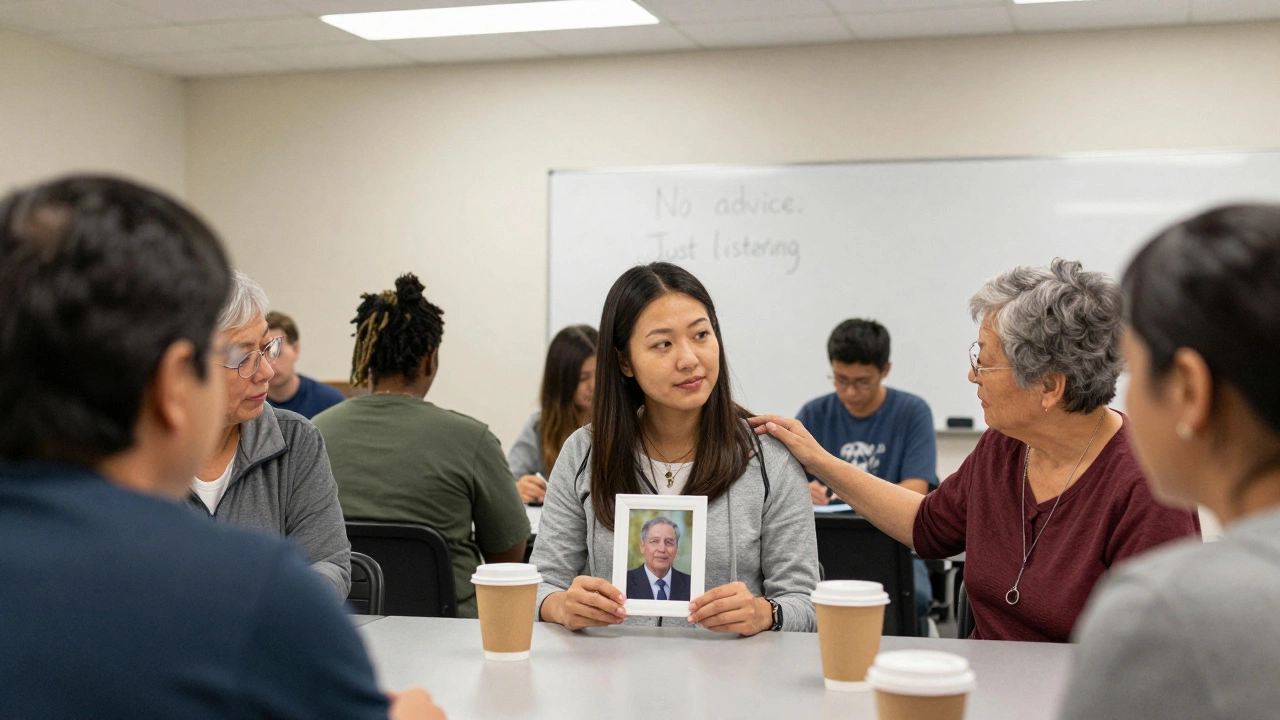
Picture this: It’s Tuesday night. A small room above the community center on St. Mary’s Road. Folding chairs. A kettle that never boils fast enough. Twelve people. One facilitator. No agendas. No scripts.
Someone starts by saying, "I lost my son last month. I still talk to him in the mirror." Silence. Then another person says, "I do that too. My dog died last year. I leave his bowl out every night." No one offers advice. No one tries to fix it. They just nod. And that’s the first thing you learn: support groups aren’t about solutions. They’re about being seen.
Unlike therapy, where you pay for one-on-one attention, support groups give you a community. You don’t have to explain yourself over and over. You don’t need to sugarcoat your feelings. Someone in the room has been where you are. And they’re still here. That’s powerful.
Who benefits the most?
Not everyone finds support groups helpful. But certain groups have strong evidence behind them.
For people recovering from addiction, groups like Alcoholics Anonymous and Narcotics Anonymous have been studied for decades. A 2020 analysis from the National Institute on Drug Abuse found that people who attended regular AA meetings were twice as likely to stay sober after one year compared to those who didn’t.
For caregivers of people with dementia, local groups run by the Alzheimer’s Society in Bristol show similar results. One participant, Margaret, 68, told me: "I used to cry in the supermarket because I couldn’t remember my husband’s favorite song. Then I went to the group. I learned I wasn’t the only one who forgot things. And I learned how to laugh about it again."
Parents of children with autism also report big shifts. A 2023 survey by the National Autistic Society found that 78% of parents who joined local support groups felt less isolated after three months. They shared tips on school meetings, sensory tools, and how to handle meltdowns in public-things no Google search could fully explain.
Even people dealing with chronic pain-like fibromyalgia or long COVID-find relief in these spaces. One Bristol group meets every Friday at the St. Philip’s Community Hall. Members don’t just talk about symptoms. They trade recipes for anti-inflammatory meals, recommend physiotherapists who actually listen, and text each other when they’re having a bad day.
What’s the catch?
Support groups aren’t magic. They don’t replace therapy, medication, or professional care. And not every group is well-run.
I’ve heard stories of groups that turned into gossip circles. One man joined a grief group after losing his wife, only to find the facilitator pushing religious conversion. Another group got so large that people stopped speaking up, afraid of being judged.
Good groups have clear rules: confidentiality, no advice-giving unless asked, no interrupting. They’re usually run by trained volunteers or local charities-not random people with good intentions.
If you go to a meeting and feel worse afterward-if people are competitive, dismissive, or overly dramatic-it’s okay to leave. You don’t owe it to them. Not every group fits every person.
How to find a good one near you
Start with trusted local organizations. In Bristol, check:
- Brookside Community Centre (mental health and addiction groups)
- Bristol Mind (anxiety, depression, trauma)
- Alzheimer’s Society Bristol & South Gloucestershire
- Carers UK local branches
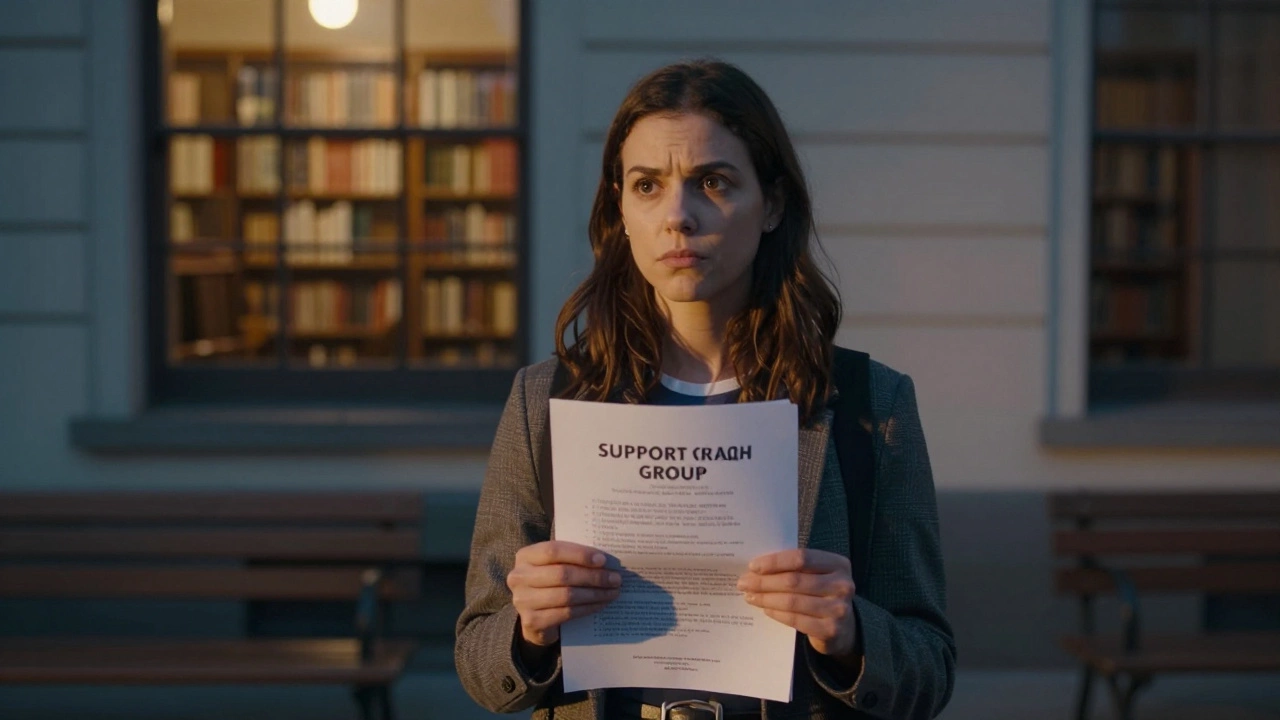
- Libraries often have bulletin boards with group flyers
Try a few. Most groups let you drop in without signing up. Go alone. Sit in the back. Listen. Don’t feel pressured to speak. You’re not there to perform. You’re there to see if it feels safe.
Some groups meet weekly. Others meet monthly. Some are online. Some are in person. Some cost nothing. Some ask for a small donation. None should pressure you to pay.
What if you’re shy or scared to go?
That’s normal. Most people feel that way the first time.
One woman I spoke to, Linda, 52, had been hiding her depression for years. She didn’t go to her first group until she was on the bus there-and got off at the wrong stop. She walked around the block three times before walking in. She didn’t say a word that night. But she came back. And the next week, she said, "I told them I didn’t want to get out of bed. And no one looked at me like I was weak. They just said, ‘Me too.’"
You don’t need to be brave. You just need to show up. Once. That’s enough.
Are they worth it? Real results
Here’s what people actually say after six months:
- "I stopped calling my sister at 3 a.m. because I finally had people to talk to."
- "I started walking again because someone in the group asked if I’d join them on Sundays."
- "I didn’t realize I’d been blaming myself until someone said, ‘That’s not your fault.’ And it clicked."
- "I used to feel like a burden. Now I feel like I belong."
These aren’t grand transformations. They’re quiet, daily shifts. But they add up.
Support groups don’t cure depression. They don’t reverse dementia. They don’t bring back the dead. But they do something quieter, deeper: they remind you that you’re not alone in your pain. And sometimes, that’s the only thing that keeps you going.
What if you can’t find a group that fits?
Then start one.
A woman in Clifton started a group for women who lost partners to cancer. She put up a flyer at the library. Three people showed up. Now there are 27. All it took was one person willing to say, "I’m tired of doing this alone."
You don’t need to be an expert. You just need to be willing to show up. Libraries, community centers, and churches often let you use their space for free. You can even start online-just a Zoom link and a simple rule: "No advice. Just listening."
There’s no perfect group. But there’s always room for one more.