
Interactive Ecosystem Explorer
Click on an ecosystem card below to reveal detailed insights about its environment, species, and importance.
Marine
Saltwater EnvironmentsFreshwater
Rivers & LakesWetlands
Earth's KidneysForest
Dense VegetationGrassland
Open PlainsDesert
Arid RegionsTundra
Frozen GroundKey Characteristics
Sub-types & Species
Walk outside your front door right now. What do you see? If you're in a city, you might see pavement, cars, and maybe a patch of grass. If you're in the countryside, you might see forests, fields, or rivers. Each of these places is an ecosystem, defined as a community of living organisms interacting with their physical environment. It’s not just about the plants and animals; it’s about how they survive together using sunlight, water, soil, and air.
We often think of nature as one big thing, but it’s actually broken down into distinct categories based on where they are and what lives there. Understanding these seven main types helps us protect them better. Whether you’re a student, a gardener, or someone who cares about the planet, knowing the difference between a desert and a coral reef changes how you view the world.
The Big Split: Aquatic vs. Terrestrial
Before we get into the specific seven types, it helps to know the two biggest buckets. Scientists split all ecosystems into Aquatic ecosystems, which are water-based environments covering about 71% of Earth's surface, and Terrestrial ecosystems, which are land-based environments that support most human activity.
This split matters because water behaves differently than land. Water holds heat longer, moves nutrients around faster, and supports different kinds of life. Land ecosystems depend heavily on soil quality and rainfall patterns. Let’s look at the three aquatic types first, then move to the four terrestrial ones.
1. Marine Ecosystems
When people say "ocean," they usually mean this type. Marine ecosystems are saltwater environments that cover more than 70% of the planet. They range from the shallow, sunny shores to the dark, crushing depths of the trench floors.
You can break marine ecosystems down further into zones:
- Coral Reefs: Often called the "rainforests of the sea," these are hotspots for biodiversity. They support nearly 25% of all marine species despite covering less than 1% of the ocean floor. Think of the Great Barrier Reef or the reefs off the coast of Belize.
- Estuaries: Where rivers meet the sea. The mix of fresh and saltwater creates nutrient-rich mudflats that serve as nurseries for young fish and crabs.
- Open Ocean (Pelagic): The vast middle ground. This includes the sunlit surface layer where phytoplankton grow and the deep sea where bioluminescent creatures hunt in total darkness.
Why does this matter? Marine ecosystems regulate our climate by absorbing carbon dioxide and producing oxygen. Without healthy oceans, global weather patterns would become chaotic.
2. Freshwater Ecosystems
If marine ecosystems are salty, Freshwater ecosystems are low-salt water environments essential for drinking water and agriculture. Even though they cover only about 3% of Earth’s surface, they hold 97% of the available fresh water. Humans rely on these directly for survival.
There are two main sub-types here:
- Lentic (Still Water): Lakes, ponds, and swamps. In a lake, light penetration determines life. Near the surface, you find algae and small fish. Deeper down, where light doesn’t reach, you find specialized bacteria and bottom-feeders.
- Lotic (Flowing Water): Rivers and streams. The constant movement brings oxygen and nutrients downstream. Fish like salmon have evolved strong bodies to swim against currents, while insects cling to rocks to avoid being swept away.
Freshwater ecosystems are currently under severe threat from pollution and dam construction. Protecting a river isn't just about saving fish; it’s about ensuring clean water reaches your tap.
3. Wetlands
Sometimes categorized separately from general freshwater systems due to their unique soil conditions, Wetlands are areas where water covers the soil or is present near the surface for varying periods. This includes marshes, bogs, fens, and swamps.
Wetlands act as the Earth’s kidneys. As water flows through them, plants and microbes filter out pollutants and excess nutrients. They also store massive amounts of carbon in their peat soils-far more per acre than forests do. When we drain wetlands for farming or development, we release that stored carbon back into the atmosphere, accelerating climate change.
Visually, a wetland might look messy or stagnant, but ecologically, it’s a powerhouse. It provides habitat for migratory birds, amphibians, and rare plant species that can’t survive anywhere else.
4. Forest Ecosystems
Now let’s step onto dry land. Forest ecosystems are land areas dominated by trees and dense vegetation. They are the lungs of the planet, absorbing CO2 and releasing oxygen. But not all forests are the same.
Forests are generally divided into two major groups:
- Tropical Rainforests: Found near the equator, these receive heavy rain year-round. They have the highest biodiversity on Earth. The Amazon Rainforest alone contains 10% of all known species. The layers are distinct: the emergent layer (tallest trees), canopy, understory, and forest floor.
- Temperate Deciduous Forests: Found in regions with four distinct seasons, like parts of Europe, North America, and East Asia. Trees here lose their leaves in winter to conserve energy. Oaks, maples, and beeches are common. These forests cycle nutrients rapidly through leaf litter decomposition.
Forests also stabilize soil. Tree roots hold dirt in place, preventing erosion during heavy rains. Without forests, hillsides would wash away, turning fertile land into barren rock.
5. Grassland Ecosystems
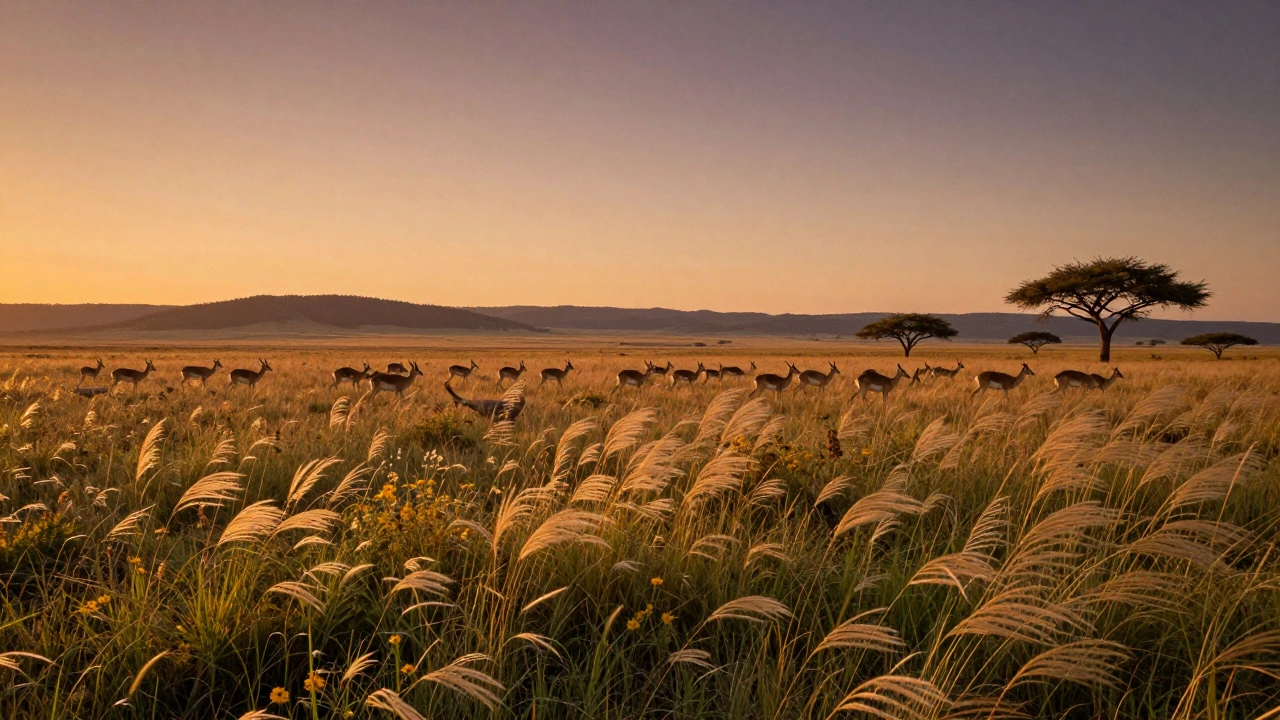
If forests are crowded, Grassland ecosystems are vast open spaces dominated by grasses rather than large shrubs or trees. You might call them prairies, savannas, steppes, or pampas depending on where you are.
Grasslands exist in areas where it’s too dry for forests but too wet for deserts. The key feature here is fire. Many grassland plants have deep root systems that survive fires, which clear out competing woody plants. Native grasses shoot back up quickly after a burn.
These ecosystems support huge herds of grazing animals. In Africa, lions chase zebras across the savanna. In North America, bison roam the plains. The relationship between the grass, the grazers, and the predators is delicate. Remove the grazers, and the grass grows too tall and dies. Remove the predators, and the grazers overpopulate and eat the land bare.
6. Desert Ecosystems
Deserts aren’t just empty sand dunes. Desert ecosystems are arid regions receiving less than 10 inches of rain per year. They cover about one-third of Earth’s land area. Life here is a masterclass in adaptation.
Plants in deserts, like cacti, store water in thick stems and have spines instead of leaves to reduce evaporation. Animals are often nocturnal, sleeping in cool burrows during the day and hunting at night. Camels, kangaroo rats, and sidewinder snakes are perfect examples of desert specialists.
Deserts can be hot (like the Sahara) or cold (like the Gobi). Cold deserts experience freezing temperatures at night, adding another layer of difficulty for survival. Despite the harshness, deserts bloom spectacularly when rare rains occur, showing hidden resilience.
7. Tundra Ecosystems
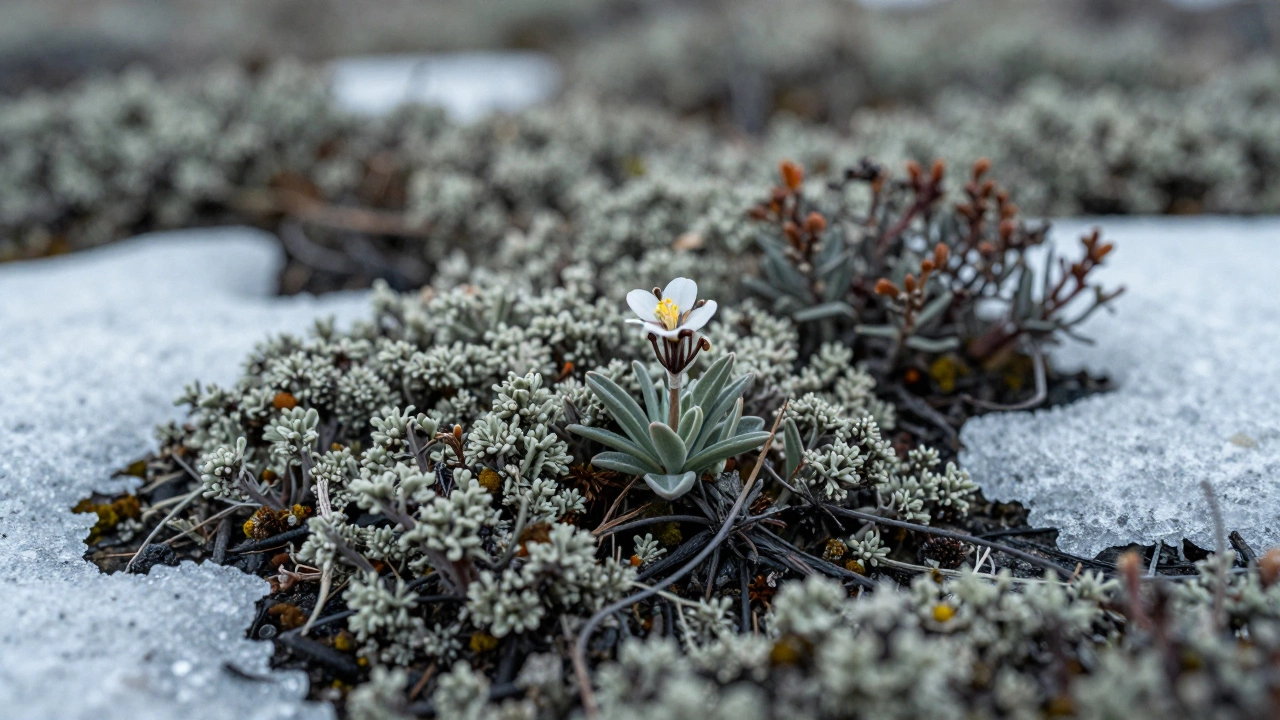
The final type is the coldest and most fragile. Tundra ecosystems are treeless plains found in the Arctic and high mountains, characterized by permafrost. "Permafrost" means permanently frozen ground. Only the top layer thaws in summer, allowing mosses, lichens, and dwarf shrubs to grow.
The growing season is incredibly short-sometimes just 50 to 60 days. Plants grow low to the ground to avoid wind and stay warm. Animals like caribou, musk oxen, and polar bears rely on seasonal migrations to find food.
Tundras are critical indicators of climate change. As global temperatures rise, the permafrost melts. This releases methane, a potent greenhouse gas, creating a feedback loop that warms the planet even more. Protecting tundra health is vital for global temperature stability.
| Ecosystem Type | Key Feature | Climate/Condition | Example Species |
|---|---|---|---|
| Marine | Saltwater coverage | Varies by depth/latitude | Sharks, Coral, Whales |
| Freshwater | Low salt content | Depends on region | Trout, Frogs, Ducks |
| Wetlands | Saturated soil | Humid, waterlogged | Crocodiles, Herons, Cattails |
| Forest | Dominant tree cover | Tropical to Temperate | Bears, Eagles, Ferns |
| Grassland | Open space, grasses | Semi-arid to humid | Bison, Lions, Grasses |
| Desert | Extremely low rainfall | Hot or Cold arid | Cacti, Camels, Scorpions |
| Tundra | Permafrost, no trees | Polar/Cold | Polar Bears, Moss, Caribou |
Why Does This Classification Matter?
You might wonder why we need seven labels. Couldn’t we just say "nature"? The problem is that each ecosystem has different needs and threats. You can’t save a coral reef with the same strategy you use to save a pine forest.
For example, reforestation projects work well in temperate forests but fail in tundra because the soil is frozen. Wetland restoration requires understanding water flow, not just planting trees. By identifying the specific type, environmental groups can target their efforts effectively.
Also, many ecosystems overlap. An estuary is both marine and freshwater. A cloud forest is a forest with high humidity akin to a wetland. Recognizing these connections helps us see the bigger picture of biodiversity.
How You Can Help Protect These Ecosystems
You don’t need to be a scientist to make a difference. Here are practical steps based on the ecosystem type:
- Reduce Plastic Use: Plastic ends up in marine and freshwater ecosystems, harming turtles, fish, and birds. Switch to reusable bags and bottles.
- Support Sustainable Forestry: Look for FSC-certified wood products. This ensures that timber harvesting doesn’t destroy forest ecosystems.
- Conserve Water: Freshwater ecosystems are shrinking. Fix leaks, take shorter showers, and install efficient fixtures.
- Plant Native Species: If you have a garden, plant local flowers and grasses. This supports local pollinators and mimics natural grassland or forest edges.
- Advocate for Wetlands: Support policies that protect wetlands from drainage and development. They are cheap, natural flood control systems.
Every action counts. When you buy coffee, choose shade-grown varieties that preserve forest habitats. When you travel, respect wildlife distances to keep animal behaviors natural. Small choices add up to significant protection for these seven vital systems.
What is the largest ecosystem on Earth?
The marine ecosystem is the largest, covering over 70% of the Earth's surface. Within that, the open ocean (pelagic zone) is the single largest continuous habitat.
Are cities considered ecosystems?
Yes, urban areas are sometimes called "urban ecosystems." They consist of humans, pets, pests, plants, and infrastructure interacting. However, they are artificial and rely heavily on external resources for energy and food.
Which ecosystem produces the most oxygen?
While forests are famous for oxygen production, marine ecosystems, specifically phytoplankton in the oceans, produce between 50% and 80% of the world's oxygen. This makes protecting oceans crucial for air quality.
What is the difference between a biome and an ecosystem?
A biome is a large geographical area with similar climate and ecosystems (e.g., Tropical Rainforest Biome). An ecosystem is a smaller, specific community within that biome interacting with its environment. All ecosystems belong to a biome, but a biome contains many ecosystems.
Why are wetlands important for climate change?
Wetlands store vast amounts of carbon in their soil (peat). When drained, this carbon oxidizes and releases CO2 and methane into the atmosphere. Keeping wetlands intact prevents this release and acts as a natural carbon sink.